
Dr. Ahmad Al‑Ghamdi: The Architect of Sustainable Industrial Leadership
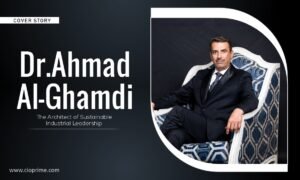
Manufacturing, energy, maritime, and large-scale infrastructure industries form the backbone of economic development. Behind every refinery, shipyard, transportation network, and industrial facility are leaders responsible for creating environments where safety, operational excellence, and long-term sustainability work together. Few leaders embody this philosophy as comprehensively as Dr. Ahmad Al-Ghamdi.
With more than thirty-five years of experience spanning the energy, maritime, infrastructure, and industrial sectors, he has built a career distinguished by strategic leadership, governance excellence, and an unwavering commitment to quality, health, safety, environment, and sustainability. From beginning his professional journey in 1988 as a Refinery Operations Supervisor at Arabian Oil Company in Khafji to leading executive functions at globally recognized organizations, his path reflects continuous growth shaped by experience, learning, and purpose.
Throughout his career, Dr. Al-Ghamdi has held leadership positions across refinery operations, corrosion protection, facilities maintenance, environmental management, laboratory management, and large-scale safety operations before advancing into senior executive roles.
His leadership journey includes serving as a Managing Director for QHSSE at SNC-Lavalin. At SAPTCO, he served as Vice President responsible for Quality, Safety, Fleet Management, Customer Experience, and Customer Service, where he led enterprise-wide initiatives to strengthen operational excellence, enhance service quality, improve safety performance, and elevate customer satisfaction across the organization.
Every stage of his career has expanded his understanding of how strategic leadership can create stronger organizations while supporting national development priorities.
Shaping a Vision That Goes Beyond Industrial Growth
Dr. Al-Ghamdi believes that every successful organization needs a vision that evolves with changing realities rather than remaining fixed. During his tenure at International Maritime Industries, the goal extended far beyond expanding shipbuilding capacity. The broader ambition was to help establish a world-class and sustainable maritime industrial ecosystem that would strengthen Saudi Arabia’s position in global shipbuilding and heavy marine engineering.
As the industry matured and global market conditions became increasingly complex, that vision also transformed. The focus gradually moved from simply developing industrial capabilities to building long-term resilience. Governance, environmental responsibility, enterprise risk management, and sustainable business practices became integral parts of strategic planning instead of separate corporate initiatives.
Rising stakeholder expectations and a stronger global focus on sustainability reinforced the importance of transparency and responsible leadership. Operational excellence continued to matter, but lasting success increasingly depended on creating value through sound governance, ethical decision-making, and a commitment to sustainable growth.
Navigating Industry Challenges Through Strong Governance
The maritime and industrial sectors are experiencing a period of rapid transformation. According to Dr. Al-Ghamdi, organizations must simultaneously address talent localization, increasingly demanding regulatory requirements, and the challenge of modernizing deeply established organizational cultures without interrupting operational performance.
Meeting these demands required a structured approach built on governance reforms, enterprise-wide risk management, and continuous investment in workforce development. Rather than treating compliance, safety, and operational excellence as separate responsibilities, he worked toward integrating them into a unified strategic framework.
This approach created clearer accountability across every level of the organization, enabling quicker decisions while ensuring that safety, quality, and environmental performance remained closely connected to business objectives. The result was an operating model that strengthened both efficiency and long-term organizational resilience.
Driving Transformation Through Integrated Innovation
Throughout his career, Dr. Al-Ghamdi has viewed innovation as more than introducing new technologies. He believes the greatest transformation comes from building systems that connect people, processes, and strategic objectives.
During his time at Al Khafji Joint Operations, he developed an integrated departmental strategy that brought together engineering, laboratory operations, and environmental compliance under shared performance indicators. This alignment improved collaboration across departments while delivering measurable improvements in operational performance.
His leadership at SAPTCO reflected the same philosophy. Working in alignment with Saudi Vision 2030, he helped reshape customer engagement strategies, operational planning, and investment priorities to support long-term national development goals.
The same integrated mindset continued within the maritime industry. Instead of treating environmental, social, and governance performance, enterprise risk, and stakeholder engagement as independent reporting functions, he encouraged organizations to view them as interconnected elements that collectively strengthen decision-making and business performance.
Leading Cultural Change Through Trust and Consistency
Among the defining moments of Dr. Al-Ghamdi’s career was leading organizational culture transformation at SNC-Lavalin, where he oversaw Quality, Health, Safety, Security, and Environment strategies across major engineering programs.
Changing long-established workplace behaviors presented a significant challenge. Rather than relying on policies alone, he believed lasting transformation could only happen when leadership remained visible, consistent, and genuinely engaged with employees. His experience reinforced a leadership principle that has guided him throughout his career: people embrace change when they understand the purpose behind it and feel personally connected to the journey.
Creating an Environment Where Learning Never Stops
Continuous learning has become one of the defining characteristics of Dr. Al-Ghamdi’s leadership philosophy. He believes leaders have a responsibility to demonstrate the same commitment to growth that they expect from their teams.
His own academic journey reflects that mindset. Alongside earning a Doctor of Business Administration, he completed qualifications in Environmental, Social, and Governance practices and Corporate Governance, while continuing his education through an Executive MBA at MBSC and the Advanced Management Program at Wharton.
Learning, however, extends well beyond personal achievement. Throughout his career, he has invested significant time in mentoring young graduates, offering career guidance, and designing professional development programs that encourage collaboration and intellectual curiosity.
He believes innovation flourishes when people feel respected, trusted, and supported in their professional development. Creating that environment has remained a consistent priority across every organization he has served.
Building Organizations Prepared for the Future
According to Dr. Al-Ghamdi, resilience begins with disciplined governance. Clear oversight of enterprise risks, effective board advisory structures, and alignment with national priorities such as Saudi Vision 2030 create the foundation for organizations that can adapt confidently to changing business environments.
He also believes governance should accelerate decision-making rather than slow it down. Strong governance frameworks provide leaders with greater clarity, enabling faster and more informed strategic choices when navigating uncertainty.
Beyond systems and processes, resilience ultimately depends on people. Organizations that invest in leadership development, employee wellbeing, and capability building are better equipped to recover from disruption and seize emerging opportunities. Human capital, in his view, remains the strongest driver of long-term organizational strength.
Advancing Responsible Leadership Through ESG and Community Impact
Environmental, Social, and Governance principles have shaped much of Dr. Al-Ghamdi’s professional and academic work. His doctoral research, together with his ongoing studies on leadership’s influence on ESG practices within Saudi Arabia’s industrial sector, reflects his long-standing commitment to responsible business leadership.
Within the organizations he has served, these principles translate into practical action through stronger governance structures, active stakeholder engagement, and environmental performance measures that receive the same level of attention as financial performance.
His commitment to responsibility also extends well beyond the workplace. Over the past two decades, he has volunteered as a rescuer and first-aid responder, supported humanitarian initiatives, and mentored aspiring professionals beginning their careers.
These experiences continue to shape his perspective as a leader. They serve as a constant reminder that every governance framework, safety protocol, and strategic decision ultimately influences the lives of individuals, families, and communities.
Harnessing Digital Intelligence for Better Decisions
Digital transformation has become an increasingly valuable tool in strengthening governance and enterprise risk management throughout Dr. Al-Ghamdi’s leadership journey. Modern enterprise risk platforms and performance dashboards now provide boards and executive teams with real-time insights rather than relying solely on periodic reports. This immediate visibility supports faster responses, stronger oversight, and more informed strategic planning.
His participation in executive programs focused on artificial intelligence has further expanded his perspective on the future of leadership. While AI continues to reshape business operations, he believes its greatest contribution lies in enhancing, rather than replacing, executive judgment.
In industries where safety, operational reliability, and risk management are critical, technology serves as a powerful decision-support tool. By presenting accurate information at the right time, digital systems allow leaders to make better-informed decisions with greater confidence while maintaining the human judgment that remains essential in high-risk environments.
Preparing for the Next Era of Industrial Transformation
Throughout his career, Dr. Al-Ghamdi has remained committed to creating lasting impact through three interconnected pillars that have defined his professional journey.
The first is delivering meaningful and measurable success for every organization he has had the privilege to serve, both within the Kingdom of Saudi Arabia and internationally, ensuring sustainable growth and operational excellence.
The second is empowering people by mentoring, developing, and supporting colleagues and future leaders, viewing their achievements as an extension of his own contribution and one of his most rewarding accomplishments.
The third is his unwavering commitment to continuous academic and professional development, recognizing that lifelong learning is fundamental to leading with excellence, creating greater value for organizations, and making a lasting difference in the lives of others.
Together, these three pillars have shaped his leadership philosophy and enabled him to achieve the enduring impact he has always aspired to make. Preparing for these shifts requires more than responding to change as it happens.
Dr. Al-Ghamdi continues to invest in his own academic and professional development while ensuring his work remains aligned with Saudi Vision 2030. At the organizational level, he focuses on developing governance and enterprise risk frameworks that are adaptable enough to accommodate evolving regulations, technological advancements, and changing business expectations. In his view, flexibility has become one of the most valuable qualities any organization can possess.
A Foundation of Humility and Accountability
Throughout his career, Dr. Al-Ghamdi has been guided by principles that extend beyond business performance. Integrity, consistency, and a genuine commitment to serving others have shaped his leadership philosophy from the earliest stages of his professional journey.
His approach has always been rooted in staying close to the operational realities of the organizations he leads. From working alongside teams on refinery floors early in his career to overseeing complex operations in shipyards and executive leadership roles, he believes credibility is earned through presence, engagement, and shared experience rather than authority alone.
Faith has also played an important role in shaping his perspective on leadership. Values such as humility, patience, and accountability continue to influence how he makes decisions, mentors future leaders, and fulfills his responsibilities toward employees, stakeholders, and the communities affected by every strategic choice. These principles have remained constant regardless of the scale or complexity of the organizations he has served.
Advice for the Next Generation of Leaders
Dr. Al-Ghamdi encourages aspiring entrepreneurs and executives to view learning as a lifelong responsibility rather than a stage that ends with formal education. Despite decades of executive leadership experience, he has repeatedly returned to academic study because he believes industries continue to evolve, and leaders must evolve with them.
Building credibility, he believes, begins with understanding the realities of day-to-day operations. Leaders who remain connected to the practical challenges faced by their teams make better decisions and earn greater trust across their organizations.
He also encourages future leaders to view governance, safety, and responsible management as foundations for sustainable growth instead of barriers to ambition. Strong governance creates stability, while effective safety cultures enable organizations to pursue innovation with confidence.
Beyond professional success, he believes meaningful leadership also requires contributing to society. His own volunteer work over the past two decades has provided lessons in compassion, resilience, and responsibility that have influenced his leadership as profoundly as any executive position or boardroom experience.
A Legacy Built on Responsible Leadership
Looking back on his career, Dr. Al-Ghamdi hopes to leave behind more than successful projects or organizational achievements. He wants to be remembered as a leader who demonstrated that strong governance, a deeply embedded safety culture, and people-centered leadership are not separate priorities but interconnected foundations of lasting organizational success.
His message to business leaders around the world is grounded in both optimism and responsibility. While technological innovation, artificial intelligence, and digital transformation will continue to reshape industries, the qualities that define exceptional leadership remain remarkably consistent.
Continuous learning, technical expertise, ethical decision-making, and an unwavering commitment to people will continue to distinguish leaders who create lasting impact. As industries become increasingly advanced, Dr. Al-Ghamdi believes the greatest competitive advantage will belong to those who never lose sight of the human purpose behind innovation, ensuring progress serves both organizations and the communities that depend on them.