
Zooming in — Yvonne Wennerlid
A text message from my sister can change what I’d intended to focus on. In recent years, I’ve had many serious conversations with her because our mother suffered from dementia for nine years. During the last year, we spoke every other day because Mom’s condition had deteriorated significantly. So, it was hard to focus for that reason.
Otherwise, it might be that I accidentally sent the wrong email to the wrong person, and I felt the stress mounting, my heart racing, sweat starting to break out, and I forced myself to realize that things like that happen. After all, it’s tough because in the moment I think I’m doing the right thing, but a minute later, reality catches up with me.
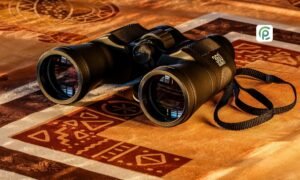
Zooming in to see the details is amazing. In school, the students were going to use a microscope for the first time to look at the cells in a yellow onion. I’d never used the specific microscope the teacher had brought out, so it was a bit tricky figuring out which knobs to turn to find the right setting. None of the students knew either, since they’d never used a microscope before.
When I think back to when I was that age—in my early teens, which was in the early 1990s—it was actually a few reruns that aired in the afternoon that drew me in. I remember it was the show Little House on the Prairie, and I actually needed to do nothing every now and then. The time after school and before I had to head to gym class was precious—eating, studying, packing, and getting ready to go. So, an hour in front of the TV wasn’t exactly a great use of my time. Or maybe I’d bake muffins. I love muffins—especially chocolate, raspberry, or lemon ones.
So, what can we do to understand the amazing benefits of staying focused? Is it really that hard? Yes, for many people, it is exactly that—a real challenge—and I’m not even talking about those with ADHD, ADD, or other diagnoses. At the school where I work, there are many students with these diagnoses, so I’m a big help in the classrooms, allowing the teacher to focus on their main task: teaching.
How easy can it be? How hard can it be? Should we reframe the questions surrounding focus and maintaining concentration? Perhaps the questions should be asked differently. Why do we need to stay focused for as long as society demands of us? For many reasons, starting with gaining an understanding of, for example, events, circumstances, relationships, and knowledge.
Life itself is a vast sequence of events in which we learn every day, and through this, we expand our brain’s ability to relate one thing to another. These connections grow, and as they do, we’ll be able to continue our thought processes as one thing leads to another. In other words, focus is something we can build upon and change—perhaps by finding clues that lead to greater awareness of this very concept.
If we start by making a list of things like perfume, the piano, cars, maps, soups, theatre, and glasses, and end up with knitting, making the list even longer will help us learn to find common threads and build on our own experiment. By talking about perfumes and how they’re produced—drawing on our growing knowledge of flowers, trees, spices, and herbs—we can connect that to the piano. The piano, in particular, can be associated with jazz bars, and many people spray on perfume before heading out. The scents blend together, and our senses work in harmony to create memories.
These first two steps, in particular, can be crucial for laying a stronger foundation. The third part involves cars as a means of transportation to get home from the piano bar or piano lesson, where a strongly scented older woman teaches her students. Cars are of great value to us in many ways, even as they contribute to environmental pollution. Maps are needed in the car to find our way, but maps themselves are actually outdated—yet when we plan our trips, we still need to consult them.
Maps change and have been changing throughout the millions of years the planet has existed. We can skip the rest because I got distracted while writing—our sweet cat, Millie, found a black spot on the wall. Her wonderfully soft front paw is trying to touch the spot, which isn’t moving. There, I see once again how this whole business of focus is something we can learn to work with and on. It takes time, and life itself takes time.
Zooming in drains our energy, and maybe that’s what we’re trying to avoid—but why is that? If we flip it around, maybe zooming out is what we need to broaden our perspective, so the whole breaks down into parts. The parts are where we zoom in, and we train our eyes to almost stare ourselves blind at something important and more essential.
Once again, I get distracted while writing because my daughter is talking to me and wondering how she’ll get through the upcoming school day since she’s feeling sick. What should she do? My focus shifts, and I need to give her my attention. Even though she’s an adult, it’s clear that she’s still asking for advice. We all do that, regardless of age or experience. No one can be an expert in every field.
Those pursuing a Ph.D. zoom in on their chosen fields and become deeply knowledgeable within a narrow area. This requires the ability to zoom in while simultaneously asking broad questions to identify which issue is essential.
So, my text is more about zooming in on different areas than about zooming in and simply focusing and maintaining that focus. It’s a broad topic that can be discussed and analysed. This was my contribution to spreading the importance of looking at things from different angles. What do you think?