
X-59 X-Plane Tests Future of Supersonic Air Travel
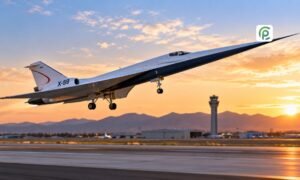
The NASA X-59 supersonic aircraft is part of a long-running effort to solve one of the biggest problems associated with faster-than-sound flight: the disruptive sonic boom. The experimental aircraft has an unusually long nose designed to reshape the shockwave created when an aircraft breaks the sound barrier.
NASA hopes the X-59 supersonic aircraft can turn the loud boom associated with traditional supersonic flight into a quieter, more tolerable sound. That could address a problem that has limited where supersonic passenger aircraft can operate.
The X-59’s unusual appearance is closely linked to its mission. Its elongated nose extends far beyond the cockpit, while the pilot relies on a camera system because the cockpit is positioned unusually far back.
The NASA X-59 programme follows a tradition of experimental aircraft that began in 1947 with the Bell X-1, the first aircraft to break the sound barrier. NASA has since used X-planes to test specific technologies and gather flight data before those ideas are considered for wider aviation applications.
Peter Coen, a NASA veteran who manages the programme, said the approach is to select a limited goal and build an aircraft specifically to demonstrate it through flight testing.
The X-59 supersonic aircraft is focused on one task rather than trying to solve multiple aviation problems at once. According to Coen, limiting the number of objectives helps control the cost of experimental aircraft programmes.
The sonic-boom problem has long affected supersonic aviation. Concorde, for example, was restricted to routes over the sea because of the noise generated by its shockwaves. A successful reduction in the perceived boom could change the possibilities for future supersonic travel.
The NASA X-59 programme therefore represents an experiment in making high-speed flight more compatible with populated areas, with the aircraft’s design centred specifically on reducing the impact of sonic booms.
NASA’s work with the X-59 supersonic aircraft will depend on flight data gathered from its experimental design. The aircraft is intended to demonstrate whether its distinctive shape can reduce the intensity of a traditional sonic boom.
The NASA X-59 programme also reflects the broader purpose of X-planes: test a narrowly defined idea in the air, gather evidence and determine what the technology can achieve.
For supersonic aviation, the central question remains whether quieter shockwaves can make faster-than-sound travel practical beyond the limited routes available to earlier aircraft.