
When Humanity Leads: The Story of Sabahatt Habib
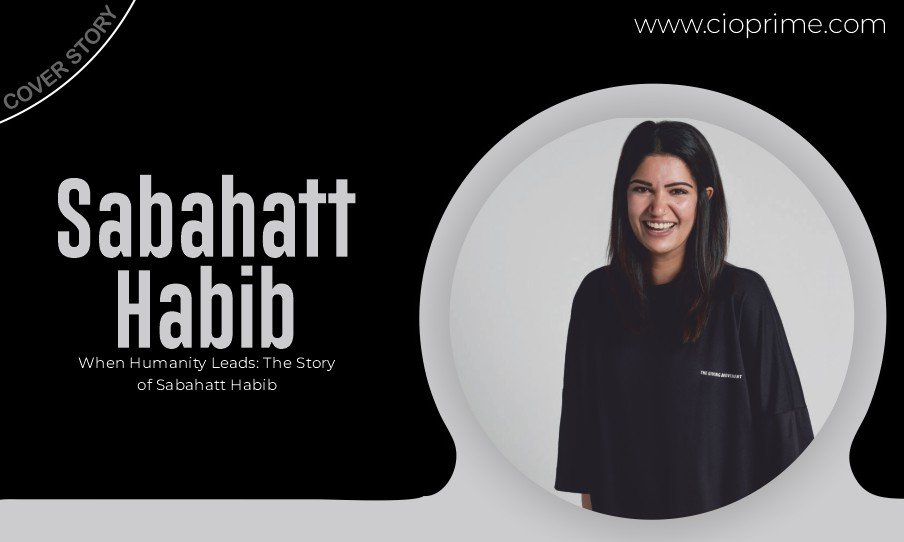
The Calm That Wins
Most leaders turn up the volume. Sabahatt Habib lowers the noise, and the results get louder.
Born and raised in Kenya, she is a third-generation Kenyan of Indian heritage, a lineage that taught her discipline, diversity, and depth. That blend gave her a worldview where humility meets ambition and where community is not an idea but a way of life. She speaks the fluent language of people: dignity, courage, clarity.
“Clarity is compassion,” she says. “When people know what you stand for and what is expected of them, they stop guessing what you mean.”
Her presence is composed, her standards exacting, her philosophy disarmingly simple: lead with humanity, demand with purpose, measure with integrity. It’s the mix that turns teams into movements. In an age obsessed with hacks, she is a habit: show up, be kind, keep promises, do hard things well. That’s the kind of leadership that scales and stays.
Roots
To understand Sabahatt Habib, you have to start where her story began, under the soft Kenyan sun, where the air hums with color and contradiction. Nairobi was her classroom long before any boardroom was. It’s where she learned that strength isn’t loud and kindness isn’t weak.
As a third-generation Kenyan of Indian heritage, she grew up between cultures, blending warmth and wit, empathy and endurance. Friends felt like family; doors stayed open, and stories travelled faster than news. “You learned early that life wasn’t about what you owned, but what you gave,” she recalls.
Those formative years shaped her leadership lens. She saw generosity in people who had little, resilience in those rarely recognized, and grace in those who carried the heaviest loads.
“It taught me that people are complex, but never complicated,” she says. “Everyone wants to be seen, understood, and treated with dignity, no matter who they are.”
And then there was her mother, the quiet constant through every chapter. Long before she understood the meaning of grit or resilience, she saw both reflected in the woman who raised her. “My mother was, and still is, my pillar,” she says softly. “She taught me that grace and strength can coexist, and that you can carry the weight of the world without ever losing your warmth.”
Kenya gave her roots in community; her mother gave her roots in courage. Together, they became the foundation on which everything else was built.
Becoming
When Sabahatt first entered the workforce, there was no grand plan. “I just needed a job,” she admits. Like many, she started where opportunity opened its door, but somewhere between the paperwork, people, and late nights, she began to notice something most overlooked.
She often found herself standing between two worlds: the world of strategy and the world of emotion. And she wondered why they couldn’t coexist. “I couldn’t understand why business talked about performance as numbers on a screen, when performance actually starts with how people feel,” she reflects.
That question changed everything. It pushed her to reimagine what leadership could look like if humanity wasn’t a side note but the center. She began building systems around people, not processes, cultures where empathy wasn’t decoration but design.
Her journey wasn’t without friction. There were moments she questioned her place in environments that valued control over connection, moments she felt misunderstood for leading with empathy. But she learned to stay rooted in intention. “You can’t teach what you don’t live,” she says. “So I decided that whatever room I walked into, I would choose to be the example, not the echo.”
The Philosophy of Leadership
Over the years, Sabahatt Habib’s philosophy has become both her compass and her calm. She doesn’t believe leadership is about hierarchy or authority; it’s about energy, the tone you set in the room, and the standard you hold when no one is watching.
She often says that clarity is the highest form of compassion. “When people know what you expect, they feel safe. Unclear leadership breeds anxiety,” she explains. That belief has shaped everything she builds: clear expectations, honest feedback, and spaces where performance and peace can coexist.
To her, empathy isn’t a soft skill; it’s a structural one. She calls it infrastructure, the foundation that holds everything else upright. “When people feel trusted, they think bigger. When they feel valued, they stay longer. It’s really that simple,” she says.
Her approach is firm but fair, compassionate yet deeply accountable. She believes kindness without accountability creates comfort zones, and accountability without kindness creates fear. “The magic,” she says, “is in the balance.”
What she leads, she leads quietly. She doesn’t command attention; she earns it through consistency. There’s no script, no corporate performance, just an insistence that leadership must feel human. And in that belief, she’s reshaped the way people around her see their own potential.
“People don’t remember the meeting or the metrics,” she smiles. “They remember how you made them feel about their work, and about themselves.”
The Stoic Shift
As her career evolved, Sabahatt began searching for something deeper, a way to stay centered amid the constant movement of modern life. She found her answer not in management books, but in philosophy.
In the quiet hours before the city wakes, she began to immerse herself in the teachings of philosophy and mindfulness, lessons on peace, courage, and compassion. She learned that true strength lies in calm, that authenticity will sometimes make you misunderstood but will always keep you free, and that happiness isn’t something you chase; it’s something you choose. Each idea became a mirror, reminding her that leadership doesn’t begin with others, it begins within.
These teachings slowly shaped her rhythm. She learned to respond instead of react, to hold space for others without losing herself, and to find stillness even in chaos. “You can’t lead people through storms if you haven’t learned to stand still in the rain,” she says.
Now, before every major decision, she pauses, not to delay, but to observe. “Most problems,” she reflects, “are not as urgent as our anxiety makes them feel. When you slow down, truth has room to speak.”
Her Stoic practice isn’t about detachment; it’s about direction. It keeps her grounded, disciplined, and deeply aware, a reminder that strength isn’t in control, but in composure.
And yet, she’s the first to admit that balance isn’t permanent. “Life isn’t perfect, and neither am I,” she says with quiet honesty. “There are still days I lose my rhythm, moments when I have to re-learn and re-remind myself of what I’ve already learned. But I’m aware of my imperfections, and I work on them every day. Awareness is the real growth.”
Resilience Under Pressure
Pressure doesn’t intimidate Sabahatt Habib, it focuses her. She has lived enough life to know that things rarely go as planned, and that leadership is often defined in the quiet seconds between what happens and how you respond.
“There’s no such thing as a perfect moment,” she says. “Some days you make the best decision you can with what you have, and then you stand by it.”
She’s had her share of hard calls, moments where the human thing to do and the right thing for the business didn’t perfectly align. What sets her apart is her ability to sit with discomfort instead of avoiding it. “You can’t lead only when things are easy,” she says. “Your real test is when everything feels like it’s falling apart and people are looking at you for stability.”
Her resilience isn’t loud. It shows up in composure, not control, in being able to listen, reflect, and respond without ego, and to lead through uncertainty without letting fear make the decisions. “When things go wrong, I remind myself that nothing stays broken forever,” she reflects. “You can always rebuild, but only if you stay calm enough to see the next step.”
Over time, she’s learned to find meaning even in the moments that hurt. “The hardest situations have shaped me the most,” she says. “I used to think resilience was about pushing through. Now I know it’s about learning through, letting every challenge teach you something you didn’t know about yourself.”
It’s that perspective that has made her the person people turn to when things get messy—not because she has all the answers, but because she refuses to lose balance while finding them.
The Human Equation
For Sabahatt Habib, the future of leadership isn’t about power, it’s about people. She believes the real competitive edge of any organization lies in what she calls the human equation: empathy, awareness, and adaptability.
“The world changes fast,” she says, “but what doesn’t change is how deeply people want to feel valued.” In every conversation, whether she’s leading teams, mentoring, or building strategy, she starts with one simple question: What does this mean for the people behind it?
To her, empathy is not emotional softness, it’s strategic strength. It helps leaders anticipate challenges before they escalate and build trust that data alone can’t sustain. “When people feel seen, they take ownership. When they’re dismissed, they disconnect,” she explains. “It’s not philosophy, it’s cause and effect.”
She often reminds leaders that business decisions are human decisions in disguise. “We measure performance, but we rarely measure the energy behind it,” she says. “That’s where culture either flourishes or fades.”
Sabahatt’s approach blends intuition with analysis. She values data but uses it to serve people, not replace them. ‘Data shows you what’s happening,’ she says. ‘Thinking beyond it helps you understand why.’
As Chief People & Culture Officer at The Giving Movement, she has turned that belief into architecture, designing cultures that balance humanity with high performance. Under her guidance, People & Culture became more than a department; it became the engine of transformation.
This balance between logic and heart has become her leadership signature, practical enough to drive results, human enough to inspire loyalty. She calls it the sweet spot between head and heart. And it’s here that she believes the next generation of leadership will rise, those who understand that humanity isn’t a liability; it’s the future’s biggest asset.
Lessons in Humility
For all her recognition and accomplishments, Sabahatt Habib remains deeply grounded. Awards and titles make her smile, but they’ve never been her measure of success. “They’re nice reminders,” she says, “but they’re not the reason you do what you do.”
What matters to her is impact, not the kind that fills reports or headlines, but the kind that shapes how people live and lead. She often speaks about a vision far bigger than company walls: a movement to make workplaces more human, more aware, and more peaceful, because when people thrive at work, they carry that energy into the world.
“I always say even something as small as traffic reflects our workplaces,” she explains. “If someone’s had a bad day, they’ll drive aggressively. But if their day was challenging in the right way, the work stretched them, not the environment, they’ll drive calmly. They’ll be kinder on the road. That’s how the energy from one good workplace ripples outward into society.”
Her mission is to help organizations see that revenue and humans go hand in hand. When companies take care of people, people take care of performance, and the world outside becomes a little softer, a little kinder. “I’m not just trying to change HR,” she says. “I’m trying to change mindsets. Because if we can make work better, we can make life better.”
She’s learned that humility isn’t about downplaying your strength; it’s about using it to lift others. “You don’t have to prove your value when you know who you are,” she says. And it’s this quiet confidence that drives her to speak, write, and teach, not for recognition, but to raise collective awareness of what leadership can and should be.
There have been moments that tested that philosophy: times when doing the right thing came at the cost of approval, or when resilience mattered more than recognition. But those moments became her greatest teachers. “Humility doesn’t mean silence,” she reflects. “It means choosing integrity even when no one’s watching.”
Her version of leadership isn’t about being at the front of the room; it’s about being with the people in it. She believes the best leaders are often invisible architects: people who build systems that let others shine. “I don’t want to be remembered for my position,” she says. “I want to be remembered for how people felt around me, and how they carried that feeling into the world.”
Legacy
When asked about legacy, Sabahatt Habib doesn’t talk about milestones or titles. She talks about energy, the kind that begins within workplaces and ripples far beyond them.
Her dream is to spark a global shift in how companies see people, to prove that when humans thrive, so do numbers, communities, and nations. “Work is where most of us spend the majority of our lives,” she says. “If we can make that experience better, more respectful, more human, more real, we can change the energy of entire societies.”
To her, this is more than leadership; it’s a responsibility. Every decision, policy, and conversation in the workplace carries an invisible weight. It shapes how people go home to their families, how they treat others on the road, how they show up in their communities. “The ripple doesn’t stop at the office door,” she says. “It’s all connected.”
As Chief People & Culture Officer at The Giving Movement, she has seen firsthand how humanity and performance can not only coexist but accelerate each other. Her hope is that more companies will adopt that mindset, one that sees revenue and relationships as partners, not trade-offs.
“For me, legacy isn’t about being remembered,” she reflects. “It’s about what continues because of what you’ve built, the mindsets that shift, the cultures that heal, the people who lead differently because of something you said or did.”
She believes true success lies in building systems that outlive you, structures that keep kindness and performance intertwined long after you’ve moved on. “If someone, somewhere, becomes a better leader, parent, or human because of the energy I helped create,” she says, “then that’s the legacy.”
Her story isn’t about climbing ladders, it’s about leaving bridges. Bridges that make it easier for others to rise, to be seen, to belong. And that, perhaps, is the quiet truth behind her success: she doesn’t just build culture or lead teams; she builds people, and through them, a gentler world.
“At the end of it all, I just want to know I made things a little better, for someone, somewhere. That’s it. That’s the legacy.”
Read the full magazine edition: Click Here