
Professor Kelly Mua Kingsly: The Architect of Africa’s Financial Rebirth
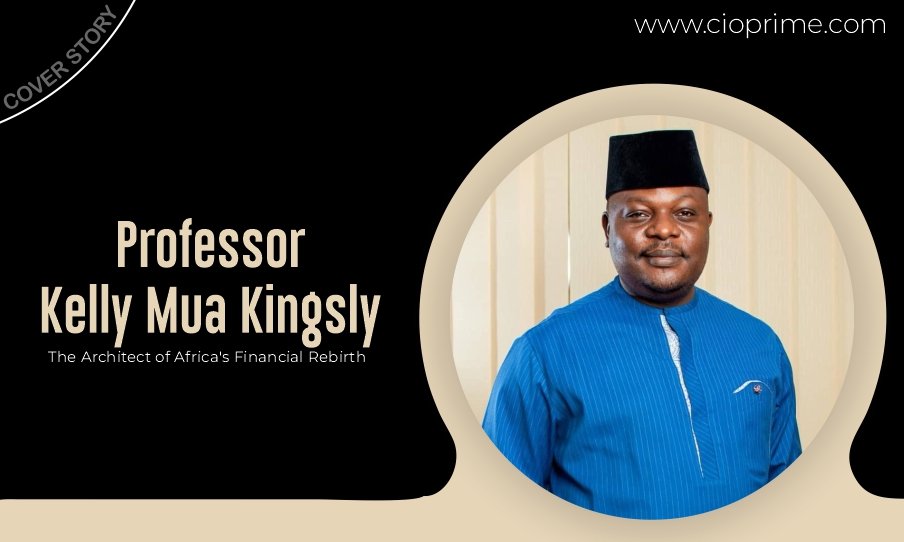
Across Africa, investors often face uncertainty. Markets can be fragile, and confidence is hard won. Without it, even the most promising opportunities struggle to take root. This is the challenge Professor Kelly Mua Kingsly has made his life’s work: creating systems and frameworks that inspire trust and drive lasting economic growth.
Kelly’s journey began in Cameroon, where he combined rigorous academic training with a determination to turn ideas into results. He did not stop at classrooms or theory. From local universities to global platforms like ATIDI and the United Nations, he has consistently translated research into practical solutions that strengthen markets and guide investment decisions.
Clarity and accountability shape his approach. He believes that financial policies and instruments must be accessible, understandable, and trustworthy. This openness naturally builds confidence among investors and governments alike, enabling capital to flow where it is most needed. Throughout the continent, his work has helped stabilise markets, attract long-term investment, and turn uncertainty into opportunity.
Mentorship is another pillar of Kelly’s mission. He nurtures emerging leaders in Forensic finance, business engineering, and economics, teaching them that integrity and measurable results must move hand in hand. His guidance ensures that Africa’s next generation of decision-makers is equipped to carry forward the values of trust and transparency.
For Kelly, trust is not an abstract ideal; it is the lifeblood of progress. His career demonstrates how one person’s vision, combined with clarity and execution, can transform financial systems, inspire confidence, and lay the groundwork for lasting economic growth across a continent.
Origins: Curiosity Turned Commitment
Born in Cameroon, Kelly grew up with a restless curiosity about how systems shape people’s lives. He watched how weak structures created barriers for ordinary citizens, and how policies written in capital cities could ripple across entire communities. That awareness became the spark that defined his career.
He began by studying law and political science at the University of Dschang, where he developed an early understanding of institutions and governance. His pursuit of knowledge did not stop there, as he completed a Master’s in Public Finance. Determined to gain a global perspective, he earned a Master’s in Public Finance at Harvard Kennedy School, MA/MCP-Mid Career In Public Administration from Harvard Kennedy School, later followed by a PhD in Public Policy and Business Management from Charisma University. He emerged as a full professor at Coppertone University and obtained a Doctor of Business Administration in Financial Management from Prime Light Open University. Alongside these milestones, he became a finance engineer, a forensic accountant, and a certified forensic finance investigator. He also achieved credentials as a Project Management Professional, Procurement, Logistics and Supply Chain Manager, amongst many others.
This was not simply the accumulation of credentials for their own sake. Each step was a deliberate investment in tools that would enable him to reform public finance and strengthen governance. His academic journey laid the foundation for a career focused on transformation.
System Change: Building Durable Institutions
System change has been the through-line of Kelly’s public service. Since 2016, he has played a pivotal role in Cameroon’s Ministry of Finance, where he faced the challenge of modernising fiscal systems in a context where inefficiency and opacity had eroded trust.
Overseeing the country’s financial operations, Kelly implemented measures based on transparency and accountability. These reforms were more than just technical adjustments; they restored confidence in the country’s economic management. His leadership mobilised around CFA 1.2 trillion through the domestic capital markets—particularly via the issuance of Treasury bills and bonds on the regional BVMAC stock exchange. For international markets, the country issued a Eurobond worth CFA 332 billion in 2024, providing resources for national development and regional stability.
Professor Kelly’s leadership was further exemplified by his influence, which extended to the regional level, as he collaborated with BEAC and COSUMAF to enhance coordination in Central Africa. By stabilising systems and modernising practices, he showed that institutional reform can create ripple effects beyond borders. This was amplified in his role as the designated representative of the Regional Advisory Commission on financial markets, where he led the following;
1. Regulatory Framework Enhancement: COSUMAF has updated and harmonised regulations to align with international standards, improving the legal framework governing capital markets.
2. Market Infrastructure Development: Initiatives to modernise trading platforms and settlement systems have been introduced, facilitating smoother transactions and reducing settlement risks.
3. Investor Education Programs: COSUMAF has launched campaigns to educate investors about financial products, risks, and market operations, promoting informed investment decisions.
4. Corporate Governance Standards: Enhanced corporate governance guidelines have been established for listed companies, ensuring accountability and transparency in financial reporting.
5. Promotion of Financial Instruments: The introduction of new financial instruments, including bonds and derivatives, has diversified investment options, attracting more participants.
6. Strengthening Supervision: COSUMAF has bolstered its supervisory capabilities to monitor market activities more effectively, ensuring compliance and reducing fraud.
The breakthrough occurred in October 2024, when Kelly was elected as the first Cameroonian Chairperson of the African Trade and Investment Development Insurance (ATIDI), securing 65% of the vote. ATIDI offers political risk, credit, and bond insurance across Africa, underwriting nearly $78 billion in trade and investment. His election was more than just symbolic; it positioned him at the centre of Africa’s financial resilience framework, providing him with a continental platform to strengthen the reforms he advocates at home.
People-Centric Finance: Empowering Communities
Transformative Leadership in Finance
Professor Kelly Mua Kingsly has established himself as a finance engineer who sees numbers not just as statistics, but as tools to transform lives. From his role as Board Chair of ATIDI, driving risk mitigation and investment flows across Africa, to his mandate as Director of Finance Operations for Cameroon, he has consistently mobilised resources to support infrastructure, resilience, and inclusive growth. His strategies always connect back to the communities they serve—whether in debt sustainability, budget reforms, or climate finance.
Institutional Impact
Through the creation of Prima Finance & Investment Micro Merchant Bank, Professor Kingsly has promoted financial inclusion. By partnering with MTN MoMo and CredixCam, Prima enables small merchants, diaspora investors, and households to access deposit services, credit, and savings products that broaden their financial opportunities. His focus on digital banking and innovative deposits shows how finance can be made more accessible.
He has equally founded and nurtured multiple companies in finance, consulting, and development, positioning Cameroon and CEMAC as fertile grounds for innovative funding.
Philanthropy and Community Development
At the core of his legacy is the RECO Foundation, which directs resources to orphans, vulnerable communities, and youth initiatives. Through RECO, Professor Kingsly has created programmes in education, health, and youth empowerment, illustrating that finance is not merely transactional but also transformational.
Additionally, his community engagement in Menchum Division through political, educational, and cooperative platforms reflects a commitment to making finance serve households, farmers, women entrepreneurs, and local businesses.
Education and Knowledge Sharing
As a full professor of finance, an alumnus of Harvard Kennedy School, and a global thought leader, Professor Kingsly continues to strengthen capacity across Africa. He has launched school programmes, alumni engagement initiatives, and training workshops that introduce ESG standards, sustainability reporting, and green finance literacy to ministries, businesses, and young professionals. His ability to connect academia, government, and the private sector makes him a builder of people-centred knowledge.
Global Networks and Partnerships
Professor Kingsly has worked closely with the United Nations, UNDP, AfDB, IMF, EU, and World Bank, leveraging his role as Cameroon’s focal point on ESG, climate finance, and debt resilience platforms. These partnerships have helped to secure financing for climate projects, resilient infrastructure, and sustainable reporting systems. He ensures that global commitments translate into local opportunities.
Philosophy of People-Centric Finance
What sets him apart is his guiding philosophy: finance is not an abstract system but a human-centred force. Every program, negotiation, or investment is rooted in empowering communities—youth, women, SMEs, and the vulnerable—so that prosperity is widely shared.
His work demonstrates that finance, when engineered with people at the centre, can combat poverty, expand opportunities, enhance resilience, and accelerate Africa’s emergence.
Sovereign Innovation: Redefining Africa’s Role
Kelly’s journey is also a testament to sovereign innovation, the capacity to craft financial models that protect national interests while engaging with global systems.
He has represented Cameroon and Africa on international platforms, from serving as Deputy Resident Representative at the United Nations to advising programs at the African Development Bank, UNDP, and the European Investment Bank. His expertise spans climate finance, sovereign debt restructuring, and innovation-driven development.
His board roles, including Quantum Blockchain Technology, Definer, and Prima Finance, demonstrate his ability to balance traditional governance with frontier technologies. In his academic contributions, he has authored more than seven books, now adopted in public policy and MBA programs, alongside over 100 scholarly articles. His teaching at Harvard, Leipzig, Copperstone, and Charisma University bridges theory and practice, preparing future leaders to build resilient systems that reflect Africa’s priorities.
Through this global footprint, Kelly advances the idea that sovereignty is not isolation, but innovation: creating frameworks that allow Africa to engage the world on equal footing.
Recognition and Honours
Kelly’s leadership has gained widespread recognition. He was awarded the Edward S. Mason Fellowship at Harvard Kennedy School, received the IICFIP Leadership Excellence Award, and was named a Knight of the National Order of Valour in Cameroon. These honours emphasise both his technical expertise and the trust he commands among peers and institutions. They reflect not only his past achievements but also his credibility to influence the future.
Impact at a Glance
- €10B+ mobilised in sovereign and climate-aligned capital
- 200,000+ micro-merchants onboarded into digital finance ecosystems
- 7+ books and 100+ scholarly articles on policy and education
- $78B in trade insured under ATIDI leadership
Africa 2050: A Vision for the Future
Kelly’s story is not just about achievements to date; it is about where he is taking Africa’s financial future. His vision for Africa 2050 includes:
- Designing sustainable finance frameworks that link investment to climate responsibility.
- Advancing debt-for-nature swaps that balance growth with environmental protection.
- Developing youth-centred banking systems to integrate Africa’s Gen Z into formal economies.
- Building Afro-entrepreneurial capital ecosystems that nurture indigenous businesses and drive continental competitiveness.
This forward-looking vision positions him as a candidate for global leadership roles, such as Deputy Managing Director of the IMF, Under-Secretary General for Finance at the UN, or African Central Bank Governor. More than titles, these possibilities represent the logical next step for a leader already shaping institutions at national and continental levels.
Professor Kelly’s career is a testament to the fact that leadership is a journey, rooted in systemic change, people-centric finance, and sovereign innovation, and offers a blueprint for Africa’s financial rebirth. He has faced pivotal challenges, delivered measurable breakthroughs, and articulated a vision that reaches decades into the future.
In him, Africa has not just a policymaker or professor, but a leader building durable systems, empowering communities, and pioneering sovereign models that will define the continent’s role in the global economy.
Read the full magazine edition: Click Here