
Jenny White: How a Brain Tumour Survivor Found a New Purpose Through Storytelling
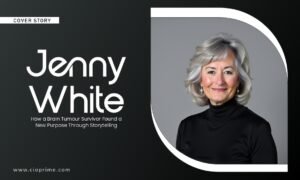
How a retired nurse turned brain surgery, recovery and resilience into stories that challenge healthcare and inspire hope.
Healthcare depends on nurses who can think clearly, act quickly and support people through their most vulnerable moments, yet the people who care for others rarely escape the human cost of illness themselves.
For more than three decades, Jenny White served as a registered nurse and Director of Nursing, helping patients through frightening diagnoses, difficult recoveries and uncertain outcomes. Then, near Christmas in 2023, a brain tumour changed the direction of her own life.
After surgery in January 2024, she woke from a coma unable to walk or speak, with much of her memory gone, facing the unfamiliar task of rebuilding herself. Writing began as a way to communicate when speech therapy moved slowly, but it soon became a source of healing and a new purpose.
Through Jenny White Books Inc., medical thrillers, children’s stories and inspirational speaking, Jenny now draws on her experience as both nurse and patient to challenge healthcare assumptions and remind others that life can hold possibilities even after profound change.
Three Decades in Healthcare
Before becoming an author and speaker, Jenny spent 33 years serving patients as a registered nurse and Director of Nursing across various healthcare settings. Her career exposed her to the fear, uncertainty and difficult decisions that accompany illness, while teaching her how much patients depend on those responsible for their care.
Her experience also influenced her approach to leadership. As a Director of Nursing, Jenny recognised that staff members were among an organisation’s most valuable resources. They needed respect, careful listening and opportunities to contribute to decisions affecting their work. She understood that better patient care depended partly on supporting the people delivering it.
Determined to strengthen her leadership abilities, she returned to school to earn a Master’s degree in Healthcare Administration. Her studies introduced her to leadership theories, connected her with other healthcare professionals and allowed her to exchange ideas about common challenges. She also developed a stronger understanding of quality performance indicators and their application to improving care within her facility.
Over time, Jenny came to value consistency, lifelong learning, resilience and creative thinking. She became more deliberate about setting goals, developing strategies, evaluating outcomes and considering alternative approaches.
These lessons guided her professional life and gave her a practical understanding of effective leadership. They also provided a foundation for the patience and adaptability she would later need when confronting circumstances no management course could fully prepare her for.
A Diagnosis Which Changed Her Life
After retiring from healthcare, Jenny entered a new chapter, expecting to have more time for herself and her family. Near Christmas in 2023, however, she began feeling unwell and suspected she might be having a stroke. She went to the emergency department, where doctors diagnosed a brain tumour.
The news brought fear and uncertainty. As she prepared for surgery, she relied on patience, diligence and prayer. In early January 2024, she underwent an operation that would transform her daily life.
When Jenny woke from a coma, she could neither walk nor speak, and most of her memories had disappeared. She did not even know her own name and struggled to recognise the life she had known before surgery. Basic abilities had to be relearned as she adjusted to an unfamiliar reality.
For the first time in decades, Jenny experienced healthcare from the patient’s side. She understood what it meant to depend on others for assistance with tasks that had previously required little thought. The uncertainty she had witnessed in patients now formed part of her own experience.
Progress was often slower than she hoped. Speech therapy and physical rehabilitation demanded patience, while fatigue and other effects of brain surgery limited what she could accomplish each day. She had to find ways to work around these difficulties and accept that recovery would take time.
The experience gave her a more personal understanding of the frustration that comes with communication difficulties, the uncertainty surrounding treatment and the emotional consequences of losing familiar abilities. These insights would later inform her fiction, bringing together decades of professional knowledge and the vulnerability of someone who had become a patient herself.
The First Words Which Opened a New Door
During speech therapy, Jenny and her therapist hoped for faster progress. When speaking remained difficult, her therapist suggested that she try writing down her thoughts to see whether she could communicate through words on a page.
The suggestion led to an unexpected discovery: Jenny could write.
Initially, writing gave her a practical way to communicate with others. It also allowed her to express emotions and frustrations that were difficult to convey through speech. As she continued, the activity became more personal, helping her organise her thoughts and reconnect with her imagination.
With many memories gone, Jenny began inventing adventures in her mind, much as a five-year-old might imagine stories before falling asleep. These imagined worlds entertained her during rehabilitation and gave her something to anticipate when her energy was limited.
When she regained some stamina, she began putting those ideas on paper. Completing stories brought a sense of achievement and helped restore her self-esteem while she was still learning to speak and walk.
Writing had become more than a communication exercise. It offered enjoyment, emotional expression and an opportunity to discover abilities she had never previously considered developing. What began with a speech therapist’s suggestion gradually introduced Jenny to an entirely new creative pursuit.
Learning to Turn Experience into Stories
Jenny initially gravitated towards children’s books because they were shorter, simpler to develop and could communicate clear messages. Their imaginative possibilities suited her interests and allowed her to work around fatigue and rehabilitation appointments.
As her confidence grew, she developed a character named Abbey Roberts, a registered nurse working in an intensive care unit. Jenny gave Abbey the same brain tumour diagnosis she had experienced, allowing the fictional nurse to confront surgery, recovery and the challenge of returning to work.
Abbey struggles with memory loss, fatigue, changes in her abilities and the difficult task of rebuilding professional confidence. These experiences draw on Jenny’s personal journey, providing a way to explore emotions that remained difficult to process.
Through Abbey, Jenny could examine what happens when familiar skills become unreliable and ordinary routines require considerable effort. Developing the character also allowed her to turn personal difficulties into a narrative other people could follow and understand.
Enjoying the process, however, was only the beginning. Jenny needed to learn how fiction worked, from character development and plot structure to revising a manuscript. She enrolled in online writing courses that allowed her to study independently around her rehabilitation schedule.
One lesson encouraged her to write about something familiar. Jenny had two strong foundations: 33 years of nursing experience and firsthand knowledge of recovering from brain surgery after waking from a coma.
Combining these perspectives led her towards medical fiction. She understood the hospital environments in which her stories would unfold, the pressures faced by nurses and the decisions that could affect patient care. She also knew what it felt like to become a patient and adjust to lasting changes.
As she learned the techniques of novel writing, she found it easier to organise plots and develop her ideas. Revisions remained an essential part of the process, but she had discovered a way to create fiction that could entertain readers while raising questions about healthcare.
Choosing Her Own Publishing Path
Learning to write was one challenge; understanding the publishing industry was another. Jenny had to familiarise herself with literary agents, manuscript submissions, publisher requirements and the process of bringing a book to market.
Traditional publishing generally involves securing a literary agent who presents a manuscript to publishers. Jenny explored this route but found the process lengthy and uncertain. While managing rehabilitation and fatigue, she felt she had limited time and energy to spend pursuing agents and waiting for decisions.
She eventually chose self-publishing because it offered greater control over her stories, budget and timeline. The decision allowed her to work according to her circumstances and determine which projects she wanted to release.
That independence also brought financial responsibilities. She needed to understand production costs, publishing requirements and the decisions involved in preparing a book for readers. She also explored AI-generated illustrations for her children’s stories, an approach that influenced her publishing choices.
Self-publishing proved suitable for Jenny, although she recognises that the route may not work equally well for every author. Her experience reinforced the value of understanding an industry before deciding how best to enter it.
Building a business also required her to balance creative ambitions with family time and personal relationships. Jenny describes becoming more inward-looking after surgery and developing a strong preference for working quietly. Her determination to pursue this new career sometimes made it difficult for her spouse and family to understand how deeply invested she had become in the project.
For Jenny, establishing a new career has therefore involved practical decisions as well as personal adjustments. She has had to consider financial limitations, energy levels, relationships and the time needed to recover.
Building Jenny White Books Inc.
As Jenny’s writing developed, it grew into a business with several connected ventures, each offering a different way to reach people.
The first focuses on children’s books, including the trademarked Molson and Jenny Adventure series. Jenny wants these stories to encourage imagination, support early reading and help children develop a positive relationship with books. She shares them with daycares in her local community, with support from service clubs and funding groups, hoping to strengthen literacy and encourage reading between children, parents and caregivers.
The second area centres on adult medical thrillers, particularly the Abbey Roberts RN series. These novels draw on her nursing background and her understanding of healthcare from a patient’s perspective. Two books have been published, and she is working on the third.
The third venture is keynote speaking. Jenny is undertaking speaker training to develop talks about her recovery journey and practical strategies for people facing trauma, uncertainty or major life changes.
The fourth is her planned television programme, Inside the Story: Confidential, in partnership with the McCord List Network. She has also considered a fifth venture for the future: a podcast exploring healthcare challenges around the world.
Although these activities serve different audiences, they reflect Jenny’s interest in sharing experiences, encouraging meaningful conversations and finding new ways to contribute to her community.
The Abbey Roberts Series: Medical Thrillers with a Purpose
Jenny’s medical thrillers draw on the hospital environments she knew as a nurse and the pressures, decisions and concerns associated with patient care.
Her debut novel, The Triggering Scent, was published on 27 March 2026 through FriesenPress. It introduces Abbey Roberts, a registered nurse working in an intensive care unit who is attempting to return to work after brain surgery.
Abbey discovers that the neurosurgeon who botched her operation is now working in her city and in her ICU. The surgeon is struggling with methamphetamine addiction, and Abbey faces a difficult choice: she must stop him before he harms another patient, even if doing so could destroy her own career.
The story follows Abbey as she adjusts to a changed sense of normality, managing fatigue, memory loss and difficulties with executive functioning while trying to regain her professional confidence.
Jenny draws on her own experiences to portray Abbey’s emotional struggles, while also examining problems she encountered during her nursing career. Her novels address workplace violence, short staffing, tight budgets and superbugs, bringing difficult healthcare questions into stories that readers can engage with.
Her second book, Terror at the Manor, explores the realities of nursing homes. The third instalment, The Final Consent, is in development and will address informed consent and body donation.
For Jenny, medical thrillers offer a way to combine suspense with subjects that deserve greater attention. She wants readers to finish her books asking questions such as, Could this happen to me? and What would I do if it did?
She hopes those questions will encourage discussion among book clubs, healthcare professionals, patients and decision-makers. By presenting difficult situations through fictional characters, she aims to give people an accessible starting point for examining concerns that might otherwise remain unspoken.
Giving Nurses a Voice Through Fiction
One of Jenny’s central aims is to remind readers that healthcare workers are people, too. Nurses bring professional knowledge, experience and commitment to their work, but they also face personal struggles, difficult days and the emotional demands of caring for others.
She wants her characters to reflect that humanity. Rather than presenting healthcare professionals as flawless figures, she gives them responsibilities, weaknesses and problems of their own. This allows readers to consider how individual circumstances affect people working in demanding environments.
Retirement has also given Jenny greater freedom to speak about concerns within healthcare. After decades in the profession, she believes certain practices and working conditions deserve public attention. Fiction provides an avenue for examining these issues while advocating for nurses and encouraging people to question established systems.
Her concerns include the balance between financial priorities and the resources needed by frontline teams. She believes budgets and executive bonuses can receive greater attention than staffing levels, working conditions and the support necessary to deliver safe care.
Jenny advocates for leadership that examines best practices across healthcare systems, considers evidence and remains willing to change established approaches when improvements are needed. For her, patient safety, quality outcomes and compassionate treatment must remain central to decisions.
Her dual perspective gives these concerns a personal dimension. She understands the responsibilities nurses carry, along with the uncertainty patients experience when they depend on others for treatment and recovery.
Through her novels, Jenny hopes to bring these realities into public conversation. Her aim is to highlight nurses’ expertise, question practices that may put patients at risk and encourage more thoughtful discussion about healthcare delivery.
Writing for Children and Finding Joy in Creativity
Children’s books offer Jenny a different creative experience from her medical thrillers. Their shorter format, imaginative possibilities and clear messages allow her to introduce young readers to the pleasure of stories without the complex themes found in her adult fiction.
The Molson and Jenny Adventure series is closely connected to her community involvement. By sharing books with local daycares through service clubs and funding groups, she hopes to encourage early literacy and help parents and caregivers establish meaningful reading routines.
Jenny also uses AI-generated illustrations to bring her stories to life. This gives her flexibility when developing images for her adventures and has influenced her decision to self-publish.
Although children’s books and medical thrillers reach different audiences, both allow Jenny to explore human experiences through fiction. Her younger readers encounter imaginative adventures, while adult audiences are invited to examine healthcare practices and human behaviour.
Working across genres has allowed her to develop new creative skills and discover interests she had never anticipated before her illness. The satisfaction of completing a story remains an important part of her life as she continues to balance writing with rehabilitation and other responsibilities.
From Podcasts to Keynote Speaking
After publishing her first book, Jenny began participating in podcasts and interviews. She noticed that people connected with her journey, particularly the transition from waking from a coma to rebuilding her abilities and pursuing a new career.
The response encouraged her to explore speaking as another way to share what she had learned. She is undertaking keynote speaker training to prepare talks about trauma, resilience, recovery and personal reinvention.
Her message centres on hope, planning and persistence. She encourages people to identify their aspirations, develop a vision for the future, take small steps and find an approach that suits their circumstances. She also stresses the importance of acquiring new skills, remaining flexible and allowing progress to happen at its own pace.
Jenny has developed a self-help workbook called THRIVE, available through Amazon and as a digital file on her website, jennywhite.ca. The self-directed workbook is intended to be affordable and helps people reflect on how they would like their future to unfold.
Her speaking work draws on the practical demands of rehabilitation. Recovery required her to set goals, accept assistance, learn new skills and find ways to manage fatigue and other difficulties. She wants audiences to consider how similar approaches might help them navigate their own circumstances.
Jenny recognises that people can feel dissatisfied with their lives without knowing where to begin. Her advice is to identify what matters, establish a direction and take manageable steps towards change.
For her, public speaking offers another avenue for service, allowing her to share insights gained as a nurse, a patient and someone who has had to rebuild her daily life.
Inside the Story: Confidential
Jenny’s participation in podcasts and interviews led to an unexpected opportunity. After being interviewed by someone from Hollywood, she was approached about hosting a television programme profiling extraordinary people and examining the experiences that influenced their lives.
The proposed programme, Inside the Story: Confidential, is being developed in partnership with the McCord List Network. According to the programme information Jenny provided, it is intended to reach 117 million homes, with a launch planned for autumn 2026.
The show is expected to feature people whose experiences and achievements may offer valuable lessons to audiences. Through their decisions, challenges and responses to adversity, Jenny hopes viewers will discover perspectives they can apply to their own lives.
The concept has a personal connection to her journey. Illness forced her to reconsider her future, and rehabilitation introduced her to abilities and ambitions she had never anticipated. She hopes the programme will give others an opportunity to share their experiences and encourage viewers to recognise possibilities in their own circumstances.
The television project adds another dimension to Jenny White Books Inc., complementing her children’s books, medical thrillers and speaking work. She is also considering a podcast dedicated to healthcare challenges worldwide, which would allow her to return to a subject that occupied much of her nursing career.
These plans reflect her continuing interest in communication, creative work and public engagement. Although her professional activities have expanded beyond nursing, service remains a common thread.
Leadership, Family and the Work of Reinvention
Jenny believes effective leaders set an example, remain open to new possibilities and question established practices when improvement is necessary.
For her, leadership requires a strong value system, respect for other people’s perspectives and a commitment to lifelong learning. It also calls for the courage to attempt something unfamiliar, even when the outcome is uncertain.
These principles have become especially relevant as she develops a career she had never imagined before her illness. She has had to learn writing, publishing, illustration and speaking while adjusting to the lasting effects of brain surgery.
The process continues to bring physical and emotional difficulties, including fatigue, exhaustion, migraines, memory problems and changes in emotional well-being. Jenny has had to find practical ways to manage these challenges while allowing herself time to rest.
Her recovery has also affected her relationships. She describes becoming more inward-looking and preferring to work quietly, which can make it difficult to balance professional ambitions with time spent with her spouse and family. Those closest to her may not always understand the intensity of her desire to pursue this new direction.
Her experience has taught her that a major life change affects more than employment. It can alter routines, relationships, energy levels and a person’s sense of identity. Moving forward therefore requires determination alongside an honest understanding of personal limits.
Jenny encourages people considering a major change to identify their interests, continue learning, take small steps and look for joy along the way. She also acknowledges that it is impossible to satisfy everyone, and that pursuing a meaningful ambition sometimes involves accepting differences in opinion.
Her approach to leadership continues to rest on accountability, adaptability and respect for the people involved. These principles now guide her creative ventures as well as her understanding of professional life.
A Different Measure of Success
Jenny measures achievement less through awards or formal recognition than through her ability to keep working towards a dream. When asked about her accomplishments, she places particular value on getting up each day and continuing despite the challenges she faces.
For her, success involves trying, persevering and remaining consistent when circumstances make progress difficult. Her journey from a coma to becoming an author, speaker and prospective television host has introduced her to opportunities she could not have anticipated before surgery.
She spent 33 years serving others through nursing. Today, her work continues through children’s books, medical thrillers, speaking and a television project in development.
Each venture has a distinct objective. Her children’s stories encourage literacy and imagination; her medical thrillers raise questions about healthcare; her speaking work offers strategies for navigating adversity; and her proposed programme will provide a platform for people to share their experiences.
Jenny hopes to be recognised as a change agent who is truthful, transparent, kind and willing to discuss uncomfortable experiences when doing so might help others. She wants to pursue excellence while remaining open to learning and personal growth.
Her definition of achievement is closely connected to contribution. Rather than relying on external recognition, she values the opportunity to keep creating, share what she has learned and make a meaningful difference in other people’s lives.
The Stories Still Waiting to Be Told
Jenny intends to continue the Abbey Roberts RN series; with many more healthcare stories she wants to explore. Alongside work on The Final Consent, she plans to develop her speaking career and progress with Inside the Story: Confidential.
She also hopes to create opportunities for people navigating trauma, recovering from difficult experiences or seeking a more meaningful future. Her nursing background and experience as a brain tumour patient give her insights into both the practical demands of healthcare and the personal effort involved in rebuilding daily life.
Readers can find The Triggering Scent, including audiobook and e-book editions, through jennywhite.ca. The debut novel was published by FriesenPress and is also listed through Amazon. Information about her speaking work is available at speakerjennywhite.ca.
Jenny also shares updates through Facebook, Instagram and X.
Her future plans span fiction, children’s literature, public speaking and television. Each provides an opportunity to communicate ideas, explore human experiences and encourage people to reflect on what difficult circumstances can teach them.
A Life Reimagined Through Hope
Jenny White’s journey raises a question that extends beyond recovery: what remains possible when illness changes so much that even the most familiar parts of life must be relearned?
After waking from a coma unable to speak or walk and with most of her memories gone, she faced the difficult task of rebuilding basic abilities. Writing offered an unexpected starting point, eventually leading her towards a career that brought together creativity, healthcare knowledge and a desire to help others.
Her progress has involved uncertainty, setbacks and continuing physical and emotional challenges. Determination has played an important role, alongside patience, support, education and the willingness to recognise her limits.
Through Jenny White Books Inc., she now pursues several ventures that reflect her interests and experiences. Her medical thrillers examine difficult healthcare questions, her children’s stories encourage early reading, and her speaking work draws on the lessons she gained during rehabilitation. Her television project offers another opportunity to bring people’s experiences to a wider audience.
One of the most significant aspects of her story is the continuation of a commitment to service after her nursing career ended unexpectedly. The setting has changed, yet she remains interested in helping people, communicating difficult ideas and encouraging others to consider different possibilities.
Jenny’s advice is simple: identify what matters, keep learning, take small steps and make room for joy. A difficult experience may force someone to reconsider the future, but it can also reveal interests and abilities that might otherwise have remained undiscovered.
For Jenny, writing provided the first step towards that discovery. The work she continues today draws on the knowledge of a nurse, the vulnerability of a patient and the determination of someone who remains willing to try something new.