
Hakimuddin Ali – Driving Growth, Transformation and Sustainable Leadership Across Emerging Markets
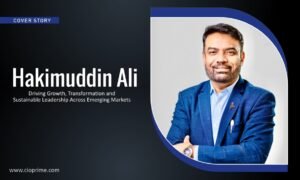
In a world where markets are changing faster than ever, leadership requires more than business knowledge. It demands the ability to understand people, recognize opportunities, navigate uncertainty and build organizations that can sustain growth over time. Hakimuddin Ali has built his leadership journey around exactly these principles.
As President for the Middle East, Türkiye and Africa at RHI Magnesita, Ali leads across a diverse and rapidly evolving region where industrialization, infrastructure development and changing customer expectations are creating new opportunities. His experience across Tata Steel, Calderys, Imerys and Dalmia Cement has given him a strong understanding of operations, transformation and the realities of managing businesses across different markets.
A Leadership Journey Rooted in Experience
Ali began his career close to operations at Tata Steel, an experience that provided him with a strong foundation in execution and discipline. As his career progressed, he took on responsibilities across industries and geographies, gaining a broader perspective on how complex global organizations operate.
His journey has been particularly defined by transformation. Whether the objective was scaling growth or turning around underperforming operations, Ali learned that sustainable results require a combination of decisive leadership, resilience, disciplined execution and strong teams.
One of the most defining experiences of his career came during his time with Dalmia Cement. During the COVID 19 pandemic, he was entrusted with the responsibility of reviving a shut cement plant. Working with his team, he helped transform a deserted site into a fully functional and branded cement plant within 11 months.
The achievement was not simply an operational success. It demonstrated what can happen when people are united around a clear objective and given the confidence to make decisions.
For Ali, transformation is ultimately about people. A strategy provides direction, but capable and motivated people are what turn that strategy into reality.
Finding Opportunity in Emerging Markets
Ali has always been attracted to the complexity and potential of emerging markets. Early in his career, he realized that some of the most interesting business challenges were found in markets that were still developing.
These were markets where infrastructure was being built, industries were expanding and demand was creating new opportunities.
Rather than viewing these challenges as obstacles, Ali saw them as opportunities to build something meaningful.
His approach to emerging markets combines commercial ambition with organizational development.
For him, growth is not simply about identifying an opportunity on a spreadsheet. It is about developing the talent, capabilities and relationships required to capture that opportunity successfully.
This philosophy has become particularly relevant in his current role at RHI Magnesita, where he oversees the Middle East, Türkiye and Africa.
These markets present different economic conditions, cultures, customer expectations and regulatory environments. Successfully leading across them requires a balance between global consistency and local understanding.
Global Standards, Local Understanding
One of Ali’s strongest leadership principles is the importance of remaining close to the customer.
RHI Magnesita serves industries such as steel and cement where production facilities cannot afford unnecessary downtime. Understanding the customer’s operational reality therefore requires leaders to remain connected to the field rather than managing exclusively from a distance.
At the same time, Ali believes global standards should remain non negotiable.
Safety, quality and ethical standards must remain consistent, while the way an organization communicates, builds relationships and executes its strategy should reflect the local market.
This balance allows organizations to remain globally aligned while staying locally relevant.
Ali also believes that emerging markets require decisiveness. Markets can move quickly and leaders cannot always wait for perfect information before making a decision.
His approach is to make the best decision possible with the information available while remaining open to learning and adjusting course when circumstances change.
Building Growth That Lasts
For Ali, sustainable growth means creating a business that remains strong even when circumstances change.
Currency fluctuations, regulatory developments, economic uncertainty and changes in leadership can all affect businesses operating in emerging markets. Sustainable organizations therefore need strong foundations.
Ali believes those foundations include a strong local manufacturing and supply footprint, meaningful customer relationships, a strong talent pipeline and financial discipline.
But perhaps the most important element is localization of capability.
Building teams, plants and supply chains that are genuinely rooted in the market allows an organization to create long term value rather than simply entering a market and serving it from outside.
This philosophy is reflected in RHI Magnesita’s approach to innovation and transformation.
Through initiatives such as 4PRO, the organization is responding to changing industrial requirements and the growing expectations of customers. Built around the principles of planet, people, performance and partnerships, the approach extends beyond traditional refractory products and services.
Recycled products, robotics, systems, sensors, digital solutions, decarbonization initiatives and green steel solutions are becoming increasingly important.
The future of industrial leadership will belong to organizations that can combine innovation with operational excellence.
Technology as a Driver of Competitiveness
Technology is playing an increasingly important role in improving operational performance across emerging markets.
Ali believes that emerging markets should not automatically be considered behind in digital adoption. In some cases, the absence of extensive legacy infrastructure can actually allow organizations to adopt new technologies more quickly.
At RHI Magnesita, digital transformation is supporting areas such as supply chain visibility, safety monitoring, predictive maintenance and customer service.
Digital monitoring of refractory linings and data driven solutions can provide customers with deeper insights into furnace performance and lifecycle optimization.
This represents an important evolution in the industry.
Instead of simply providing materials, companies can increasingly become technical and sustainability partners that help customers improve their overall operations.
Empowering People to Drive Transformation
While technology is an important part of modern business, Ali believes people remain at the center of every successful transformation.
His leadership approach begins with the understanding that even the strongest strategy will have limited value without the right people to execute it.
He focuses on developing local talent and giving teams clarity, trust and autonomy.
At RHI Magnesita, open decision making, respectful collaboration and cross functional teamwork help create a performance driven and accountable environment.
Ali believes leaders should not simply manage outcomes. They should build organizations that are capable of sustaining those outcomes.
His experience at Dalmia Cement reinforced this philosophy. Reviving a shut plant during a global pandemic required the team to overcome extraordinary external challenges. By empowering local leaders and creating a shared sense of responsibility, the organization was able to move forward despite the circumstances.
This experience continues to influence his approach to leadership today.
Preparing for the Next Industrial Chapter
Looking toward the future, Ali sees several trends that will influence RHI Magnesita and the broader refractory industry.
The decarbonization of steel and cement production will create new technical requirements. Continued industrialization and infrastructure investment across the Middle East and Africa will generate new opportunities. Customers will increasingly expect suppliers to contribute technical expertise and sustainability solutions rather than simply supplying materials.
These developments will require leaders to become more adaptive.
The ability to operate confidently amid uncertainty while maintaining a clear long term strategy will become increasingly important.
For Ali, sustainability and operational excellence are closely connected.
Customers in steel, cement and glass are facing increasing pressure to improve efficiency and reduce emissions. Refractory solutions can contribute to furnace efficiency and therefore play an important role in supporting these objectives.
At the same time, safety, quality and reliability remain fundamental.
In heavy industry, trust is built through consistent performance and responsible business practices.
Responsible leadership is not only an ethical responsibility. It is also fundamental to long term commercial credibility.
Measuring Leadership Beyond Numbers
Financial performance remains an important measure of business success. Revenue growth, margins and market share provide clear indicators of performance.
But Ali believes leadership should be measured through other indicators as well.
Are local leaders being developed?
Are customers strengthening their relationships with the organization?
Is the safety record improving?
Can the organization continue to perform successfully without depending on one individual?
These questions reflect his broader understanding of leadership.
The true test of a growth leader is what the organization looks like after that leader has moved on.
If the business has developed capable leaders, strong customer relationships and sustainable systems, then the leader has created something that can continue to grow.
A Legacy Built on People and Sustainability
Ali’s advice to emerging market leaders is shaped by his own experiences.
He encourages leaders to spend meaningful time on the ground before attempting to introduce change. Understanding local employees, customers and market conditions is essential before imposing new frameworks.
He believes leaders should be patient about the pace of institutional change but remain impatient about standards.
Safety, ethics and quality should never become negotiable simply because the business environment is challenging.
Above all, he believes in investing in people.
Markets will change. Currencies will fluctuate. Regulations will evolve. Economic conditions will shift.
But a strong, capable and well developed local team can remain one of the most durable assets an organization can build.
This is also the foundation of the legacy Ali hopes to create through his leadership at RHI Magnesita.
He wants to build something durable rather than simply create a temporary period of growth. His vision is to help create an organization across the Middle East, Türkiye and Africa that is stronger, more locally rooted and more capable of sustaining long term success.
For Ali, the greatest achievement would be to see the leaders he has developed take on greater responsibilities and continue strengthening the markets they serve.
His leadership story is ultimately about building for the future: creating growth that lasts, developing people who can lead, embracing innovation and ensuring that success becomes institutional rather than dependent on one individual.