
Dilip Sinha: Translating People Strategy into Industrial Performance
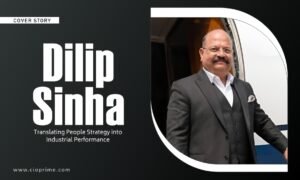
How a Seasoned HR Leader Drives Workforce Productivity, Leadership Development and Organisational Growth Across Industrial Sectors.
A company can invest in new machinery, expand its factories and set ambitious production targets, yet its success still depends on the people who keep everything moving. When skills fall short, leadership struggles to adapt or employees lose sight of their purpose, even the strongest business plans can lose momentum.
This is where human resources takes on a greater responsibility: connecting organisational ambitions with the people expected to bring them to life.
For Dilip Sinha, President & Chief Human Resources Officer at Super Smelter Ltd., this connection has formed a career spanning more than 28 years across steel, power, mining, manufacturing and retail. His experience in workforce productivity, leadership development, organisational transformation and industrial relations reflects a consistent understanding: sustainable business performance depends on aligning people, capabilities and operational priorities.
Across his career, Dilip has worked on workforce planning, productivity improvement, leadership pipelines and digital HR transformation. His experience offers a perspective on how HR can contribute to industrial growth while building workplaces where employees have the skills, support and opportunities to perform effectively.
“People are not merely an organization’s most valuable asset; they are the force that converts strategy into performance.”
The Early Years
Dilip began his professional journey in 1996, after studying History at St. Stephen’s College, University of Delhi, and completing his MBA (PGDM) at Xavier Institute of Social Science in India. His first role at BEML introduced him to the practical demands of organisational life, where business priorities, leadership decisions and employee capabilities intersect every day.
Over nearly 9 years at BEML, he served as Executive Assistant to the Director of Human Resources before becoming Head of HR for Marketing. These responsibilities gave him an early understanding of how people management connects with the wider business. Supporting leadership decisions and addressing workforce requirements also helped him recognise the influence HR could have on careers, workplace culture and organisational performance.
That connection became the foundation of his professional philosophy. Dilip was drawn to human resources because it offered an opportunity to influence business outcomes while helping people develop their careers and leadership abilities. As his experience grew, he began to view HR as a strategic partner in growth, transformation and long-term sustainability.
“When people understand the purpose, possess the capability, and feel empowered to perform, extraordinary organizational outcomes become possible,” he believes.
The idea would acquire greater significance as he moved through different industries, where the challenges varied but the relationship between people and performance remained central.
From Tanzania to International Leadership
In 2005, Dilip moved to Tanzania to become Head of HR for Africa at Sumaria Group. He remained in the position until 2008, gaining experience in an international environment that demanded an understanding of different cultures, working practices and organisational expectations.
Managing people across countries requires leaders to balance common business objectives with local realities. It also calls for an ability to build trust among teams whose experiences and professional environments may differ considerably. This period broadened Dilip’s understanding of workforce management and prepared him for roles involving increasingly complex organisations.
In 2008, he joined Future Group as Chief People Officer. His experience in retail exposed him to a different set of business pressures, where employee performance, customer experience and operational efficiency are closely interconnected.
The experience reinforced the importance of aligning people practices with the demands of the business. Recruitment, development, performance management and workplace culture must support the organisation’s daily operations while preparing employees for changing responsibilities.
Dilip’s experience then took him into an international business environment. At Astarc Group, where he served as Global HR Head, he worked across India, the United States, Africa and Indonesia, gaining a broader perspective on managing people and organisational needs across different markets and cultures.
During this period, he led the people integration associated with Astarc Group’s acquisition in Chicago. Integrating a business involves more than bringing operations together. Employees must understand their responsibilities, leadership structures must become clear, and organisational practices must support the transition.
His work at Astarc strengthened his experience in multicultural workforce management and cross-border integration, capabilities that would prove valuable in the industrial sector.
In 2014, Dilip became Group CHRO and Head of Projects at Prism Johnson Ltd., a position he held until 2016. He then joined Leanbox Logistics Solutions as a member of its Corporate Management Committee, serving from 2016 to 2017.
Together, these roles widened his exposure to business management and cross-functional decision-making. They also reinforced a lesson that would guide his later work: people strategy delivers greater value when it is closely connected to the decisions that determine how an organisation operates and grows.
Understanding Workforce Performance at Reliance Retail
In 2017, Dilip took charge of human resources at Reliance Retail Ltd., where his responsibilities covered major retail and supply-chain projects across e-commerce, fashion, digital, grocery and jewellery.
He was responsible for competency models, organisational development frameworks and performance management systems, while also overseeing employee relations and industrial relations governance across nationwide operations.
The breadth of the role required an understanding of different functions and the capabilities each one needed. Competency models helped clarify expectations, while organisational development and performance management provided ways to assess whether employees and teams were moving towards business goals.
This experience added another dimension to Dilip’s understanding of HR. The same principles could apply across industries, but their practical use depended on the people, operating conditions and objectives of each business.
His next move would take him into steel manufacturing, where the connection between workforce capability and operational performance becomes particularly visible.
When Workforce Strategy Meets Industrial Growth
When Dilip joined JSW Steel Ltd. in 2019, he stepped into an environment where business growth and people strategy were closely linked. As production capacity expanded and operational demands grew, building the right workforce and strengthening organisational capabilities became increasingly important to sustaining that growth.
He designed the human-capital blueprint to support JSW Steel’s planned expansion from 5 million tonnes per annum to 10 million tonnes per annum. The work involved preparing workforce structures, developing capabilities and strengthening leadership so that the organisation could support its future requirements.
He also led initiatives in competency modelling, succession planning and capability academies to strengthen the leadership pipeline. These efforts addressed a key challenge of organisational growth: as operations expand, companies need leaders who can take on greater responsibilities and make sound decisions closer to the ground.
Employee relations and industrial relations governance formed another part of his responsibilities across complex, multi-location operations. In industrial businesses, workforce relationships influence the stability of daily operations, making clear communication, consistent leadership and an understanding of employee concerns essential.
One of his major assignments involved integrating the Bhuj and Sambalpur units, with capacities of 1 million tonnes per annum and 5 million tonnes per annum respectively. The integration required the alignment of policies, culture and workforce arrangements across the two operations.
At the same time, productivity improvement became a measurable outcome of his work. Through job redesign and digital interventions, productivity rose from 400 to 700 tonnes per employee per year, according to his professional record.
Then came the COVID-19 pandemic, which placed extraordinary pressure on organisations to protect employees and maintain essential operations. At JSW Steel, Dilip’s work contributed to uninterrupted operations, with zero production loss during the crisis.
The experience illustrated how workforce planning, leadership and operational preparedness come together during periods of uncertainty. Business continuity depends on systems and processes, but also on people who understand their responsibilities and can respond effectively when circumstances change.
For Dilip, this perspective is closely tied to his understanding of transformation. He emphasizes that sustainable transformation occurs when change becomes an integral part of an organization’s operating culture rather than remaining a time-bound project.
“Sustainable transformation happens when change becomes part of the organization’s operating culture rather than a time-bound project.”
Raising Capability Across Aluminium and Mining
In 2022, Dilip joined Vedanta Ltd. as Sector CHRO, taking responsibility for HR priorities across major industrial operations.
His work included supporting the turnaround of aluminium operations, with capacity increasing from 2 million tonnes per annum to 3 million tonnes per annum alongside improvements in manpower productivity and skill mix.
He also led workforce design and cost realignment for an alumina refinery expansion from 2 million tonnes per annum to 5 million tonnes per annum. The task required careful consideration of the workforce structures and capabilities needed to support higher production.
Mining presented a different set of challenges. Dilip was involved in operationalising coal and bauxite mines with a combined capacity of more than 40 million tonnes per annum, while strengthening safety practices and supervisory capabilities.
These responsibilities brought productivity, technical capability and employee safety into close focus. In industrial settings, improvements in output must go hand in hand with the skills, working conditions and leadership needed to sustain them.
Dilip’s work at Vedanta also included a significant effort to widen opportunities for women. Through Project Pancchi and Sri Shakti, women’s participation increased from 10% to 30%.
The initiatives formed part of a broader diversity, equity and inclusion effort. Creating more opportunities for women in industrial organisations requires attention to access, development, workplace conditions and the practices that influence whether employees can progress.
He also introduced KPI-led performance management, digital dashboards and organisational health diagnostics. These measures helped leaders assess performance through clearer indicators and identify areas where organisational changes were required.
Across these initiatives, Dilip brought together operational requirements and the human factors that influence them. He regards high performance and employee well-being as complementary priorities, arguing that sustainable results depend on a workforce that is capable, healthy, motivated and equipped to manage change.
In industrial operations, that includes safe working conditions, responsible workload planning, fatigue management, psychological safety, family welfare and the particular demands of shift-based work. Professional development, in his view, must be part of everyday work rather than an occasional training activity.
The objective is to create an environment where employees understand what excellence requires, have opportunities to develop and remain accountable for their contributions.
Returning to JSPL: Preparing for a Larger Future
In November 2024, Dilip joined Jindal Steel & Power Ltd. (JSPL) as President & Chief Human Resource Officer for its Angul operations. He held the position until 2026, bringing his experience in workforce productivity, leadership development, industrial relations and organisational transformation to one of India’s major steel manufacturing operations.
During his tenure, JSPL was pursuing a major expansion of its Angul steel complex, increasing its crude steel capacity from 6 million tonnes per annum to 12 million tonnes per annum. Supporting growth on this scale required workforce planning, capability development and organisational structures that could keep pace with expanding operations.
Dilip’s work focused on improving workforce productivity, with initiatives involving zero-based workforce planning, role rationalisation and automation-led improvements. His stated objective was to increase productivity from 530 tonnes per person per year towards a target of 1,000 tonnes. This approach connected workforce planning with operational requirements, helping identify how responsibilities, staffing structures and employee capabilities could better support business performance.
Digital HR modernisation was another priority. His responsibilities included SAP SuccessFactors integration, KPI-based performance management, AI-enabled hiring and real-time dashboards. These systems were intended to strengthen workforce visibility, improve decision-making and establish clearer links between individual contributions and organisational objectives.
Employee relations and industrial relations governance were also important across the company’s mining, steel and power operations. His broader responsibilities included Group Security, corporate social responsibility, environment and safety, connecting workforce management with operational governance and risk preparedness.
The experience reinforced a central principle of industrial HR leadership: workforce readiness must develop alongside business expansion. As production systems become more automated and digitally integrated, organisations need employees who can adapt to changing responsibilities, develop technical capabilities and work effectively with emerging technologies.
For Dilip, this means aligning people, processes, leadership and organisational culture with business priorities. His tenure at JSPL added another dimension to a career built around connecting human capital decisions with measurable operational objectives.
Measuring the Value of People Strategy
For Dilip, workforce transformation must produce results that the business can measure. Across JSW Steel, Vedanta and JSPL, he has pursued productivity benchmarks of more than 800 tonnes per employee per year, with JSPL now working towards its higher target.
Achieving these improvements requires an understanding of how work is organised, where skills are needed and how technology can improve the use of workforce resources. It also involves identifying inefficiencies, reviewing staffing structures and ensuring that employees have the capabilities required for evolving operational demands.
His work in workforce modelling and productivity engineering connects HR decisions with business performance. Cost optimisation has included workforce planning, digitalisation, vendor rationalisation and zero-based budgeting, with implications for operating costs, EBITDA and cash flow.
He views HR success through a wider set of measures than hiring figures, training hours or employee engagement scores alone. These indicators provide useful information, but their value becomes clearer when considered alongside the business outcomes they support.
A balanced HR scorecard, in his view, should connect workforce measures with operational performance. These include workforce productivity, labour cost per unit of output, critical-role vacancy rates, succession readiness, skills certification, quality and safety outcomes, regretted attrition, employee engagement and leadership effectiveness.
For steel manufacturing, additional measures such as overtime, absenteeism, contractor workforce effectiveness and capability gaps in critical operations can help identify where changes are required.
Each major HR initiative should have a clear business case, a baseline, a target, an accountable owner and a review mechanism. This gives leaders a practical way to assess progress, understand root causes and take corrective action.
The principle is straightforward: people strategy should contribute to an organisation that is more productive, capable, agile, safe and sustainable.
Preparing Leaders for the Next Chapter
Dilip’s work in leadership development extends across the organisations he has served. He has developed nine or more future CHROs through structured leadership development and helped create a pipeline of more than 100 internal leaders through FFL/ACTUP.
For him, building leadership depth is essential to preparing an organisation for growth. New responsibilities require people who can combine technical understanding with sound judgement, communication and the ability to guide others through change.
His approach to leadership development includes competency models, succession planning, capability academies and opportunities for employees to take on greater responsibilities. At JSPL, these priorities remain closely connected to the workforce requirements of the company’s expansion.
Dilip identifies business acumen, empathy, strategic foresight, execution discipline, technological awareness and an understanding of human behaviour as important qualities for a CHRO. He also emphasises business orientation, the courage to challenge conventional thinking, the ability to develop future-ready leaders, strong change-management skills and data-driven decision-making.
Anticipating the future is especially important. HR leaders must understand markets, productivity, costs, volumes, customers, technology and shareholder expectations as deeply as people and culture. They must also remain a trusted voice for employees and a credible strategic partner to the CEO and Board.
His advice to aspiring HR professionals reflects this expectation. They should spend time understanding operations, customers, financial performance, technology and the realities of the workplace before attempting to transform a business.
He encourages them to develop expertise in talent management, organisational design, labour relations, leadership development, analytics and change management, alongside communication, critical thinking, judgement and the ability to influence stakeholders.
For future CHROs, credibility comes from combining commercial understanding with human sensitivity. It also requires the courage to challenge decisions when necessary, uphold fairness and make difficult choices with integrity.
Technology Must Advance Human Capability
Digital technology and artificial intelligence are reshaping human resources, influencing recruitment, workforce planning, learning, employee services and performance management. Throughout his career, Dilip has worked with digital HR and AI-enabled solutions, including SAP SuccessFactors, Darwinbox, SAP and TurboHire. His wider experience also includes Zoho, people analytics using Power BI and wearable technology through Suraksha Kavach.
During his tenure at JSPL, digital HR modernisation formed part of his responsibilities. SAP SuccessFactors integration, AI-enabled hiring, KPI-based performance management and real-time dashboards were among the initiatives associated with his work. These tools can improve access to workforce information, support consistent processes and help leaders make better-informed decisions.
For Dilip, however, the opportunity extends beyond automating existing processes. Data and AI can help organisations anticipate future skill requirements, redesign jobs, improve workforce productivity and align employee capabilities with business strategy. Their value depends on how effectively organisations translate technological possibilities into practical improvements in the way people work.
In steel and other industrial settings, AI, robotics, smart manufacturing and people analytics are expected to influence roles across the shop floor and the boardroom. HR leaders must prepare employees for human-machine collaboration while ensuring that technological change is introduced responsibly. Privacy, fairness, transparency and human judgement remain essential safeguards, particularly when technology informs decisions affecting employees and their careers.
Summarising this opportunity, Dilip says, “AI will transform HR, but the differentiating advantage will come from combining machine intelligence with human wisdom, empathy, and leadership.”
He expects skills-based organisations, workforce reskilling, human-machine collaboration, demographic diversity and greater emphasis on productivity and organisational agility to shape the future of work. Traditional job structures are likely to evolve towards capability-based workforce models, requiring companies to identify emerging skill requirements, map existing capabilities and create pathways into new roles.
In manufacturing, AI, automation, robotics, digital twins and predictive analytics are expected to influence operational processes and decision-making. Digital literacy and analytical capabilities will become increasingly important, alongside adaptability, critical thinking and problem-solving. Employees will need opportunities to develop these capabilities as technology changes their responsibilities and working environments.
The challenge for HR is to anticipate these developments and prepare people to participate in them. Technology can improve efficiency and expand what organisations can achieve, but its long-term value depends on the workforce’s ability to use it effectively. For Dilip, the defining question is how organisations can combine technological progress with human judgement, leadership and continuous learning to build stronger, future-ready workplaces.
Creating a Workplace Where People Can Thrive
For Dilip, high performance and employee-centred leadership belong together. A strong workplace gives people respect, clear expectations, opportunities for growth and the responsibility to deliver results.
His approach includes aligning individual goals with business priorities, strengthening performance differentiation, developing leadership pipelines, promoting continuous learning, encouraging open communication and recognising meaningful contributions.
In industrial operations, safety, quality, operational discipline and teamwork are essential parts of this culture. Employees should feel able to identify inefficiencies, raise concerns, suggest improvements and challenge established practices constructively.
Frontline managers have a particularly important role because employees experience organisational culture through everyday interactions with supervisors and team leaders. The way these leaders communicate, listen and respond can influence trust and willingness to contribute.
Dilip has also built organisational capabilities through workforce modelling, productivity enhancement, capability building, automation, digitalisation and safety strategy. These are practical ways of connecting organisational values with daily work.
His approach to employee well-being includes responsible workforce planning, safe working conditions, fair performance expectations, appropriate workload management and continuous development. In industrial environments, it also encompasses occupational health, fatigue management, psychological safety and family welfare.
At the same time, accountability remains essential. The objective is to create conditions where employees can perform at their best while protecting their safety, dignity and long-term development.
Dilip emphasizes that a high-performance culture is built when employees feel valued, have a clear understanding of excellence, and are accountable for achieving it.
“Transformation cannot succeed through structural changes or technology alone. It requires alignment between business priorities, organizational design, workforce capabilities, performance management, and leadership behaviour.”
Building a Talent Ecosystem for Long-Term Growth
Attracting, developing and retaining talent requires an integrated approach. Dilip sees recruitment, professional development and retention as connected parts of a wider talent ecosystem.
Attraction begins with a compelling employee value proposition built around meaningful work, strong leadership, learning opportunities, fairness and the chance to contribute to something larger than oneself.
Development requires organisations to identify critical roles and future capabilities, build succession pipelines, offer challenging assignments, strengthen mentoring and create opportunities for internal mobility. In industrial organisations, this also includes technical expertise, digital fluency, operational leadership and the ability to manage complex transformation.
Retention depends on more than compensation. Career opportunities, managerial quality, recognition, trust and a sense of purpose influence whether employees choose to stay.
Critical talent and high-potential employees require differentiated development and succession planning, supported by transparent criteria and periodic review. The aim is to create an organisation where capable people can do meaningful work and build their future.
Dilip’s wider approach also places importance on partnerships that deliver measurable business value. Potential technology vendors are assessed according to their alignment with organisational priorities, contribution to innovation and willingness to share responsibility for results.
Functional leaders participate in vendor discussions and technology decisions, helping internal teams develop ownership while benefiting from specialist expertise. The objective is to improve performance, strengthen innovation and support long-term development.
His technology priorities also include optimising software-as-a-service tools while managing vendor lock-in risks, and developing data science and AI capabilities that help executives make better use of analytical insights.
Recognition and Professional Contribution
Dilip’s career has received recognition across the HR profession. He was named among Asia’s Top 100 Most Talented CHROs in 2015 and 2016 and received the Impact Leadership Award in 2024.
He is a Certified OKR Coach through WorkBoard Inc. in the United States and serves as a visiting faculty member at MBA colleges. He is also a member of the Advisory Council of the World HR Congress in Mumbai, participates in HR forums including CHRO Forum Mumbai, and serves as a director on the Board of IISSC.
His areas of expertise include HR strategy and organisational transformation, workforce modelling and productivity engineering, leadership development and succession planning, culture building and value internalisation, compensation and total rewards, global HR governance and compliance, employee relations and industrial relations governance.
His experience also covers digital HR technologies including SuccessFactors, SAP, Darwinbox and Zoho; AI-driven talent acquisition; people analytics using Power BI; M&A people integration across India, the United States, Africa and Indonesia; ESG; diversity and inclusion; talent attraction; crisis leadership; and business continuity.
These areas reflect the breadth of his work across large, multi-location and multicultural organisations, where people decisions affect productivity, costs, safety, leadership continuity and the ability to respond to change.
A Legacy Rooted in Values
For Dilip, leadership ultimately comes down to the conditions an organisation creates for its people. He hopes to leave behind stronger leadership pipelines, safer and more inclusive workplaces, employees equipped for future demands and cultures where accountability and empathy reinforce each other.
His ambition is to help build institutions that combine high performance with strong values, operational excellence with employee dignity, and business growth with long-term sustainability.
As AI and smart manufacturing change the nature of work, he sees a continuing responsibility for leaders to ensure that technological progress creates opportunities for people. Organisations must keep learning, adapting and creating value while preserving the trust and purpose that bring employees together.
His closing statement captures the philosophy that runs through his career: “For me, leadership is about creating the conditions in which people, performance, and purpose reinforce one another. The future of HR is not simply about managing a workforce; it is about building an organization capable of continuously learning, adapting, and creating value. Technology may redefine work, but it is leadership, culture, and human potential that will determine how far an organization can go.”
His ultimate dream is to build an organisation where people work for values and culture rather than money alone. He wants employees to take pride in what they achieve, feel confident about what they can become and understand the value of what they contribute.
It is an ambition that brings his career back to the principle that first drew him to human resources: organisations become stronger when people have the opportunity, capability and purpose to grow alongside them.
“My ultimate dream is to create an organisation where People work for Values & culture, not for Money.”