
Aashish Jadhav: Building Smarter Systems for Sustainable Success
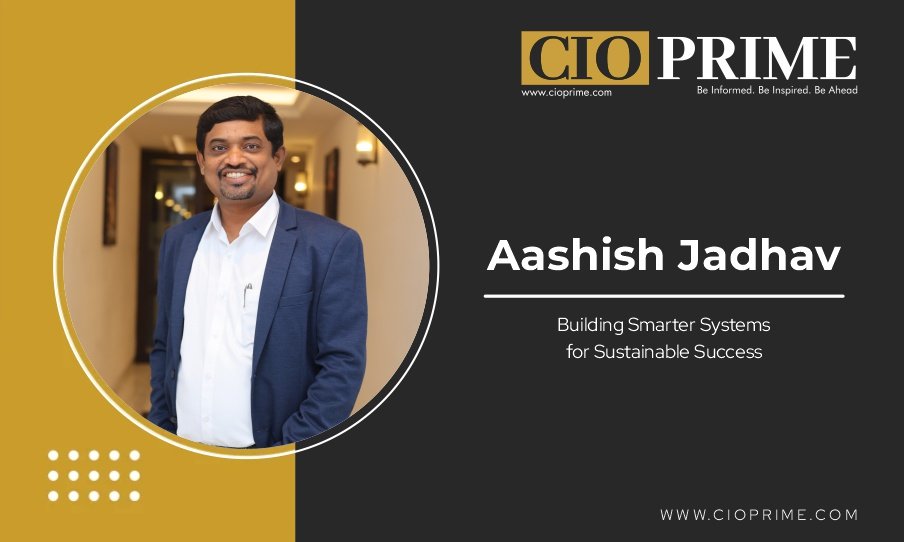
Aligning digital tools with real business needs and empowering teams to perform better!
Every successful business has moments when decisions feel like moving through fog. The right path is not always clear, yet someone has to navigate the uncertainty and guide others forward. For over 21 years, Aashish Ashok Jadhav has been that kind of leader. He steps into complex situations, cuts through the noise, and turns challenges into clear, actionable plans.
Aashish’s journey has been shaped by choices that demand courage and clarity. He has built his career around ERP, cloud platforms, and IT services, but what sets him apart is how he views these tools. To him, technology is not just about automation; it is a way to transform businesses, empower teams, and help leaders make informed decisions.
His approach is simple and human: listen first, understand what the customer truly needs, and bring the right solution with conviction. This clarity has allowed him to exceed targets consistently, build strong systems, and foster relationships that endure far beyond individual projects.
Colleagues see him as steady when it counts, sharp when it matters. He does not seek the spotlight. He focuses on impact. By guiding teams through complexity and turning uncertainty into opportunity, he ensures that every step taken is purposeful and lasting.
What defines Aashish is his commitment to people and purpose. He understands that technology alone cannot drive growth; it is how it is applied, how it supports decision-making, and how it strengthens teams that makes the difference.
In a world where challenges are constant, Aashish demonstrates that true leadership is measured not by titles or accolades but by the clarity and confidence he brings to every situation. His story is an example that steady, thoughtful guidance can transform uncertainty into progress and build success that endures.
Let us learn more about his journey:
Cultivating and Communicating a Vision that Inspires Action and Commitment
Ashish believes a compelling vision begins with clarity, alignment, and relevance. When cultivating a vision, he starts by deeply understanding the organization’s strategic objectives, market position, and stakeholder expectations. He then translates these into a vision that is aspirational yet actionable, clearly outlining where the organization is headed, why it matters, and how each team member contributes to the journey.
To communicate this vision effectively, Ashish emphasizes consistency, transparency, and engagement. He uses multiple channels—leadership meetings, team sessions, and one-on-one conversations—ensuring the message remains aligned and relatable.
For immediate action, he breaks the vision into short-term goals and measurable milestones, enabling teams to track success and celebrate wins. For long-term commitment, he fosters ownership by involving people in decision-making, recognizing contributions, and building a culture where individuals see purpose in their roles.
Ashish observes that when people connect emotionally with the vision and understand the impact of their work, momentum and sustained commitment naturally follow. He notes that the emotional connection between employees and organizational goals drives both immediate performance and long-term dedication, creating a workplace culture where people are genuinely motivated to contribute beyond transactional responsibilities.
Adapting Vision During Pivotal Challenges
Ashish recalls a pivotal moment in his leadership journey during his tenure as Director at Grown-Up Software Solutions. The company was launched with a clear vision to build a multi-service organization offering software development, executive education, ERP customization, and implementation under one roof. The goal was to provide integrated solutions to small and medium-sized enterprises undergoing digital transformation.
In the initial phase, the organization experienced positive traction. The team expanded, client engagements increased, and the company established a presence across multiple locations. However, as the business scaled, differences in strategic direction and execution priorities began to emerge among the partners. These differences led to operational misalignment, delays in decision-making, and a lack of cohesion in key business areas.
Although the original vision was sound, internal conflicts among partners created friction that ultimately affected client satisfaction, team morale, and long-term planning. It became evident that alignment on roles, responsibilities, and the pace of organizational growth had not been established early enough.
Faced with this situation, Ashish made the decision to step back, reassess, and prioritize clarity over expansion. Though the venture did not succeed as planned, it became one of the most valuable leadership lessons of his career. He learned the critical importance of alignment in vision, transparent communication, and shared accountability among partners. This experience reinforced his ability to navigate adversity, take ownership, and emerge stronger with a clearer perspective and greater resilience.
Aligning Vision with Organizational Values and Purpose
For Ashish, aligning vision with the organization’s core values and purpose is a strategic necessity rather than a mere leadership responsibility. He follows several key strategies to ensure that alignment remains strong and consistent throughout the organization.
First, he invests significant time in understanding the organization’s foundational principles, cultural drivers, and long-term mission. Before defining or communicating any vision, he ensures it reflects not only where the business needs to go but also how it wants to reach that destination.
Second, he translates the vision into specific priorities that resonate with the organization’s value system. For example, if customer centricity is a core value, he ensures that goals, initiatives, and communication reinforce a customer-first mindset in both planning and execution.
Third, he encourages cross-functional dialogue. Ashish involves different levels of the organization when shaping key objectives, allowing people to feel connected to the purpose and see their values reflected in the broader vision. This approach also helps identify gaps early and fosters a sense of shared ownership.
Finally, he continuously monitors how organizational actions reflect core values. Through employee feedback, customer engagement, and team reviews, he treats alignment as a dynamic process that must evolve with time but never drift from its fundamental purpose.
Ashish notes that when vision and values move in the same direction, organizations not only achieve results but also build trust, loyalty, and long-term sustainability, creating a culture where people believe in the mission as much as the metrics.
Empowering Team Members to Shape Vision
Ashish emphasizes that a vision becomes truly powerful when it is co-created. Empowering team members begins with building an environment of trust, openness, and mutual respect.
When team members bring differing perspectives, Ashish treats those differences as strengths rather than conflicts. He actively encourages open dialogue through regular discussions, brainstorming sessions, and feedback platforms, allowing team members to voice ideas, challenge assumptions, and feel heard without hesitation.
He listens carefully, asks questions to understand the reasoning behind differing viewpoints, and reflects on how these insights can improve the collective direction. When a perspective adds value or highlights a blind spot, he adapts the vision or approach accordingly. Assigning leadership roles to individuals for specific initiatives reinforces empowerment and demonstrates trust in their ability to lead, innovate, and make decisions.
Ashish observes that when people see their opinions influencing the bigger picture, they become more engaged, committed, and driven to contribute meaningfully. The diversity of thought, even when perspectives differ, often leads to stronger outcomes and a more resilient strategy.
Fostering a Culture of Innovation and Risk-Taking
Ashish fosters a culture of innovation by creating an environment where team members feel psychologically safe to think beyond the conventional, experiment, and even fail without fear of judgment. He believes that innovation thrives where curiosity is welcomed and bold thinking is recognized.
He sets a clear tone from leadership, emphasizing that innovation is not limited to technology or products but can also be reflected in operations, process improvements, and customer engagement strategies. He encourages the team to challenge assumptions, ask questions, and propose new approaches.
To make this culture more inclusive, Ashish creates platforms for open dialogue and informal exchanges. Lunch and dinner sessions with his team focus on freely sharing thoughts, ideas, and challenges rather than reporting tasks. These gatherings break hierarchy barriers, encourage transparency, and foster the emergence of fresh ideas.
He assigns ownership of pilot projects to team members, giving them the space to try new approaches and take calculated risks. Efforts and learnings are recognized regardless of outcome. One notable example involved an idea born from a casual dinner conversation, which led to a redesign of the channel partner onboarding process, resulting in higher engagement and faster activation. This experience reinforced Ashish’s belief that innovation requires both structure and space—structure to implement and space to imagine.
Navigating Resistance to Transformative Change
During a large-scale ERP transformation initiative, Ashish encountered resistance from long-established partners and internal stakeholders. Many were accustomed to unstructured workflows and feared that the new system would limit flexibility and require significant change.
Hesitation arose around training, compliance, and perceived loss of autonomy.
Rather than imposing change top-down, Ashish adopted a collaborative and inclusive approach. He conducted sessions to understand concerns, explained the long-term value of the transformation, initiated pilot implementations with smaller teams, provided continuous support, and incorporated feedback to refine processes.
He highlighted early success stories from those who adopted the changes effectively, showcasing measurable improvements such as faster delivery, better coordination, and enhanced client satisfaction. This approach helped transform resistance into shared success. Ashish notes that resistance often reflects uncertainty, not opposition, and that empathy, inclusion, and visible impact are key to overcoming it.
Identifying and Nurturing Emerging Leaders
Ashish emphasizes the importance of identifying and nurturing emerging leaders to ensure the organization’s vision continues to thrive beyond individual leadership. He believes leadership is defined not by hierarchy but by ownership, initiative, and the ability to influence outcomes with integrity and purpose.
He observes team members for initiative, responsibility, problem-solving capabilities, emotional intelligence, and a willingness to learn. Potential leaders are given freedom to operate, entrusted with responsibilities beyond their current roles, and empowered to make decisions without fear of failure. Ashish guides and supports them as a mentor rather than a micromanager.
He exposes emerging leaders to strategic conversations, client interactions, and cross-functional collaboration to provide a holistic understanding of the business. Regular feedback sessions help them align with the larger vision while developing their individual leadership style. In his experience, leaders who receive freedom, responsibility, and mentorship grow quickly and carry the vision forward with purpose and confidence, even in his absence.
Regularly Assessing and Refining Vision
To ensure the vision remains relevant amid evolving industry trends and technological advancements, Ashish follows a structured process of review, market sensing, and internal reflection. Adaptability forms the foundation of this approach. A strong vision remains consistent in purpose but flexible in execution.
He stays informed on emerging trends by reading industry reports, attending conferences, participating in webinars, and engaging with thought leaders. Relationships with technology partners and solution providers help him remain aware of innovations and shifts in client expectations.
Quarterly strategy reviews with internal stakeholders evaluate goals, assess progress, and identify areas needing evolution. These sessions are data-driven and insights-focused, analyzing customer feedback, sales patterns, operational challenges, and competitor movements. Cross-functional inputs from sales, delivery, and support teams provide day-to-day execution insights.
Ashish treats refinement as an ongoing process, whether it involves adopting new technology, shifting focus to emerging verticals, or reimagining go-to-market strategies. This approach balances consistency in direction with openness to change, keeping the vision both grounded and progressive.
Making Decisions Guided by Integrity
Ashish recalls a difficult decision at Grown-Up Software Solutions involving a potential client who expected compromises on transparency and post-implementation support. Accepting the deal would have boosted short-term revenue but conflicted with ethical standards.
Despite internal pressure, Ashish prioritized integrity and purpose, refusing to compromise the organization’s principles. He explained his stance to the team and stood firm, ultimately walking away from the opportunity.
This decision reinforced the culture he wanted to build, one where values are non-negotiable. Over time, it strengthened internal cohesion and attracted clients who respected the organization’s approach. Ashish observes that leadership is not only about delivering results but also about doing what is right, even when difficult.
Balancing Long-Term Goals with Short-Term Results
Ashish balances ambitious, long-term objectives with short-term results through structured planning. He aligns personal and professional goals with the broader organizational vision, connecting individual motivation to organizational success.
Long-term goals are broken into achievable, measurable short-term targets. Regular tracking maintains momentum, ensures visible outcomes, and allows every short-term win to serve as a stepping stone toward the larger purpose.
He aligns team members’ personal development goals with organizational objectives, integrating skill enhancement, leadership opportunities, and new responsibilities. Continuous monitoring and feedback maintain flexibility without losing sight of the destination. Ashish notes that realistic, measurable, and personally meaningful goals sustain engagement, consistent performance, and long-term success.
Leveraging Emotional Intelligence to Mobilize Teams
Ashish considers emotional intelligence essential for mobilizing diverse teams. A leader must connect on a human level, understand perspectives, and foster trust and belonging.
Diverse teams bring different experiences, expectations, and communication styles. Emotional intelligence allows Ashish to manage differences with empathy, patience, and awareness. He actively listens, responds thoughtfully, and leads sensitively, especially during change or pressure.
When introducing new strategies, he engages teams through one-on-one and group discussions, addressing concerns, acknowledging challenges, and demonstrating how contributions fit into the bigger picture. Emotional intelligence transforms directives into shared commitment, fostering unity, resilience, and purpose across the organization.
Aspiration for the Organization and Initial Steps
Ashish’s boldest aspiration is to build purpose-driven, innovation-led organizations that set new benchmarks in customer success, employee growth, and technological excellence. He envisions companies that shape industry futures, offering intelligent, scalable, and human-centric solutions.
The first step is defining a clear purpose, establishing not only what the organization aims to achieve but also why it exists. Next, he builds a strong, aligned leadership team capable of taking bold decisions and challenging the status quo.
Simultaneously, he fosters a culture of agility and continuous learning through talent development, system upgrades, and staying connected to evolving customer needs and emerging technologies. Pilot initiatives in high-impact areas generate early wins, build momentum, reinforce belief in the vision, and attract internal and external support.
Ashish believes that big aspirations require clarity, courage, and consistency in action. By starting with purpose, empowering people, and focusing on early execution, he lays the foundation for sustainable growth and meaningful impact.
Read the full magazine edition: Click Here