
A Visionary Strategist – Rabih Ibrahim: Shaping Resilient Urban Environments 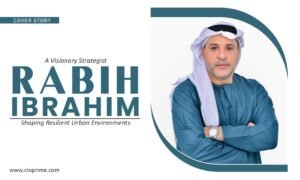
The skyline of the globe is shifting. The concurrent times are electrified. Hitherto, rigid boundaries between real estate, infrastructure, and green technology have finally dissolved. Amid this transformation rises a legend. Rabih Ibrahim illuminates like an emblem. A master architect of the new world, he is not merely an executive; he is a bridge-builder, a visionary who operates at the high-stakes intersection of government diplomacy, corporate strategy, and the sustainable energy revolution.
Rabih, being the Head of Government & Corporate Relations and Operations at SAAS Properties, is the diplomatic engine driving one of the region’s most ambitious development portfolios. Yet, his influence is far-reaching, spanning a sprawling ecosystem of ventures that redefine how we live, move, and build. From the foundational strength of Star Oscar General Contracting to the forward-leaning pulse of Volta EV, Rabih is the definitive business leader to watch—a man whose ‘Advanced Intelligence’ turns complex ideas into tangible, community-shifting results.
The Master Strategist: Real Estate as a Civic Legacy
Rabih’s leadership is forged in the belief that a building is more than steel and glass; it is a vehicle for growth. Having previously served as Vice Chairman at SAAS Properties, he deeply understands the kernel of real estate—the intricate balance between profitability and public impact. Today, he leverages that experience to forge ironclad partnerships between the public and private sectors, ensuring that every project under his watch is strategically aligned with the national vision for 2026 and beyond.
His entrepreneurial DNA is evident in the pillars he has built from the ground up:
*Star Oscar General Contracting Company: As Founder and CEO, he provides the structural backbone for large-scale development.
*Seven Yard Real Estate: A testament to his ability to navigate market dynamics as a Founder and Partner.
*Imdad Trading (Lebanon): Showcasing his ability to manage cross-border commerce and supply chain resilience.
The Energy Engineer: Charging the Future
Rabih is not content with simply building the structures of today; he is investing in the energy that will power tomorrow. As a Co-founder of Volta EV and an Investor/Co-founder of V-Charge, he is at the vanguard of smart energy solutions. He recognizes that the future of real estate is “smart” and “electric,” and he is actively creating the infrastructure—charging networks and energy management systems—that will make carbon-neutral living a reality. “Real progress is not a solitary pursuit; it is the result of teamwork, uncompromising honesty, and a vision that stays clear even when the market is blurred. We don’t just build projects; we build the value that sustains a community.”
The Voice of Innovation: A Boardroom Visionary
Beyond the construction site and the energy grid, Rabih contributes to the intellectual capital of the industry as a Board Member at CIOMinds. Here, he helps shape the narrative of technological transformation, ensuring that the next generation of leaders understands the intersection of digital innovation and physical assets.
His philosophy is refreshingly grounded: he enjoys the friction of turning a raw idea into a measurable result. Whether he is advising a startup or navigating a government mandate, Rabih Ibrahim remains a sentinel of excellence, proving that in 2026, the most successful leaders are those who can integrate the diverse domains of real estate, energy, and human relations into a single, unstoppable vision.
A Leadership Journey Excelling with Professional Evolution
A multidisciplinary perspective across real estate development, construction, and smart energy infrastructure has shaped Rabih’s professional journey. He began as the Founder and CEO of Star Oscar General Contracting, where execution discipline, project delivery precision, and operational resilience formed the foundation of his leadership philosophy. “Construction taught me that vision without structure is merely aspiration.”
Later, through his executive role at SAAS Properties, where he currently leads Government & Corporate Relations and previously served as Assistant Chairman of the Board, Rabih shifted from operational leadership to institutional strategy. That transition was a defining moment. It expanded his focus from projects to ecosystems—from buildings to governance frameworks.
Co-founding V-Charge, a smart EV charging infrastructure platform, marked another inflection point. It represented not diversification, but integration. Urban development, clean energy, and intelligent infrastructure are no longer separate sectors—they are components of one sustainable urban model, believes Rabih. “The defining thread across my journey has been long-term value creation. I do not pursue industries; I pursue systems that define the future of cities,” he states.
A Leader Favouring Innovation and Digital Transformation
Rabih says, “Innovation is not a department—it is a culture,” adding that they are integrating digital project management platforms, data-driven feasibility modeling, and predictive analytics into development planning. In the energy sector, V-Charge is building intelligent charging ecosystems powered by real-time data monitoring, usage optimization, and scalable infrastructure deployment.
Rabih informs that digital transformation in their model operates across three layers:
- Operational efficiency,
- Customer experience enhancement,
- Strategic data intelligence.
“Technology allows us to anticipate market behavior rather than merely react to it,” he shares. Artificial intelligence, smart grid systems, and energy optimization platforms will increasingly define competitive advantage in both property and infrastructure sectors. Digital transformation is no longer optional—it is foundational, he insists.
An Execution Grounded in Strategic Decision-Making
Again, Rabih’s executive decision-making framework rests on three principles:
*Institutional logic over emotional impulse.
*Risk-adjusted opportunity assessment.
*Long-term sustainability over short-term gain.
During periods of uncertainty, Rabih applies structured scenario modeling and downside protection analysis. Every major decision is stress-tested against regulatory risk, capital exposure, operational scalability, and reputational impact. Execution discipline follows strategic clarity. Without alignment between board-level strategy and operational teams, even the strongest plan fails. Leadership in disruption demands calm decisiveness grounded in data and experience.
Building High-Performance Teams
According to Rabih, high-performance cultures are built on clarity, accountability, and trust. He prioritizes three leadership pillars:
- Clear authority structures
- Measurable performance metrics
- Continuous capability development
Rabih believes that empowerment without accountability creates confusion; accountability without empowerment creates disengagement. The balance between both defines effective leadership. He encourages open strategic dialogue while maintaining decisive executive direction. Teams perform best when they understand not only what to do, but why it matters within a broader institutional vision, he emphasizes.
An Entrepreneurial Mindset of Market Leadership
Entrepreneurship, for Rabih, is the ability to see structural shifts before they become visible trends. What differentiates my leadership style is systemic thinking. Rather than compete within saturated frameworks, he analyzes where infrastructure gaps exist—whether in sustainable development, institutional partnerships, or clean mobility solutions.
New growth opportunities emerge at intersections. The intersection of energy and real estate created V-Charge. The intersection of governance and development strengthened institutional positioning within SAAS Properties. Competitive markets reward clarity of positioning, disciplined capital allocation, and brand credibility built over time.
Insights on Governance, Risk, and Sustainable Growth
Rabih ardently believes that governance is not compliance—it is architecture. He explains, “We operate within regulatory environments that demand transparency and institutional alignment, particularly in international financial jurisdictions.” Strong governance frameworks protect stakeholders, reduce risk exposure, and enhance investor confidence. Risk management is embedded into feasibility assessments, capital structuring, and execution oversight. Sustainability is equally central. Environmental, operational, and financial sustainability must coexist. Growth that compromises governance or environmental responsibility is not strategic—it is temporary.
Industry Impact of Rabih’s Thought Leadership
Beyond organizational leadership, Rabih contributes to industry dialogue through strategic advisory roles, institutional collaboration, and participation in sector forums focused on urban sustainability and energy transition.
“I believe leadership extends beyond corporate walls.” Developing ecosystems—through mentorship, knowledge-sharing, and responsible market participation—is essential to elevating industry standards. “My focus is on building bridges between private sector innovation and regulatory institutions to ensure balanced and sustainable growth models.”
Resilience That Gives Confidence in Overcoming Challenges
Challenges are the part and parcel of every successful leadership journey. Rabih’s case is no different. There were many. However, he reflects that one of the most significant leadership challenges he faced involved navigating regulatory complexity while structuring cross-border development transactions. Market conditions were volatile, regulatory requirements were evolving, and stakeholder expectations were high. The solution required disciplined communication, transparent negotiation, and strategic patience. Instead of accelerating execution under pressure, we recalibrated timelines, strengthened compliance frameworks, and reinforced institutional trust. The experience reinforced a core lesson: resilience is not about speed; it is about stability under pressure.
A Grand Vision for the Present and Beyond
Over the next three to five years, Rabih’s strategic vision centers on building resilient, technology-integrated urban ecosystems.
Real estate must evolve from static asset classes to intelligent, adaptive environments, he insists. “We are positioning our organization around three pillars:”
*Digitally enabled development processes.
*Integrated energy infrastructure.
*Institutional-grade governance and transparency.
The global economy is becoming more interconnected, volatile, and data-driven. To thrive within it, organizations must balance innovation with discipline. “Our focus is on strengthening cross-border partnerships, institutional financing relationships, and smart infrastructure investments that align with national sustainability agendas.” The future belongs to organizations that think beyond quarterly cycles and design for generational impact.
Building a Legacy
Legacy, for Rabih, is not defined by projects completed, but by systems built. He aspires to be recognized as a leader who contributed to shaping resilient urban environments—where real estate, infrastructure, and clean energy function as integrated pillars of sustainable cities.
Advice to Future Leaders
To aspiring business leaders aiming for global impact, Rabih Ibrahim’s advice is simple:
- Think in decades, not quarters.
- Build credibility before visibility.
- Prioritize governance as much as growth.
- Align ambition with responsibility.
Leadership is not about authority—it is about stewardship. The future will belong to leaders who understand that progress without principle is fragile, but progress built on structure, vision, and integrity becomes transformational, he concludes.