A People Empowerer – Suhas Athma: Combining Business Excellence with Genuine Care for People 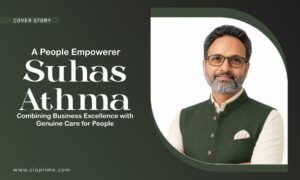
In the present manufacturing frontier, orchestrating clean-tech scale and greenfield industrial workforce transformations demands promising human resources leaders. Because, in ever-evolving times, traditional dynamics are not working anymore. Suhas Athma knows this fact. For him, talent management is a precise extension of industrial engineering and operational scale. He, as the Vice President of Human Resources at Olectra Greentech Limited, is powering up the company’s human capital strategy.
Olectra Greentech is India’s pioneer in electric bus manufacturing and heavy green-tech transport systems. Suhas Athma’s executive decisions require managing an aggressive production scale-up while building heavy engineering talent pools that did not exist a decade ago. He replaces reactive staffing methods with a structured workforce framework that balances complex factory floor protocols with corporate agility. This deep grounding in industrial relations allows him to anchor high-risk manufacturing environments, ensuring that regional labor compliance and advanced technical training progress together naturally.
Suhas Athma drives this industrial execution by drawing on more than two decades of diverse, senior-level expertise spanning crucial economic sectors. He has held prominent HR leadership positions across complex industries, including pharmaceuticals, auto ancillary, telecommunications, and corporate consulting. His career history includes managing talent operations at top-tier organizations like Telenor India, Syngenta, and ETS India Pvt. Ltd, Computer Sciences Corporation, and Dr. Reddy’s Laboratories. Backed by a postgraduate qualification in Human Resource Management from XLRI Jamshedpur, a Diploma in Business Management from IMM, and a Master of Arts degree in Defense Studies from the University of Madras, Suhas Athma approaches corporate workforce stabilization with a unique understanding of strategic security, resource mobility, and systemic risk management.
The Multi-Vertical Blueprint: Scaling Enterprise Networks and Automating the Transactional Floor
Suhas Athma expands the structural capacity of modern enterprises by designing global business services that transform how international corporations process labor data. He has successfully set up and scaled six Global Capability Centers and shared services hubs across multiple industry verticals, servicing complex markets in the United States, Europe, and the Asia-Pacific region. This extensive cross-border management experience allows him to build highly localized operational frameworks while maintaining uniform corporate governance standards. By overseeing a massive sales force team of 25,000 personnel on a PAN India scale, he proves that large-scale human systems run smoothly when backed by clear communication channels and automated incentive tracking.
This focus on operational velocity guides his ongoing digital initiatives within HR technology, where he replaces manual administration with advanced automation tools. Suhas Athma has developed sophisticated Enterprise Resource Planning approaches, integrated AI chatbots for automated HR shared services query handling, and executed blockchain pilot runs for sales incentives and payroll inputs. His recent technical frameworks introduce robotic process automation and predictive analytics to streamline background verification and talent mapping. By building the six building blocks of digital leadership capabilities, his systems free HR professionals from tedious paperwork, allowing the enterprise to focus entirely on human evolution and behavioral transformation.
The Strategy-Execution Balance: Full Testimony of an Enterprise Leader
Suhas Athma has 26+ years in senior-level HR management roles, primarily in Manufacturing (EV, Pharma, Electronics, Energy, Engineering, Chemical, Agri), IT-Product & Services, Telecom, Consulting, KPO & Edu Tech. Have experience in Greenfield projects and Start-up Technology companies. He also has experience in setting up and scaling 6 GCCs/ Shared Services for multi-industry verticals. He managed a sales force team of 25k PAN India. He has worked for Start-ups, Indian corporate houses, US and European MNCs. He further has understanding and experience of HR practices for the US, Europe, and APAC markets. “I have learned over the years the balance between strategy and execution.”
As an HR professional, some of the key strengths he has developed over a period of time are HR Transformation, experience in partnering with business on this new transformation model; apart from being part of the Transformation group that has made a significant impact on improving operating effectiveness through HR system and process improvements, shared services, outsourcing, employee self-service, and cost efficiencies. As a team, the next approach was to help the business achieve its strategic objectives for performance and growth, with behavioral changes to achieve the goals in changing market environments. Managed the Technology evolution within HR and Digital Transformations.
Digital Transformation, having developed the ERP Solution approaches, had worked on AI (chatbot) implementation for HRSS query handling, Blockchain pilot runs for Sales incentives & various payroll inputs to payroll processing, background verification processes, etc. Developed an approach for Robotic Process Automation and HR Analytics. Built the six building blocks of Digital Leadership capabilities.
Key Transformations-
- Developing HR Processes using the Design Thinking Principles
- Digital HR Transformation approach to HR practices like AI (chatbots), Blockchain, and RPA.
- Designing HR Data into Talent Analytics to support Business Efficiencies & Sales Productivity
- Designing and developing Diversity and Inclusion Programs
- Developing Job Architecture principles and Designing of Org Structures
- Transforming the Training function into Portfolio Competency Mgt Group
- Developing both the Traditional and Modern Performance Management Systems
- Developing Digital Leadership Behaviors and Capabilities-Digital Transformation
- Transforming HRSS into AI-based processes
- Transforming the Recruitment function into the Assessment Development Center
- Transforming Generalist HR into Consultative Business Group
- Building a Participatory and innovative Culture, withmicroskillbehaviors
- Increasing the productivity of resources withbehaviouralbased incentive scheme
- Built shared services operations and HR Outsourcing processes
- Developing HRO Operating Model
Business Transformation
Suhas Athma has developed HR Shared Services for Employee Life Cycle Management. Built processes around following verticals like HR Operations from recruit to retire, Payroll, HR Team Services, Country Compliances, Labor Contingency, and Business Architecture and Technology. He was involved in Digital Transformation processes from an HR perspective.
Business Change, focus on the people side of change – including changes to business processes, systems and technology, job roles and organization structures. The primary focus was on creating and implementing change management plans that minimize employee resistance and maximize employee engagement. The Change work to drive faster adoption, greater ultimate utilization, and higher proficiency on the changes impacting employees in the organization, such that business results are achieved. Had worked directly on communication, training, HR, and OD in the formulation of plans and activities to support change implementation.
Processes. Suhas Athma has been involved in policy formulation and execution through the entire employee life cycle, i.e., from acquiring talent, developing talent, and managing talent. He was also instrumental in building an ecosystem that supports the organization’s diversity initiative. He had designed policies pertaining to township and employee living. Led one of his companies to the first company in Asia-Pac and the first company outside a US defense ancillary unit to be assessed for PCMM in 1999.
eHR: designed and developed an employee intranet that automated the HR processes, which became the system of record for all HR policies and procedures. This application was supported at the backend with Workday, SAP & PeopleSoft HR.
Shared Services. Suhas Athma has experience in setting up backend operations for support service tasks of IT organization, telemarketing, market research, proposal writing, account receivables, project costing, Talent Acquisition, employee relations, Payroll & benefit administration, Data Management, Internal Application development and maintenance, Travel & Visa Management, Research, Knowledge based processes. Handled backend processes for North America, Europe, the Middle East, and APAC countries.
HR Analytics, designing, executing, and measuring the effectiveness of talent programs, which will include identifying issues, forming hypotheses, and synthesizing conclusions into recommendations. Develop and analyze surveys and metrics. Conduct data analyses, such as regressions and factor analyses. Communicate findings and recommendations on critical initiatives and influence leaders to act on these findings.
Transition Management, study and recommend a strategy for effectively transitioning work from on-site to offshore locations. Work with on-site sales, account management, and offshore delivery teams on project offshoring, resource planning, knowledge transfer process, and deployment of resources. Tracking the project budgets and billings. Developed and implemented a Global Resource Transition model.
Quality Processes, ha has experience in implementing some of the quality standard benchmarks like ISO-9000, PCMM, CMM, & SixSigma. Implementation of concepts like 5S audits, Kaizen, BPR, etc., a certified SOX professional.
Business Continuity. He had developed processes and strong practices for continuity of business under threat of health, Political, terrorism, etc., untoward situations, with safety of resources, property, client information & data as the prime focus.
The 18 Disciplines of Talent Science: Merging Behavioral Psychology with Enterprise Economics
What drew Suhas Athma to Human Resources was the realization that every organization is, at its core, about people. He has always been curious about what motivates individuals, how teams come together, why some cultures thrive, and how leaders can bring out the best in others. The more he explored the profession, the more he discovered that HR is not just about policies and processes—it is about understanding human behavior and enabling people to succeed. What fascinated him most was the depth and breadth of HR. It is one of the few professions that brings together insights from multiple disciplines—often referred to as encompassing elements of nearly 18 sciences and fields of study. Psychology helps us understand behavior and motivation; sociology explains group dynamics and culture; economics influences workforce planning; statistics and analytics support decision-making; law ensures fairness and compliance; neuroscience, health sciences, communication, anthropology, organizational behavior, and leadership studies all contribute to how we manage and develop people effectively. For him, HR became the perfect blend of science and humanity. It allows him to use data and business insights while never losing sight of the human side of work. Whether it is helping someone build a career, supporting employees through change, developing future leaders, or creating a healthier workplace, every day presents an opportunity to make a positive difference. What continues to inspire him is the privilege of impacting lives while contributing to organizational success. When people grow, organizations grow. Being able to play a small role in that journey is what makes HR not just a profession for him, but a purpose.
The Transformational Compass: Combining Absolute Empathy with Structural Accountability
Suhas Athma describes his leadership style as people-centric, purpose-driven, and transformational. He firmly believes that leadership is not about directing people; it is about creating an environment where individuals feel empowered to perform at their best and grow beyond what they thought possible. As an HR leader, he focuses on building trust through authenticity, transparency, and accessibility. He strives to understand the perspectives of employees, managers, and business leaders, and then connect those perspectives to create solutions that benefit both people and the organization. He believes that when people feel heard, valued, and respected, they contribute with greater commitment and passion. He is also a strong believer in leading through influence rather than authority. He encourages collaboration, challenges conventional thinking, and supports innovation while ensuring that decisions remain aligned with organizational values and business objectives. His approach combines empathy with accountability—he cares deeply about people, but he also believes in setting high standards and helping teams achieve them. Another important aspect of his leadership style is being a catalyst for change. In today’s rapidly evolving business environment, HR leaders must help organizations adapt while ensuring that employees remain engaged, resilient, and supported throughout the journey. Above all, he sees his role as enabling others to succeed. The greatest measure of leadership is not personal achievement but the growth, confidence, and success of the people you have helped develop. If his team members and business leaders feel more capable, inspired, and empowered because of his leadership, then he considers that his biggest success.
The Operational Interface: Workforce Design, Governance, and Ecosystem Simplification
In his current role, Suhas Athma has the privilege of partnering closely with business leaders to align people strategy with organizational goals. His responsibilities span both strategic and operational aspects of Human Resources, ensuring that people remain at the center of business growth and transformation. A significant part of his role involves driving organizational effectiveness by building the right talent, capabilities, and culture required for long-term success. He works closely with leadership teams on workforce planning, talent management, succession planning, leadership development, and employee engagement initiatives. He also supports key business transformations by helping leaders manage change, strengthen organizational readiness, and maintain employee confidence during periods of transition.
Employee wellbeing and experience are equally important areas of focus. He believes that sustainable performance can only be achieved when employees are physically, emotionally, and professionally supported. Therefore, he actively contributes to initiatives that enhance workplace culture, productivity, collaboration, and overall employee wellness. Another critical responsibility is fostering a high-performance culture through effective performance management, capability building, and continuous learning opportunities. He works to ensure that employees have clear career pathways and the resources needed to realize their full potential. Additionally, Suhas Athma oversees core HR processes, governance, policy implementation, employee relations, and compliance, while continuously seeking opportunities to simplify processes and improve efficiency through data-driven decision-making and technology adoption. At its heart, his role is about creating an environment where people can thrive, leaders can succeed, and the organization can achieve its strategic ambitions. Balancing business priorities with employee aspirations is both the challenge and the most rewarding aspect of his work.
Global Harmonization: Digitizing Core Shared Services and Transforming Geographically Dispersed Operations
One of the most significant achievements in Suhas Athma’ HR career has been leading large-scale digital transformation and establishing Global Shared Services that transformed the way HR supports the business across geographies. He had the opportunity to drive the digitization of core HR processes, moving from traditional, transaction-heavy operations to a more integrated, technology-enabled people ecosystem. This transformation involved implementing global HR platforms, standardizing processes, leveraging analytics for decision-making, and creating seamless employee experiences across multiple regions. The initiative not only improved operational efficiency and data accuracy but also enabled HR teams to shift their focus from administrative activities to strategic business partnering.
Another milestone was building and scaling Global Shared Services that served diverse markets and business units across the world. This required harmonizing processes, creating governance frameworks, establishing service delivery standards, and building high-performing teams capable of supporting a global workforce. The outcome was a more agile, cost-effective, and customer-centric HR operating model that delivered consistent employee experiences while accommodating local business requirements. What makes these achievements particularly meaningful is that they were not simply technology or process projects. They were transformation journeys that required change leadership, stakeholder alignment, capability building, and cultural adaptation. Success was measured not only through productivity gains and cost efficiencies but also through improved employee satisfaction, stronger manager experience, and enhanced organizational capability. These experiences reinforced his belief that the future of HR lies in combining technology, analytics, and human-centered leadership. The ability to build global capabilities while keeping people at the heart of transformation remains one of the most rewarding aspects of his professional journey.
The Employer Brand: Cultivating Trust, Transparency, and Value Propositions to Attract High-Quality Talent
Suhas Athma believes that a positive and engaging workplace culture is not created through policies or programs alone—it is built through everyday experiences, leadership behaviors, and the genuine care an organization shows towards its people. Culture is ultimately how employees feel when they come to work and how connected they feel to the organization’s purpose. His approach begins with creating an environment of trust, transparency, and respect. Employees are most engaged when they feel heard, valued, and included in the organization’s journey. He encourages open communication, regular feedback, and meaningful dialogue between employees and leaders, ensuring that people have a voice in decisions that impact them.
He believes that attracting and retaining top talent requires organizations to move beyond traditional recruitment and compensation practices. Today’s talent is looking for purpose, growth, flexibility, wellbeing, and meaningful experiences. His approach focuses on creating an employee value proposition that resonates both professionally and personally. To attract top talent, he emphasizes building a strong employer brand that authentically reflects the organization’s culture, values, and growth opportunities. Candidates today conduct extensive research before joining an organization, so it is important that the employee experience matches the promises made during recruitment. He also leverages data-driven talent acquisition strategies, digital platforms, employee referrals, campus partnerships, and proactive talent pipelining to ensure access to diverse and high-quality talent pools.
Root-Cause Conflict Resolution: Empowering Managers through Objective, Solution-Oriented Active Listening
Suhas Athma views employee challenges and workplace conflicts not as problems to be avoided, but as opportunities to strengthen relationships, improve processes, and build a healthier organizational culture. In any dynamic workplace, differences in perspectives, priorities, and working styles are inevitable. What matters is how we address them. His approach begins with listening. Before seeking solutions, he ensures that all parties feel heard and understood. Often, conflicts escalate when people feel their concerns are overlooked. By creating a safe and respectful environment for open dialogue, he can better understand the root causes rather than just the symptoms of the issue.
He focuses on remaining objective, fair, and solution-oriented. As an HR leader, it is important to balance empathy with accountability. He encourages constructive conversations that move individuals away from positions and toward shared interests and common goals. His aim is not to determine who is right or wrong, but to find a resolution that preserves relationships, maintains trust, and supports business outcomes. When dealing with employee challenges, he also looks beyond the immediate situation. Sometimes conflicts stem from unclear expectations, communication gaps, workload pressures, leadership issues, or organizational changes. Addressing these underlying causes often prevents similar issues from recurring in the future. He strongly believes in empowering leaders with conflict-resolution and coaching skills. Managers play a critical role in shaping team dynamics, and early intervention by leaders can often prevent small concerns from becoming larger challenges.
Predictive Intelligence: Harnessing Evidence-Based Data Analytics to Elevate the Human Element
According to Suhas Athma, technology has become a fundamental enabler of modern HR, transforming the function from a largely transactional role into a strategic business partner. Today, technology is not just about automation; it is about enhancing employee experiences, improving decision-making, and enabling organizations to respond more effectively to a rapidly changing business environment. Throughout his career, he has witnessed how digital transformation has reshaped every aspect of HR—from talent acquisition and onboarding to learning, performance management, workforce planning, and employee engagement. By leveraging integrated HR platforms, cloud-based solutions, and self-service capabilities, organizations can simplify processes, improve efficiency, and provide employees with seamless and personalized experiences.
One of the most powerful contributions of technology is the ability to harness data and analytics. Modern HR leaders can now make evidence-based decisions on talent acquisition, retention, workforce productivity, succession planning, and employee engagement. Predictive analytics helps organizations anticipate future talent needs, identify retention risks, and proactively address workforce challenges. In his view, the best HR organizations are those that use technology not to replace the human element, but to elevate it, freeing HR professionals to focus on what matters most: developing people, strengthening culture, and driving business success through talent.
Personalized Ecosystems: Lifelong Learning, Cross-Functional Exposure, and Internal Mobility Pipelines
Suhas Athma further believes that one of the most important responsibilities of an HR leader is to create an environment where people can continuously learn, grow, and realize their full potential. Employees are not just looking for jobs; they are looking for opportunities to build meaningful and fulfilling careers. Organizations that invest in their people ultimately build stronger, more resilient businesses. His approach begins with fostering a culture of continuous learning. In today’s rapidly evolving business landscape, skills can become obsolete quickly, making lifelong learning essential. He works to create learning ecosystems that combine formal training, digital learning platforms, on-the-job experiences, mentoring, coaching, and cross-functional exposure. He strongly believes that some of the most valuable learning happens through real business challenges and practical experiences.
Career development is equally important. He encourages transparent career conversations between employees and leaders, helping individuals understand potential career pathways and the capabilities required for future roles. Through succession planning, talent reviews, internal mobility programs, and leadership development initiatives, he strives to ensure that employees can see opportunities for growth within the organization rather than feeling the need to look elsewhere. He also believes that development should be personalized. Every employee has unique aspirations, strengths, and learning needs. Therefore, he advocates for individualized development plans that align personal ambitions with organizational objectives. This creates a win-win situation where employees feel invested in, and the organization builds the capabilities it needs for future success.
The Skills Paradigm: Skills-Based Talent Management, Holistic Wellbeing, and Global Connectivity
Suhas Athma feels that the future of work is being shaped by a combination of technological advancement, changing workforce expectations, and evolving business models. HR is at the center of this transformation, helping organizations adapt while ensuring that people remain engaged, productive, and prepared for the future. One of the most significant trends is the rise of Artificial Intelligence and intelligent automation. AI is transforming talent acquisition, workforce planning, learning, employee support, and people analytics. While technology will automate routine tasks, it will also create opportunities for HR to focus more on strategic workforce decisions, employee experience, and organizational capability building.
A second major trend is the growing emphasis on skills over job titles. Organizations are increasingly moving toward skills-based talent management, where hiring, development, and career progression are determined by capabilities rather than traditional role structures. Continuous reskilling and upskilling will become critical as business requirements evolve at an unprecedented pace. Another trend is the increasing focus on employee wellbeing and holistic employee experience. Organizations are recognizing that sustainable performance depends on supporting employees’ physical, mental, emotional, and financial wellbeing. The future workplace will place greater emphasis on creating environments where people can thrive both professionally and personally. The evolution of flexible and hybrid work models will also continue to shape workforce strategies. Employees increasingly expect flexibility, while organizations seek to maintain collaboration, innovation, and culture. HR will play a key role in designing work models that balance business performance with employee expectations.
Data and people analytics will become even more important. HR decisions will increasingly be driven by predictive insights related to talent availability, employee engagement, productivity, retention, and future workforce needs. Organizations that effectively use data while maintaining a human-centered approach will gain a significant competitive advantage. Another important trend is the growing importance of leadership transformation. Future leaders will need to be more agile, inclusive, digitally savvy, and empathetic. The ability to lead through uncertainty, inspire diverse teams, and manage continuous change will become a critical differentiator. He also sees the emergence of global talent ecosystems where geographical boundaries become less relevant. Organizations will increasingly access talent from across the world through digital platforms, global capability centers, and shared service models, creating more diverse and interconnected workforces. Above all, he believes the future of HR will be defined by its ability to balance technology with humanity. While digital transformation will continue to accelerate, the organizations that succeed will be those that use technology to enhance human potential, foster meaningful connections, and create workplaces where people can learn, grow, and contribute their best. The future of work is not just about smarter technology—it is about creating a better, more inclusive, and more human workplace.
Operational Guidance: Cultivating Business Acumen, Integrity, and Holistic HR Foundations
To young professionals aspiring to build a successful career in HR, Suhas Athma’s advice is to view HR not merely as a function, but as a profession that sits at the intersection of people, business, and transformation. To build a successful career in HR, it is important to develop both a deep understanding of human behavior and a strong appreciation of business realities. First, be genuinely curious about people. HR is fundamentally about understanding what motivates individuals, how teams function, how cultures are built, and how leaders influence performance. The more you understand people, the more effective you will become as an HR professional. Second, invest time in understanding the business. The most impactful HR leaders are those who can connect people strategies with business outcomes. Learn how your organization generates value, understand its customers, financial drivers, operations, and strategic priorities. When you speak the language of business, your contribution becomes far more meaningful and influential. Third, embrace continuous learning. HR is one of the few professions that draws knowledge from multiple disciplines, including psychology, sociology, economics, law, technology, analytics, organizational behavior, and leadership studies. With the rapid emergence of AI, people analytics, and digital workplaces, the learning journey never truly ends.
He would also encourage young professionals to seek diverse experiences across talent acquisition, employee relations, learning and development, organizational development, rewards, workforce planning, and HR transformation. These experiences provide a holistic understanding of the profession and help build a strong foundation for future leadership roles. Equally important is developing credibility through integrity, empathy, and trust. Employees and leaders often approach HR during critical moments in their careers. The ability to listen, maintain confidentiality, demonstrate fairness, and make balanced decisions will define your reputation far more than technical expertise alone. Finally, remember that HR is ultimately about creating a positive impact. Every policy, hiring decision, development initiative, or transformation program affects people’s lives. Never lose sight of the human side of the profession. Technology, data, and processes will continue to evolve, but the ability to genuinely care for people while driving business success will always remain the hallmark of exceptional HR leadership. If he could leave young professionals with one thought, it would be this: Build your career with equal focus on business acumen, human understanding, and continuous learning. When you combine these three elements, HR becomes not just a profession, but a powerful platform to influence organizations, develop leaders, and make a lasting difference in people’s lives.
The Strategic Mandate: Validating HR as a Core Driver of Business Transformation
For Suhas Athma, being recognized as a ‘Promising HR Leader of 2026’ is both a humbling honor and a reminder of the responsibility that comes with leadership. While he deeply appreciates the recognition, he views it not as an individual achievement but as a reflection of the many leaders, mentors, colleagues, and teams who have been part of his journey. No HR leader succeeds alone; every milestone is built on collaboration, trust, and shared purpose. For him, this recognition validates his belief that HR has evolved far beyond a support function. Today, HR is a strategic driver of business transformation, organizational capability, culture, and employee experience. Being acknowledged for his contribution inspires him to continue challenging conventional thinking and creating workplaces where both people and businesses can thrive.
The Meaningful Impact: Harnessing High-Performance Initiatives and Global Service Models
What makes this recognition particularly meaningful is that it reflects the impact of initiatives he has been passionate about—driving digital transformation, building global shared services, strengthening leadership capabilities, enhancing employee wellbeing, and creating high-performance cultures. Knowing that these efforts have positively influenced employees and business outcomes is the most rewarding aspect of the recognition. Looking ahead, Suhas Athma’s aspiration is to continue shaping the future of work by leveraging technology, people analytics, and innovative HR practices while ensuring that the human element remains at the heart of every decision. He wants to contribute to building organizations that are agile, inclusive, purpose-driven, and equipped to thrive in an increasingly complex world.
The Mentorship Legacy: Cultivating Next-Generation Capability and Compassionate Excellence
Suhas Athma is also passionate about developing the next generation of HR leaders. One of his goals is to mentor and guide young professionals, helping them build the capabilities and confidence needed to lead in the future. He believes leadership is not measured by the success we achieve ourselves, but by the success we help others achieve. Ultimately, his goal is to leave behind a legacy of positive impact—organizations that became stronger, leaders who became more effective, and employees whose careers and lives were enriched through the work we did together. “If, years from now, people remember me as someone who combined business excellence with genuine care for people, that would be the most meaningful achievement of all.”