
Mindfulness in the Age of AI: How Thiru Damodharan Connects Strategic Growth with Human Balance
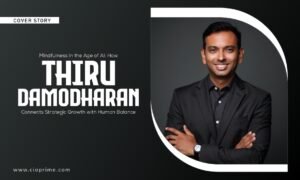
The remarkable leadership of Thiru Damodharan is like the equilibrium of innovation. It is because he is showing organizations the way they can balance aggressive technological adoption with conscious, clear decision-making in an artificial intelligence-powered era. This is an era of rapid and constant technological advancements that force corporate organizations into a situation where speed tends to trump clarity. The transformation of industrial sectors through AI technology forces executives to make quick decisions in terms of automation of operations without sacrificing the critical element of human insight for sustainable performance.
His upcoming book, Mindfulness in the Age of AI — How to Lead with Presence in a Tech-Driven World, explores this intersection further, drawing from his own mindfulness journey and his observations of how rapidly the workplace is changing. Technology has made professionals faster and more connected, but it has also created constant distraction, pressure, and mental overload. His work explores how professionals can embrace innovation without losing their presence, values, or humanity.
He has an applied, pragmatic view of organizational transformation through his extensive experience in the Asia-Pacific region for more than two decades. The expertise lies in engineering, market intelligence, strategic partnerships, and operations in multinational organizations and small and medium enterprises.
Thiru’s professional experience involves technical strategy alongside corporate governance. His educational qualification includes Bachelor of Materials Engineering and a Dual MBA in Asian Business Management. It is because of his using a multicultural and global mindset. He can do it since he is proficient in multilingual communication skills, including English, Tamil, Chinese, Malay, French, Japanese, and Korean. His cultural acumen enables him to develop digital marketing strategies not only in the Southeast Asian region but also in China, South Korea, and even Europe.
He bridges strategy to people, insight to action, and ambition to balance. He has helped organizations expand markets, strengthen partnerships, improve decision-making, and mentor professionals through training and global keynote engagements. As a global keynote Speaker, high-performance coach, and transformation leader, he brings this same philosophy to coaching conversations, corporate training rooms, and international speaking engagements. He believes sustainable growth should always be measured by its long-term impact on people as well as performance.
His mindfulness journey has also reinforced this philosophy. He began by becoming more aware of how he responded to the demands of work and life, gradually learning to pause, observe his thoughts, and respond with greater intention rather than reacting automatically. Over time, he discovered that mindfulness was not simply a personal wellness practice, but also a powerful way to communicate, make decisions, and lead others.
The Evolution of Strategic Insight
Thiru’s leadership approach has been formed by working across very different environments, from engineering and market intelligence to partnerships, business development, and strategic operations. Engineering trained him to think in systems, identify root causes, and solve problems with discipline.
Market intelligence taught him to listen to signals from the market before making decisions. Business development and partnerships showed him that growth is ultimately built on trust, relevance, and execution.
Through these diverse roles, he recognized that technical precision must always align with human dynamics to achieve true operational efficiency. It is about helping people gain clarity, make better decisions, and move forward with confidence.
Many leaders already know their challenges, but they need someone to help them structure the issue, see options, and choose a practical next step. He brings this balanced methodology into boardrooms and innovation hubs, ensuring that corporate strategy transforms into structured, manageable actions.
This philosophy also connects with his understanding of leadership presence. Leading with presence means giving full attention to the person, decision, or situation before you. It involves listening without immediately preparing a response, recognising your emotional state, and communicating with clarity. A present leader does not need to have every answer; instead, the leader creates an environment where people feel heard, respected, and psychologically safe enough to contribute.
Simplifying the Transformation Journey
Thiru helps leaders simplify the transformation journey by identifying organizational gaps, prioritizing practical initiatives, strengthening capabilities, building strategic partnerships, and turning ambitious goals into achievable action plans. His approach focuses on practical execution, measurable progress, and long-term resilience.
The Intersection of Mind and Machine
AI is changing how we work, compete, and make decisions. It can improve productivity and open new possibilities, but it can also create anxiety, pressure, and distraction if leaders are not clear about how to use it. That is why clarity, sustainable growth, and mental wellness are increasingly connected.
A leader without clarity may chase every new tool without understanding the business problem. A business without sustainability may grow quickly but burn out its people. A team without mental wellness may adopt technology but lose creativity, trust, and resilience. In the age of AI, the human side of leadership becomes even more important. Technology should support better thinking, better decisions, and better lives. It should not replace purpose, judgement or emotional balance.
AI can process information quickly, automate tasks, and support complex decisions. However, it cannot replace distinctly human qualities such as empathy, self-awareness, compassion, ethical judgment, and meaningful connection. As AI becomes more integrated into professional lives, people may feel pressure to work faster and remain constantly available. Mindfulness helps create space between information and action. It allows professionals to ask not only, “What can this technology do?” but also, “Why are we using it, who will it affect, and what is the most responsible way forward?”
Technology itself is not necessarily the problem. The challenge lies in how unconsciously we may use it. Notifications, messages, meetings and digital platforms can fragment attention throughout the day. We may become highly responsive while becoming less reflective. Many professionals move rapidly from one task to another without creating time to process what they are doing or why it matters. This can affect decision-making, creativity, relationships and personal well-being.
The aim is not to reject technology. It is to develop a healthier and more intentional relationship with it.
Mindfulness does not always require a long meditation session. Professionals can begin with small, realistic practices. Before opening an email or entering a meeting, they can take one conscious breath. When someone is speaking, they can resist the urge to check a device or prepare an immediate response. Between major tasks, they can pause briefly and ask, “What requires my attention now?”
Professionals can also create boundaries around notifications, schedule short periods of uninterrupted work, and reflect at the end of the day on what went well and what they would approach differently. The consistency of the practice matters more than its duration.
Performance Rooted in Empathy
Thiru believes business performance and empathy are not opposites. In fact, sustainable performance depends on understanding people. Strategy gives direction, but empathy helps leaders understand what customers, employees, and partners truly need. Ethics ensures that growth is built on trust. Resilience allows the organisation to withstand pressure and change. He brings this balanced approach to corporate governance workshops, guiding executives away from short-sighted operational models.
In practice, he balances these by asking a few simple questions. Is the decision commercially sound? Is it fair to the people affected? Does it strengthen trust? Will it still make sense in the long term? This approach helps leaders avoid short-term thinking and build organisations that can perform consistently without losing their values. By establishing these ethical checks, he helps businesses build cultures that survive market fluctuations.
Mindfulness can further strengthen this decision-making process by helping leaders notice their assumptions, biases, and emotional reactions before taking action. When leaders operate under pressure, decisions can easily become driven by urgency, fear, or incomplete information. A mindful pause allows them to consider the broader consequences of their choices, including the impact on employees, customers, and stakeholders. Mindfulness does not necessarily make decision-making slower; it makes it more deliberate.
Lessons from Diverse Ecosystems
From multinational organisations, Thiru learned the importance of structure, standards, governance, and scalability. Large organisations are able to execute because they build systems that support consistency. His extensive career path allows him to pull the best strategies from different business environments and apply them to complex organizational challenges.
Today, he brings structure without overcomplicating things, and empathy without losing sight of outcomes.
Grounded Global Growth
When consulting with expanding enterprises, he steers corporate boards away from superficial trends and anchors them in operational realities. His advice is to start with business fundamentals before chasing technology or overseas markets. For digital transformation, he asks: What process is slowing us down? What data do we need? What customer experience can be improved? Technology should solve a real business problem, not become a project for its own sake, insists Thiru.
Overseas growth requires patience and preparation. His practical advice is to start small, test the market, learn quickly, and scale only when the model is proven. Sustainable growth is not about rushing into every opportunity. It is about choosing the right opportunity and executing it well.
Learning for Real Outcomes
Thiru carries this structured mentality directly into corporate training rooms and international conventions, designing education ecosystems that focus heavily on long-term retention. As a high-performance coach and global keynote Speaker, he designs learning around practical outcomes.
Before any session, he asks what the participants should be able to think, feel, or do differently after the programme. He also focuses on relevance. Adult learners do not only want theory. They want frameworks, examples, tools, and conversations that connect directly to their work.
His facilitation style combines storytelling, reflection, discussion, and action planning. He wants participants to leave with insight, but also with a next step they can implement. Measurable value can come through improved decision-making, clearer strategies, stronger communication, or better readiness for transformation. Meaningful change happens when learning moves from the classroom into behaviour, habits, and business outcomes.
This emphasis on reflection also mirrors the philosophy behind his upcoming book. The book is intended to be reflective but practical, encouraging readers to examine their relationship with technology and apply mindful principles to everyday workplace situations. It is designed for working professionals, managers, business owners, emerging leaders, and anyone navigating the changing nature of work.
The True Measure of Resilience
Thiru’s practical focus stems from his personal journey through the fast-moving corporate landscapes of the Asia Pacific region. One of his defining challenges has been navigating change across industries, roles, and expectations while continuing to stay relevant. Each transition demanded humility, courage, and the willingness to begin again.
That experience taught him that resilience is not just about enduring difficulty. It is about adapting without losing your sense of purpose. Leadership is also not about having all the answers. It is about staying grounded, learning fast, making decisions with integrity, and helping others move forward even when the path is uncertain. As industries continue to shift rapidly, he focuses on expanding his collaborative network, ensuring modern corporations have the tools to expand confidently into the future.
Many professionals today face uncertainty about how their roles may change, whether their skills will remain relevant, and how they can keep pace with new developments. Others experience information overload, digital fatigue, and pressure to remain productive at all times. These concerns can create anxiety and lead people to operate in a constant state of reaction.
Mindfulness encourages professionals to recognise these emotions without allowing fear to control their choices, while focusing on what they can influence: continuous learning, adaptability, relationships, judgment, and the quality of attention they bring to their work.
Cultivating Purposeful Networks
When orchestrating multi-sector growth, Thiru actively moves beyond short-term contracts to establish deep, shared networks. Strong partnerships begin with trust and clarity. He believes in understanding what each stakeholder is trying to achieve, where interests overlap, and how collaboration can create value for everyone involved. Businesses want growth and solutions, while industry partners bring expertise, networks, and execution support.
His role is often to connect these dots. He tries to ensure that conversations are practical, expectations are clear, and the collaboration is anchored on real business needs. Lasting impact comes when partnerships are not transactional, but purposeful. The best partnerships help businesses build capability, access opportunities, and contribute to a stronger ecosystem. Through this deliberate ecosystem approach, he aligns diverse corporate priorities with larger regional development goals.
Redesigning the Modern Workforce
Looking into the mid-term future, he spots significant structural shifts that will require a new type of executive oversight. However, the bigger shift will not only be technological. It will be about how leaders redesign work around technology.
According to Thiru, other important trends include regionalisation, sustainability, cybersecurity, skills transformation, and the need for stronger data-driven decision-making. Customers and partners will expect businesses to be faster, more transparent, and more responsible. Leaders will need to combine digital fluency with emotional intelligence.
As organizations introduce AI, Thiru believes leaders must also communicate openly about why AI is being introduced, what problems it is intended to solve, and how employees may be affected. Employees should have opportunities to ask questions, learn new skills, and participate in the transition. Concerns about job security and professional identity should not be dismissed.
A mindful approach to AI adoption balances efficiency with empathy. Transformation is not only a technological process; it is also a human experience.
Building Ecosystem Resilience: A Blueprint for Future Leaders
Thiru’s extensive work with high-performing enterprises informs the strategic counsel he shares with the next generation of founders. His message is to start small, think big, and stay grounded. You do not need to have everything figured out at the beginning. What matters is clarity of purpose, courage to act, and discipline to keep improving. Build something that solves a real problem. Listen deeply to your customers. Take care of your people. Learn from failure without allowing it to define you.
Commercial success is important because it gives an organisation the strength to survive and scale. But purpose gives it meaning. The leaders of the future will not be judged only by what they build, but by how they build it and who benefits from it. Lead with clarity, execute with discipline, and never lose the human side of leadership. As the regional corporate arena evolves, he continues to expand his collaborative initiatives across international borders.
For Thiru, this human side of leadership becomes even more important as technology grows more intelligent. He hopes readers of Mindfulness in the Age of AI understand that their greatest value in the age of AI is not their ability to compete with machines, but their ability to bring awareness, empathy, wisdom, and purpose to the way technology is used.
The central message of his book reflects the broader philosophy that runs through his leadership journey: the more advanced technology becomes, the more intentional people must become about protecting and developing their humanity. AI may help us work faster, but mindfulness helps us understand where we are going. AI may provide answers, but presence helps us ask better questions.