
John Prior: Built From the Ground Up
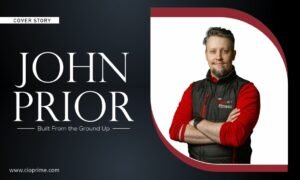
The fitness and franchise industry is often associated with growth, performance, and expansion, but behind every successful operation is someone who understands the discipline required to make businesses work day after day. John Prior, Franchisee at Snap Fitness 24/7, is one of those leaders. With more than 18 years of experience in fitness operations, business strategy, and team leadership, he has built a career around improving performance, developing people, and creating businesses that can grow sustainably.
His journey reflects a practical understanding of leadership shaped by experience rather than theory. As a Franchisee with Snap Fitness 24/7, he has focused on driving growth and strengthening the brand through strategic planning and operational execution. Before that, he spent over nine years as a Regional Manager with Snap Fitness, overseeing operations across 12 sites in England and Wales, where his work in revenue analysis, budget management, and reducing attrition contributed to the long-term strength of the franchise network.
Alongside his corporate leadership experience, John also opened and continues to operate his own award-winning multi-business fitness facility, recognised for both operational excellence and commercial performance. His work has earned him multiple business and leadership awards, reflecting a consistent commitment to high standards, innovation, and building strong teams. What makes his story particularly compelling is that it is grounded in the realities of running businesses from the ground up, solving operational challenges, and helping others achieve lasting success.
Learning by Doing
John’s career has been shaped by experience rather than a predefined blueprint. Since entering the franchise world in 2014, he has evolved from running businesses to understanding what allows them to grow, scale, and remain sustainable over time. His work has centered on ownership, operations, people, commercial performance, and the continuous pursuit of improvement.
He built and developed an award-winning multi-business site, earned several personal business awards, and has spent years supporting franchisees and business owners in strengthening their operations. His book, Operationally Fit: Operational Mastery for Modern Franchise Owners, reflects his belief that success comes not only from having a strong business idea but from executing it consistently.
Rather than pursuing the title of a global business leader, John has focused on taking responsibility for larger challenges and creating a positive impact on more people. As the scale of his work expanded, so did his perspective, moving naturally beyond a single business or location.
The Principles That Never Changed
Throughout his career, three leadership principles have remained constant. The first is taking responsibility. While it is easy to explain why something went wrong, real progress comes from asking what could have been done differently.
The second is keeping commitments. He believes trust is built when people know that a leader’s word can be relied upon, and that credibility can disappear just as quickly when promises are not kept.
The third is caring for people without lowering standards. John does not believe that good leadership means avoiding difficult conversations. Challenging poor performance or making unpopular decisions is sometimes necessary, but those decisions should always be fair and intended to strengthen the person, the team, or the business.
Curiosity also remains central to his approach. He believes leaders who stop learning are often the first to fall behind.
What Business Excellence Really Means
John views business excellence as consistency rather than perfection. An excellent business understands its customers, knows its numbers, develops its people, and builds systems that allow performance to continue without depending entirely on one individual.
Operating across markets and cultures adds complexity, but he believes the fundamentals remain remarkably similar. Clarity, accountability, customer experience, commercial discipline, and adaptability continue to determine long-term success.
In today’s competitive environment, customers can compare brands, prices, and experiences almost instantly. That means businesses can no longer rely on reputation alone. They must consistently deliver on the promises they make.
Great Teams Start with Clear Expectations
When working across different regions and cultures, John believes clarity comes before motivation. People need to understand what they are responsible for, what success looks like, and how their work contributes to the wider objective. Once that foundation exists, leaders can create an environment where individuals have the freedom to perform.
He also recognizes that leadership cannot be applied in exactly the same way everywhere. Different personalities, backgrounds, and cultures respond differently to communication, recognition, and accountability.
Adapting leadership style, however, should never mean changing the standard. The strongest teams he has worked with combine trust and accountability, giving people the confidence to make decisions while remaining committed to results.
Innovation That Solves Real Problems
John sees innovation as essential to sustainable growth, but he believes many businesses mistake innovation for simply doing something new. In his view, innovation should solve a problem, improve an experience, reduce friction, or create a better commercial outcome.
Technology has opened enormous opportunities, yet he is equally interested in operational innovation. Some of the most valuable improvements come from simplifying existing processes and making them significantly more effective.
Long-term winners are rarely the businesses with the greatest number of ideas. They are the ones that identify the right ideas, implement them well, and measure whether those ideas actually deliver results.
Growth and People Are Not Opposing Goals
John does not see strategic growth and people-first leadership as competing priorities. Sustainable growth depends on strong people, and strong people are more likely to succeed when they understand the direction of the business, feel that their contribution matters, and have opportunities to develop.
At the same time, he believes that putting people first should not become a reason to ignore commercial realities. A leader has a responsibility to protect the health of the business because that ultimately protects the people within it.
His approach is built on compassion, clarity, and accountability. The most effective workplaces, he believes, are those where people know they are valued and know they are expected to perform.
Resiliene Is Built During Difficult Seasons
Some of John John’s most important leadership lessons came from periods when things did not go according to plan. Running businesses taught him early that markets shift, costs rise, people change, and external decisions can alter even the strongest plans.
Those experiences made him more resilient and far more measured in how he responds to challenges. Earlier in his career, his instinct was to solve everything immediately. Today, he prefers to step back, understand the problem fully, and focus his energy where it will have the greatest impact.
He believes difficult periods reveal the true character of a leader. When conditions are favourable, leadership can feel straightforward. The real test comes when pressure, uncertainty, and responsibility arrive at the same time.
Using Technology with Purpose
Technology has significantly changed the way John approaches business leadership. Access to data has become far more immediate and detailed than it was when he began, allowing businesses to make better-informed decisions.
Automation, digital marketing, customer management systems, artificial intelligence, and advanced reporting tools have helped remove much of the administrative friction that slows organisations down.
Even so, he remains cautious about adopting technology simply because it is new. The question he continually asks is whether it genuinely improves the business. He believes the strongest leaders of the future will be those who can combine technology with sound commercial judgement, an understanding of human behaviour, and strong operational execution.
Better Systems, Better Results
John believes organisational excellence begins with clarity, measurement, and communication. People cannot be held accountable for responsibilities they do not fully understand, so he prefers objectives that are clear, measurable, and reviewed through regular conversations rather than annual surprises.
He also believes accountability should work in both directions. Leaders should expect performance from their teams, while teams should feel able to challenge leaders when something is not working.
Collaboration becomes stronger when people recognise that they are working toward a shared outcome instead of protecting individual departments or roles. In his view, operational excellence is created by turning good intentions into consistent behaviours and repeatable systems.
The Future Belongs to Adaptable Leaders
John believes artificial intelligence and automation will continue reshaping business, but the real difference will come from how organisations use those tools. The gap between businesses that merely adopt technology and those that redesign their operations around it is likely to become much wider.
At the same time, he believes leadership will become increasingly human. As automation takes over repetitive work, judgement, creativity, communication, emotional intelligence, and relationship building will become even more valuable.
He also expects adaptability to become one of the defining characteristics of successful organisations. A clear direction remains important, but the ability to change course when circumstances change will separate future leaders from the rest.
The Kind of Legacy That Matters
While financial performance is essential for any business, John does not see revenue alone as a meaningful definition of success. He looks at the quality of the operation, the strength of the team, customer experience, retention, employee development, and whether the business can continue performing without relying entirely on him.
Personally, success is closely connected to impact. If something he has learned, written, or implemented helps another business owner avoid a mistake, improve operations, or achieve something they once thought impossible, he considers that a meaningful result.
John hopes his legacy will be measured less by titles and more by the number of businesses and people he has helped improve. He wants to be remembered as someone who understood business from the ground up and shared practical knowledge that others could apply.
Through his businesses, his writing, the projects he supports, and the people he mentors, he aims to leave behind ideas that continue creating value long after he is gone.
To him, great leadership is about building something that performs today while developing people who can take it further tomorrow. If those people go on to achieve things far beyond what he has accomplished himself, he believes that would be the strongest legacy any leader could leave.