
Innovation, Sustainability, and Growth in Property Development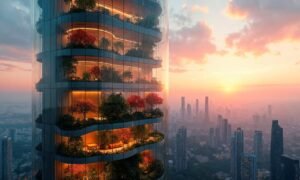
The Future of Real Estate
The real estate industry is entering a new era of transformation. Rapid urbanization, evolving consumer preferences, technological advancement, environmental responsibility, and changing economic dynamics are reshaping the way properties are planned, developed, and managed. No longer confined to the construction of buildings alone, modern real estate development has become a strategic discipline focused on creating sustainable communities, enhancing lifestyles, and supporting long-term economic growth.
“The Future of Real Estate” explores how innovation, sustainability, and forward-thinking leadership are redefining property development across residential, commercial, industrial, and mixed-use sectors. As cities continue to evolve and global expectations rise, developers are embracing new approaches that balance profitability with responsibility, technology with human experience, and growth with long-term value creation.
The future of real estate will be shaped by organizations that can anticipate change and build for the needs of tomorrow.
A Transforming Real Estate Landscape
The real estate sector has experienced significant change over the past decade. Shifting demographics, digital transformation, changing work patterns, and growing environmental awareness are influencing how people live, work, shop, and interact with their surroundings.
Developers are increasingly challenged to create spaces that are flexible, efficient, connected, and future-ready. Traditional development models are giving way to more integrated approaches that consider lifestyle, community engagement, wellness, and sustainability.
The modern real estate industry is moving beyond physical infrastructure toward creating holistic environments that support evolving human needs.
The most successful developments are designed with the future in mind.
Innovation Driving Property Development
Innovation is becoming a defining force in real estate. Advanced technologies are transforming every stage of the development process, from planning and design to construction, sales, and property management.
Artificial intelligence, Building Information Modeling (BIM), digital twins, smart building systems, virtual reality, and data analytics are helping developers improve efficiency, reduce costs, and enhance customer experiences. These technologies enable more informed decision-making while improving project outcomes.
Innovation also allows developers to respond more effectively to market demands and changing consumer expectations.
Technology is helping create smarter, more connected, and more efficient real estate ecosystems.
Sustainability as a Strategic Priority
Sustainability has become one of the most important considerations in modern property development. Environmental responsibility is no longer viewed as an optional feature but as a critical component of long-term success.
Developers are increasingly incorporating energy-efficient systems, renewable energy solutions, green building certifications, sustainable materials, and environmentally conscious design principles into their projects. These efforts reduce environmental impact while creating healthier and more resilient communities.
Sustainable developments often deliver benefits that extend beyond environmental performance, including operational efficiency, stronger asset value, and enhanced market appeal.
The future of real estate is inseparable from the future of sustainability.
The Rise of Smart and Connected Communities
Technology is not only transforming buildings but also redefining entire communities. Smart developments integrate digital infrastructure, intelligent energy systems, connected mobility solutions, and advanced communication networks to improve quality of life and operational efficiency.
These communities provide residents and businesses with enhanced convenience, security, and accessibility while supporting more sustainable urban environments.
As urban populations continue to grow, smart city concepts will play an increasingly important role in shaping the future of development.
Connected communities are creating new standards for modern living and working.
Evolving Consumer Expectations
Today’s property buyers, tenants, and investors have different expectations than previous generations. They increasingly prioritize convenience, wellness, flexibility, sustainability, and access to amenities that enhance everyday life.
Developers are responding by creating mixed-use environments that combine residential, commercial, retail, hospitality, and recreational elements within integrated communities. These developments provide a more comprehensive lifestyle experience while fostering stronger social connections.
Understanding customer preferences has become essential for creating successful and enduring projects.
Real estate value is increasingly defined by experience as much as location.
Wellness and Human-Centered Design
Health and well-being have become major influences on modern property development. Developers are designing spaces that promote physical, mental, and emotional wellness through natural light, green spaces, air quality improvements, recreational facilities, and thoughtful community planning.
Human-centered design focuses on creating environments that support comfort, productivity, and overall quality of life. These considerations are becoming increasingly important in residential communities, workplaces, educational facilities, and mixed-use developments.
The future of development will be shaped by spaces that place people at the center of design decisions.
Great real estate improves how people live, work, and connect.
Growth Through Strategic Urban Development
Urbanization continues to create significant opportunities for real estate growth. Expanding cities require housing, infrastructure, commercial spaces, logistics facilities, and community services to support growing populations and economic activity.
Forward-thinking developers play a critical role in addressing these needs through strategic planning and responsible development. Their projects contribute to job creation, economic growth, and enhanced urban functionality.
Successful development creates value not only for investors but also for communities and local economies.
Real estate remains one of the most powerful drivers of urban transformation.
Leadership Shaping the Future of the Industry
Behind every successful development is leadership capable of navigating market complexity, regulatory environments, financial challenges, and changing consumer demands. Industry leaders are responsible for identifying opportunities, managing risk, and creating long-term value.
The future of real estate will require leaders who can combine strategic vision with innovation, sustainability expertise, and customer-centric thinking. Their ability to adapt to evolving market conditions will determine how effectively organizations respond to future opportunities.
Leadership remains one of the most important drivers of industry progress.
Transformational projects begin with transformational leadership.
The Next Chapter of Real Estate Development
The future of real estate will be defined by integration—bringing together technology, sustainability, design, community development, and economic growth into a unified vision. Developers will increasingly focus on creating environments that are resilient, adaptable, and capable of meeting evolving societal needs.
As innovation accelerates and urban landscapes continue to evolve, organizations that embrace change while maintaining a commitment to quality and value will emerge as industry leaders.
The next chapter of real estate development is about building more than properties—it is about shaping the future of how people live, work, and thrive.
Progress begins with the vision to build for generations rather than for the present alone.
Conclusion
“The Future of Real Estate” highlights the profound transformation taking place across the property development industry. Through innovation, sustainability, and strategic leadership, developers are creating spaces and communities that reflect the evolving needs of a rapidly changing world.
By embracing technology, prioritizing environmental responsibility, focusing on wellness, and delivering customer-centric experiences, the industry is redefining what successful development looks like in the modern era. These efforts are creating lasting value while supporting stronger communities and more resilient cities.
As the future unfolds, one reality remains clear: the most successful real estate organizations will be those that combine vision with innovation, growth with sustainability, and development with a commitment to improving the way people live and work.