
The Numbers Language of Clarity: Fahad Al-Aslami’s Blueprint for Strategic Finance 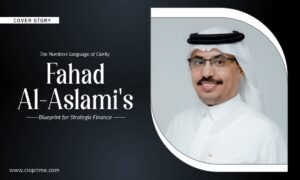
Fahad Al-Aslami has spent 25 years in the boardrooms of Saudi Arabia’s most significant organizations. His conclusion, after all of it, is simple: finance is not about numbers. It is about clarity. Beyond his CFA Charter, CMA, SOCPA Fellowship, INSEAD Certificate in Corporate Governance (IDP-C), and COSO Enterprise Risk Management Certificate, his perspective was further shaped by executive programs at Stanford Graduate School of Business, London Business School, Saïd Business School at Oxford, and INSEAD—institutions that deepened his understanding of strategy, governance, and financial leadership at a global level.
He did not initially plan to spend his entire career in this field. He stayed because he discovered that finance remains far more interesting than most people expect, “Even more interesting than I expected.” Early in his journey, he realized a truth that many overlook. Finance does not center on numbers. It centers on clarity. He views numbers as a language, and he focuses entirely on what an organization does with the information they provide.
Fahad Al-Aslami served as the Chief Financial Officer for several of the most significant organizations in the Kingdom, including STC, SATORP, Maaden Aluminum, SPIMACO, and the National Housing Company. He also managed the financial health of Al Akaria, a prominent company within the PIF portfolio. Each role presented unique challenges, yet he always returned to a single question. He asked how finance could help the organization perform at a higher level. In this relentless pursuit, recognition has followed him throughout his career, from being ranked second in the Revolutionary CFO of the Year Award across the MENA region in 2015, to CFO of the Year 2022 and Finance Team of the Year 2023.
The Power of Financial Honesty
A defining moment in his career happened during a complex financing decision with a major board. The room was filled with conflicting opinions and high emotions. Fahad Al-Aslami cut through the noise by presenting a single financial narrative. It was not the most optimistic view, nor was it the most pessimistic. It was simply the most honest. That experience solidified his belief that a leader’s most important contribution is providing clarity when the pressure is at its highest. He carries this philosophy into his current roles as a board member for Mouwasat Medical Services and Dar Al Tamleek. These positions allow him to see exactly what boards need from their financial leaders to make informed decisions.
Democratizing Elite Financial Leadership
Fahad Al-Aslami began to wonder why only the largest organizations had access to this level of high-tier financial leadership. This curiosity drove him to establish Prime CFO. Through this firm, he, being the Founder, brings the same strategic discipline used at global companies to a broader range of businesses. He acts as a Managing partner who helps organizations translate their data into actionable growth strategies. His approach involves stripping away complexity to reveal the core truths of a business. He believes that when a leader understands the ‘why’ behind the numbers, they gain the power to change their future.
Today’s financial landscape demands more than just record-keeping. It requires a partner who can navigate global shifts while maintaining a focus on local excellence. Fahad Al-Aslami spends his days bridging the gap between current operations and future potential. He sits with founders and executives, helping them find their own version of that honest narrative. As the market continues to evolve, he stays focused on the belief that clear thinking remains the most valuable asset in any portfolio. The mission to provide every organization with elite financial guidance keeps his work as interesting today as it was twenty-five years ago.
The Evolution of the Modern CFO
At this stage of Fahad Al-Aslami’s journey, he sees the role of the modern CFO evolving across Saudi Arabia and the GCC, particularly in driving strategic growth, transformation, and business resilience. When he started his career, the CFO was expected to be the organization’s financial conscience, rigorous, disciplined, and cautious. That role still matters. But it is no longer sufficient.
Navigating Vision 2030 and New Market Demands
Vision 2030 changed the equation completely for him. Companies are scaling faster, governance expectations are rising, capital markets are becoming more sophisticated, and regulatory complexity around ZATCA and CMA is increasing. The old CFO profile cannot keep pace. The modern CFO he has seen succeed sits genuinely close to the CEO and the board, not as a reporter of results, but as a thought partner on strategy. Someone who can look at a proposed expansion and say clearly: here is what the numbers tell him, here is what they do not tell him, and here is what he thinks they should do. The companies that invest in that kind of financial leadership early will have a significant advantage over those that wait until pressure forces their hand.
Strategic Leadership via the Fractional Model
The Fractional CFO market is rapidly growing in the GCC region. Now, a question might arise. What opportunities and challenges emerge in this space, and how are they reshaping financial leadership for businesses of all sizes? “Let me be honest about where this idea comes from. Across my career, I sat in rooms with founders who were clearly capable, clearly ambitious, and clearly building something real.” But making major financial decisions without the strategic support those decisions deserved. Not because they did not value it. Because it was not practically accessible to them.
Closing the Infrastructure Gap
A company with SAR 80 million in revenue does not need a full-time CFO earning SAR 720,000 to upwards of SAR 1,000,000 per year, before benefits, housing allowances, and long-term employment commitments. What it needs is five to eight days per month of genuine CFO-level thinking, applied to the decisions that actually matter. Cash flow. Financing strategy. Board reporting. Growth planning. The things that determine whether a company builds momentum or quietly accumulates risk. Vision 2030 has accelerated the growth of thousands of mid-market companies that have outpaced their own financial infrastructure. The Fractional CFO model closes that gap.
The Prime CFO Distinction
The challenge is that the market is still learning to distinguish between strategic financial leadership and outsourced accounting. They are not the same thing. A Fractional CFO does not do your bookkeeping. They help you decide whether to open a new market, how to structure your next credit facility, and where your biggest financial risks actually are. Prime CFO was built around that distinction. Fahad Al-Aslami informs that his clients are mid-market companies with real ambition. They are businesses that need strategic financial leadership delivered with the flexibility and practicality their stage demands. Every engagement begins with a structured 20-working-day diagnostic, a clear, honest picture of where the company stands and what needs to change.
When it comes to digital transformation, automation, and data-driven strategies influencing his leadership approach and financial decision-making process, Fahad Al-Aslami gives his honest view: most companies do not have a technology problem. They have a clarity problem. “I have worked with organizations that had sophisticated ERP systems and dashboards.” But whose leadership teams still could not tell you with confidence what their cash position would look like in 90 days. The technology was there. The financial thinking that should have been driving it was not.
Digital transformation only creates value when it starts with a clear understanding of which decisions need to be made better and faster. Start with the decision. Then find the tool. “At Prime CFO, we help clients build financial infrastructure that is practical and genuinely connected to how leadership actually operates; not impressive on paper but disconnected from reality.”
AI and the Transformation of Financial Functions
Artificial Intelligence is already changing the finance function in ways that are real — not theoretical. Forecasting that took days now takes hours, reveals Fahad Al-Aslami. Scenario modeling that required a dedicated analyst can now run interactively. These are genuine shifts in what a finance team can produce. But the companies that benefit most are not those with the most sophisticated tools. They are the ones with a CFO who knows which questions to ask. AI gives you answers at speed. It does not tell you which questions matter, he shares.
The Human Element: Judgment Over Algorithms
At Prime CFO, AI is structural to how Fahad Al-Aslami and his team deliver. Their clients get continuously updated cash flow modeling, board pack production, and financial dashboards; not a manual exercise once per quarter. That changes the nature of the conversation between finance and leadership entirely. What AI will not replace is judgment. Walking into a board meeting and saying calmly that the company is heading toward a liquidity problem in four months, and presenting a credible plan, requires his experience and the ability to deliver difficult truths in a way that produces action. No algorithm does that.
Elite Knowledge for the Mid-Market
After 25 years as CFO in some of the Kingdom’s most significant organizations, Fahad Al-Aslami had accumulated a very specific kind of knowledge. Not just technical knowledge, but the knowledge that comes from being in the room when difficult decisions are made. When a company is raising capital, the terms are not what anyone expected. When a board is asking questions, the finance team is not prepared to answer. When the numbers look fine on the surface, but something underneath is quietly building pressure. That knowledge was exactly what many mid-market companies needed and could not easily access.
Redefining Financial Leadership
Prime CFO was built to change that. Fahad Al-Aslami says their firm is not a consulting firm that produces reports. It is not an accounting firm that manages compliance. It is a financial leadership practice; a senior team that embeds directly into client organizations and operates as their CFO function at the strategic level. “If I had to summarize the vision in one sentence:” Prime CFO exists so that the companies building Saudi Arabia’s private sector future have access to the financial leadership they deserve, not just the financial administration they can afford.
The Pillar of Honesty and Adaptability
The best finance teams he has been part of shared one quality above everything else: they were honest. Not just technically competent, but honest. Willing to tell leadership what the numbers actually mean, even when that conversation is uncomfortable. Building that requires a specific environment. People need to feel that bringing a difficult truth to the table is valued, not penalized. That is a leadership responsibility before it is a hiring decision. Beyond honesty, he looks for commercial understanding, professionals who connect numbers to business outcomes, not just accounting standards, and adaptability. The regulatory and technological environment in Saudi Arabia is changing faster than at any point in his career. The finance professionals who matter most over the next decade will be those who update continuously, not those who rely on what they learned at the start.
Navigating GCC Financial Challenges
Also, when it comes to the biggest financial and business challenges organizations in the GCC region are currently facing, and how visionary CFOs can help navigate them, the window of opportunity Vision 2030 has created is real, but it will not stay open forever. Four challenges prevent many companies from fully capturing it. First, cash flow management; growth consumes cash faster than most leadership teams anticipate, and forward visibility is the only solution. Second, regulatory complexity, ZATCA, CMA governance, and IFRS compliance require CFO-level navigation, not back-office management. Third, financing readiness, Fahad Al-Aslami has seen companies with strong revenues unable to access capital simply because they could not present their financials in a way that gave lenders confidence. Fourth, governance maturity, risk accumulates quietly in the absence of structured financial oversight, until it becomes a crisis. Every one of these challenges is entirely addressable with the right financial leadership in place.
The Vision for Future Financial Excellence
In his long-term vision, Fahad Al-Aslami wants Prime CFO to be the firm that Saudi and GCC mid-market companies think of first when they reach an inflection point, when growth is accelerating, and complexity is increasing. They need financial leadership genuinely connected to their business rather than simply reporting on it. Over the next three to five years, he sees Prime CFO combining experienced CFO judgment with AI-powered financial infrastructure, giving clients continuously updated intelligence, not periodic engagement outputs. That combination will become the standard for how mid-market financial leadership is delivered across the region.
The Foundations of Lasting Businesses
The foundation will always be the same: helping companies see their financial reality clearly, make better decisions, and build businesses that last. Now again, when it comes to advising aspiring finance professionals and future CFOs who want to make a meaningful impact in today’s fast-changing global economy, he wants them to concentrate on three things: genuinely, not as a polished interview answer.
Core Principles for Future Leaders
First: Get close to the business. The finance professionals who develop into real CFOs are those who understand how the business actually works, not just how to account for it. The best financial analysis loses credibility if the person delivering it does not understand what they are describing.
Second: Learn to deliver difficult truths well. Anyone can present good news. The ability to tell a CEO something they do not want to hear, clearly, constructively, with a solution, is rare and genuinely valuable. He encourages them to develop it early.
Third: Be patient with the timeline. The capabilities that make an effective CFO compound over years, not months. Titles come faster than real influence. He advises them to invest in depth consistently.
Defining the Next Chapter of Financial Leadership
Saudi Arabia is producing exceptional finance talent right now. The professionals who combine genuine capability with the patience to build it properly will define the next chapter of this country’s financial leadership story. His focus remains on providing these future leaders with the environment and insights necessary to shape the private sector.
Leaders ready to explore what this could mean for their organization are welcome to reach out atwww.primecfo.sa or connect with him directly on LinkedIn.