Danny Samuel and The Road to Revolution – Leading Financial Transformation and Infrastructure Resilience 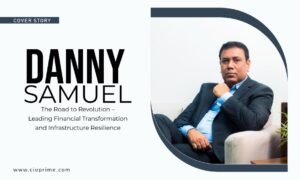
In the world of global infrastructure, all the ways lead to making a network of the modern economy, woven through a web of veins of roads, energy, and aviation. Yet, in this complex realm, Danny Samuel has emerged as a leader who understands both the weight of the past and the promise of the future. As the Chief Executive Officer (CEO) of Roadstar Infra Investment Trust and IL&FS Transportation Networks Limited, he does not just manage projects; he navigates some of the most complex financial and operational challenges of our time. With over twenty-five years of experience, he has developed a rare ability to look at distressed assets and see a path toward stability and growth.
Danny Samuel’s journey is one of deep commitment, having spent seventeen years within the IL&FS group. His work has taken him across borders, notably as the CEO for the Asia-Pacific region, where he was responsible for expanding operations into new and diverse markets. He is a master of the intricate language of debt capital markets, having coordinated the raising of funds through project bonds, foreign currency transactions, and cross-border financing. One of his most significant contributions was helping to lead the initial public offering of the company. This task required benchmarking valuations through private equity placements long before the first share was traded.
At the project level, Danny Samuel is known for his ability to think differently about finance. He conceptualized transactions that replaced standard term loans with structured, rated bonds. This shift was a game-changer, as it allowed projects to save substantial amounts on interest while replacing unpredictable floating costs with fixed-rate stability. He has a sharp eye for correcting mismatches between assets and liabilities, ensuring that the financial foundation of a project is as sturdy as the physical infrastructure it supports. Today, his work on the newly formed InvIT is a vital part of the group’s resolution framework, offering a fresh way to handle stressed assets in the transportation sector.
His leadership is grounded in a strong educational background, holding a master’s degree in Economics and Financial Management from the University of Rajasthan and being an Associate Company Secretary. He has continued to sharpen his edge through advanced management programs at UCLA Anderson and IMD Singapore. This blend of academic rigor and decades of hands-on experience allows him to lead with a calm and strategic perspective. As the infrastructure landscape continues to change in 2026, Danny Samuel remains a central figure in the effort to rebuild and innovate, always looking for new ways to turn complex problems into sustainable successes.
The Strategic Birth of Roadstar Infra Investment Trust
The creation of the Roadstar Infra Investment Trust was not a simple change in name but a deeply considered financial restructuring. This initiative was part of a larger plan set in motion by the New Board, which the Union of India appointed. The primary goal was to resolve the debt of the IL&FS Group while balancing the needs of many different stakeholders. By following a resolution framework approved by the National Company Law Appellate Tribunal, Danny Samuel and his team worked to maximize value in a way that was both fair and orderly. This move turned a difficult financial situation into a structured path toward recovery.
This new approach does much more than just settle old debts. It is a strategic effort designed to help creditors recover what the various IL&FS entities owe them. At the same time, it creates a protective barrier around the actual road projects managed by the trust. By shifting the ownership of these projects to a wide group of investors, including banks, mutual funds, and insurance companies, the trust ensures that these vital pieces of infrastructure remain stable and resilient for years to come.
Strengthening the Foundation of Public Assets
The Roadstar Infra Investment Trust represents a significant shift in how national infrastructure is managed during times of financial difficulty. This trust was not created by chance but was a carefully planned restructuring led by the New Board. By following a legal framework approved by the National Company Law Appellate Tribunal, Danny Samuel and his colleagues have worked to ensure that every decision is fair to the many people and organizations involved. The goal is to maximize the value of these road projects so that the debt can be resolved in an orderly way that respects everyone’s interests.
This new path is about much more than just paying back loans. It is a smart strategy designed to give lenders a clear way to recover their funds. At the same time, it creates a safe space for the road projects themselves. By moving the ownership of these projects into the trust, Danny Samuel has helped shield them from the broader financial troubles of the past. This protection ensures that the roads we use every day continue to be maintained and operated without interruption.
A Diverse Circle of Support
One of the most promising aspects of the trust is the wide variety of investors it has attracted. Instead of relying on just a few sources of capital, the ownership is now shared among banks, mutual funds, and even provident funds. This diversity is a major win for the long-term health of these assets. When insurance companies and pension funds invest in roads, they bring a sense of stability and a focus on steady growth. This mix of partners makes the projects more resilient against economic changes and ensures they have the support needed to thrive for decades. “The trust is a vehicle for enhancing the value of our national assets. It provides a transparent framework for lenders while making sure the roads themselves are held in safe hands for the benefit of the public.”
Roadstar essentially acts as a bridge between a difficult past and a more secure future. It offers a professional and efficient way to handle complex financial exposures while keeping the physical roads safe. As Danny Samuel continues to oversee this transition, the focus remains on building a landscape where infrastructure investment is seen as reliable and sustainable. The broad range of investors now involved suggests a bright future for these projects, marked by better management and a commitment to the growth of the country’s transport network. “By involving a broad spectrum of investors, we are building stability and diversity into the very core of our infrastructure. This is how we ensure that our roads remain strong and our financial systems remain trusted.”
Building Resilience through Investor Diversity
In essence, the trust has become a powerful tool for enhancing value. It offers a clear and efficient way to handle lender exposure while keeping the physical assets safe and operational. The fact that so many different types of investors—from provident funds to non-banking financial companies—are now involved is a very positive sign. This diversity brings a new level of stability and a variety of perspectives to the project, which helps protect against future market changes. “The goal of this restructuring is to create a sustainable future for these assets. By bringing in a diverse pool of investors, we are not just resolving debt; we are building a foundation for long-term growth and stability in the infrastructure sector.”
As Danny Samuel continues to lead this transition in 2026, the focus remains on ensuring that every step taken adds to the overall strength of the national transport network. The trust serves as a model for how complex financial challenges can be solved through cooperation and smart planning. With the support of the government and a wide range of financial partners, the road projects are now positioned to grow and serve the public better than ever before. The journey of transforming these stressed assets into a thriving portfolio continues, with each new milestone bringing more clarity and confidence to the market.
Navigating a Historic Financial Storm
Danny Samuel often reflects on the sheer scale of the organization he serves. IL&FS is not just a single company but a massive holding entity registered with the Reserve Bank of India. It sits at the top of a vast web of subsidiaries and joint ventures that reach into every corner of the economy, from transportation and energy to financial services and real estate. However, the story took a sharp and difficult turn during the 2018 financial year when the company defaulted on its borrowing obligations. The credit rating plummeted to its lowest grade, and a sense of crisis began to spread. The situation was so serious that the Ministry of Corporate Affairs ordered an investigation by the Serious Fraud Investigation Office to look into the company’s affairs.
On a landmark day in October 2018, the Union of India stepped in. The government petitioned for the immediate suspension of the existing board, citing mismanagement and a compromise in corporate governance. A New Board was appointed, led by prominent figures like Uday Kotak and Vineet Nayyar, with the clear mission to rescue the group from total financial collapse. They were tasked with a job of immense complexity: restoring solvency while managing a massive amount of debt across many different business structures.
The Shield of Value Preservation
One of the most critical moments in this journey was an order passed by the National Company Law Appellate Tribunal. This order stayed all legal actions against the group, essentially hitting a pause button on the chaos. This stay was vital because it prevented the fire sale of assets and gave the New Board the breathing room they needed to evaluate the situation. It allowed Danny Samuel and the other leaders to implement a resolution plan in an orderly way that kept the interests of all stakeholders in mind. Without this protection, the group would have been torn apart before a solution could be found.
A Framework for Recovery and Ethics
The New Board quickly realized that the best way forward was an asset-level resolution approach. Given the complexity of the group, they had to address each entity one by one to ensure the process was fair and transparent. To maintain the highest ethical standards, a retired Justice of the Supreme Court was appointed to supervise the entire resolution process. Because many directors in the subsidiaries had resigned during the crisis, members of the New Board and senior officials stepped in as nominee directors to ensure that every part of the group moved in the same direction. “Our focus is on preserving the going concern status of these entities. We are making only the payments necessary to maintain operations, ensuring that the infrastructure remains functional while we resolve the broader financial issues.”
Currently, the company is classified as a “Red” entity, which means it cannot meet all its financial obligations yet. Under the current legal framework, it is permitted to spend money only on what is strictly necessary to keep the business running. Danny Samuel continues to work within this disciplined environment, focusing on divesting group entities to recover value for lenders. It is a slow and careful process, but it is the only way to ensure that the vital infrastructure assets serving the public are protected while the financial wounds are healed. The resolution remains an ongoing effort, with every progress report bringing the group one step closer to a final settlement.
Navigating Toward a Sustainable Horizon
The journey of restructuring a giant like IL&FS is not a sprint but a long and careful walk through a maze of financial knots. Danny Samuel remains at the heart of this process, ensuring that the wheels of the transportation sector keep turning even as the paperwork of the past is settled. By focusing on the InvIT model, he has found a way to bridge the gap between old debts and new growth. This structure allows the road projects to be seen not as burdens of a troubled history but as valuable assets that serve millions of people every day.
His work involves constant coordination between the New Board, government authorities, and a wide circle of investors. Every decision is weighed against the need to preserve value and maintain the integrity of the transport network. Danny Samuel sees this phase as a transformative period where the lessons of corporate governance are being put into practice in real time. He continues to manage the delicate balance of keeping the company as a going concern while slowly and transparently handing off operations to more stable hands.
The Continuity of Public Infrastructure
As 2026 moves forward, the focus is shifting from simple crisis management to long-term stability. The road assets held within the trust are now being looked at as benchmarks for how distressed infrastructure can be reborn. Danny Samuel believes that the strength of the new framework lies in its ability to bring in institutional investors like provident funds and insurance companies. These partners provide the patient capital needed for roads to be maintained and expanded properly over the coming decades. “We are not just closing a chapter on debt. We are opening a new book on how to manage national infrastructure with transparency and collective responsibility. The goal is to ensure these roads continue to connect people and markets long after the financial restructuring is complete.”
The story of Danny Samuel and the road to revolution for the transportation sector remains an unfolding narrative. There is still much work to be done in divesting remaining entities and ensuring that every stakeholder finds a fair resolution. He approaches each new day with a focus on the practical steps that lead to big changes. While the shadow of 2018 is still visible, the light of new investment and cleaner governance is growing brighter with every successful asset transfer and every mile of road kept in top condition.