
Hybrid IT Monitoring: Managing Visibility and Performance in Modern IT Environments 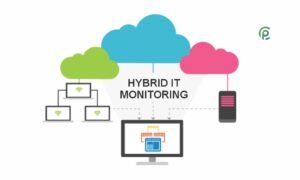
Nowadays, companies work within tech setups that keep growing more tangled. Instead of just using local servers, they tie together public cloud services, private clouds, software accessed online, along with devices at network edges. All these pieces moving at once form an ever-shifting space – hard to track unless you’re watching closely. Staying quick, safe, and running without hiccups means seeing everything clearly across different tools and locations. For IT groups doing this job daily, keeping tabs across mixed systems isn’t optional – it’s how things hold together.
Out here, apps and servers spread across many places mean old-style tracking just falls short. Tools must now piece together systems, software, services – no matter their location – with clarity. Because of this change, watching mixed IT setups closely isn’t optional anymore; it keeps things running when everything counts.
The Rise of Hybrid Infrastructure
These days, more firms rely less on office-bound servers than they did before. Still, shifting everything online hasn’t happened completely for most. Some keep older setups, internal server rooms, or gear tied to specific tasks – things hard to move elsewhere. Because of this, it’s common now to see local machines running alongside remote ones under one roof.
One big plus of this setup is how easily it adapts to changing needs, stretches when required, also keeps spending under control. Critical tasks stay within secure internal systems, whereas shifting user loads get managed through external cloud setups instead. Juggling these varied parts isn’t always smooth though. Operations often span multiple networks, running on separate platforms from different vendors – each tracks results differently, follows distinct rules too.
To address these challenges, hybrid IT monitoring enables IT teams to track system health, performance, and availability across the entire technology ecosystem. Instead of managing multiple disconnected monitoring tools, organizations gain a centralized perspective that helps them detect issues quickly and maintain operational stability.
Challenges in Monitoring Modern IT Environments
Managing distributed infrastructure comes with significant complexity. Each environment—whether on-premises servers, virtual machines, containers, or cloud services—generates different types of performance data. Without a cohesive strategy, IT teams may struggle to identify the root cause of performance issues or outages.
Another challenge lies in maintaining consistent visibility. When applications rely on multiple interconnected services, a problem in one component can affect the entire system. Traditional monitoring solutions often focus on isolated components, making it difficult to understand how issues propagate across the infrastructure.
Hybrid IT monitoring addresses these challenges by aggregating metrics, logs, and performance data from multiple sources into a unified dashboard. This allows IT professionals to correlate events, detect anomalies, and understand how different systems interact. By having a comprehensive overview, teams can respond to incidents faster and reduce downtime.
Security is another important consideration. Hybrid environments expand the attack surface because systems operate across different networks and platforms. Monitoring tools help identify unusual activity, performance spikes, or unauthorized access attempts that could indicate security risks. By integrating monitoring with security practices, organizations can improve both operational efficiency and cyber resilience.
Operational Benefits for Businesses
Implementing hybrid IT monitoring brings several operational advantages that directly impact business performance. One of the most significant benefits is improved visibility. IT teams gain real-time insights into the health of infrastructure, applications, and network components across both cloud and on-premises environments.
This visibility helps organizations maintain service reliability. When potential issues are detected early, teams can take corrective actions before users experience disruptions. In industries where uptime is critical—such as finance, healthcare, and e-commerce—this proactive approach can prevent costly outages and protect customer trust.
Another important benefit is enhanced resource optimization. Hybrid environments often involve dynamic workloads that shift between cloud and local systems depending on demand. Monitoring tools provide detailed performance data that helps organizations allocate resources more efficiently. Businesses can identify underutilized assets, optimize workloads, and reduce unnecessary infrastructure costs.
Automation also plays a growing role in modern IT operations. Advanced monitoring platforms integrate with automation tools to trigger alerts, initiate corrective actions, or scale resources automatically when thresholds are reached. By combining automation with hybrid IT monitoring, organizations can reduce manual intervention and improve operational agility.
Preparing for the Future of IT Operations
As digital transformation continues, IT environments will only become more complex. Technologies such as edge computing, containerization, and microservices architectures are expanding the number of systems that organizations must manage. At the same time, users expect seamless digital experiences with minimal downtime or performance issues.
To meet these expectations, businesses must adopt a more integrated approach to infrastructure management. Hybrid IT monitoring serves as the foundation for this strategy by providing continuous visibility into the entire IT landscape. With comprehensive monitoring in place, organizations can detect performance bottlenecks, anticipate potential failures, and maintain a consistent level of service.
Looking ahead, artificial intelligence and machine learning will play an increasingly important role in monitoring solutions. These technologies can analyze vast amounts of operational data to identify patterns, predict incidents, and recommend corrective actions. As these capabilities evolve, monitoring platforms will move beyond simple alerts to provide intelligent insights that support strategic decision-making.
Ultimately, the success of modern IT operations depends on the ability to manage complexity without losing visibility. By adopting hybrid IT monitoring strategies, organizations can ensure that their infrastructure remains reliable, secure, and ready to support future innovation. In an era defined by distributed technologies and constant digital growth, effective monitoring is no longer optional—it is a fundamental requirement for sustainable business success.