
The Impact of AI Innovations on Global Industries
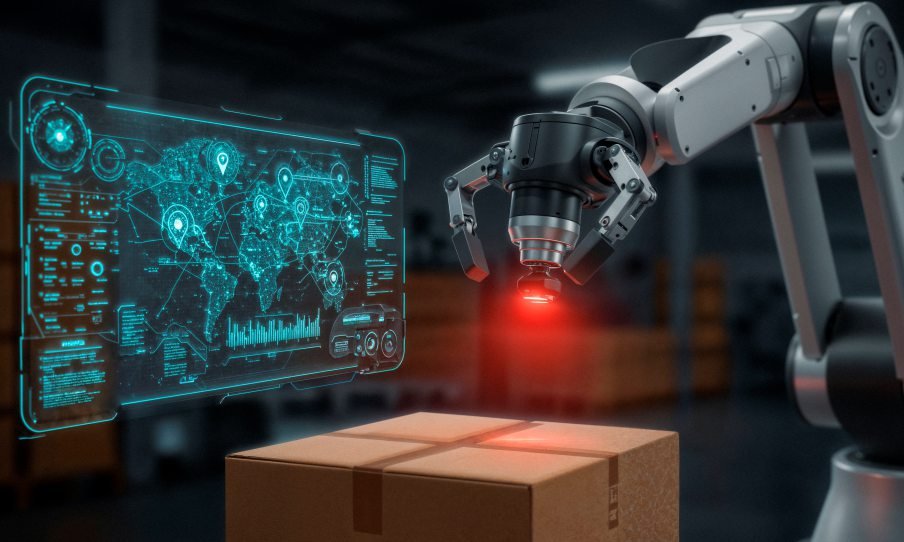
Artificial intelligence has moved beyond laboratory experiments and academic curiosity. In the past decade, it has become a transformative force across global industries. From healthcare and manufacturing to finance, logistics, and retail, AI is reshaping how businesses operate. The aim here is to examine the real, evidence-based impact of AI innovations, and to understand what this means for economies, workers, companies, and societies.
The Rise of AI: Investments and Momentum
Over the past few years, investment in AI has surged. In 2024 alone, private investment in AI reached USD 252.3 billion. At the same time, projections suggest the global AI market could grow from USD 189 billion in 2023 to as much as USD 4.8 trillion by 2033.
This massive investment reflects more than optimism, it signals concrete corporate adoption. A recent global survey found that companies report cost and revenue benefits from AI use at the “use-case level.”
With that foundation, AI is no longer a futuristic concept. It is embedded in daily workflows across major industries around the world.
Key Industries Being Transformed by AI
Healthcare: Smarter Diagnostics and Faster Drug Discovery
- AI is improving disease diagnosis by analyzing medical images, patient histories, and clinical data much faster than traditional methods.
- AI accelerates drug discovery by predicting protein structures and simulating molecular interactions. One landmark example is how AI-driven protein prediction has begun to aid targeted therapeutics, a shift with tremendous potential.
- Hospital administration and clinical workflows benefit too: tasks such as medical records management, scheduling, and claims processing are increasingly automated.
The changes in healthcare point toward a future of precision medicine, faster treatments, and improved patient outcomes.
Manufacturing and Logistics: Efficiency, Predictive Maintenance, and Smart Supply Chains
AI-driven systems are being used for predictive maintenance, supply-chain optimization, and quality control on factory floors. In logistics, smart supply-chain systems now anticipate disruptions and re-route shipments, making deliveries more reliable and efficient.
These developments reduce downtime, cut waste, and lower costs, which improves competitiveness for global supply chains.
Finance and Retail: Data-Driven Decisions and Personalized Experiences
In finance, AI algorithms help with fraud detection, risk assessment, investment recommendations, and analyzing massive data sets for better forecasting. Retail companies leverage AI to study customer behavior, anticipate demand, personalize marketing, and optimize inventory.
AI’s strength in processing large volumes of data allows businesses to tailor services more precisely and make operations more agile.
Cross-Industry Gains: Decision-Making, Productivity, and New Business Models
AI is not limited to a few sectors. A comprehensive review shows that AI has penetrated industries including education, transportation, agriculture, entertainment, and energy among others.
Within companies, AI is streamlining decision-making. An academic study covering 92 enterprises found 93% of them use AI, primarily in forecasting, customer service, and data-driven decisions. The result: faster, more accurate managerial decisions.
Some of the changes are structural, hybrid human-machine teams, new business models, and services we did not imagine a few years ago.
Macro-Economic Impact: Growth, Productivity and Global Economy
The effect of AI goes beyond individual companies. Economists estimate that wide adoption of generative AI could raise global productivity significantly, adding between USD 2.6 trillion and USD 4.4 trillion annually to the global economy. In some analyses, AI’s contribution to GDP growth could be as high as 1.0% globally and 1.5% in leading economies like the United States.
These gains come from both improved efficiency (doing more with less) and from enabling entirely new products, services, and business approaches.
Challenges and Risks: Employment, Inequality, and Responsible Integration
Despite its promise, AI also poses real challenges.
- The rise of automation means tasks once done by humans are now done by machines. Estimates suggest AI could affect up to 40% of jobs worldwide, particularly in roles involving repetitive tasks.
- For some workers, AI will complement human skill; for others, especially in routine roles, it could mean displacement.
- Integration barriers remain. One recent study highlighted obstacles like organizational resistance, data privacy concerns, cost, lack of AI literacy, and regulatory ambiguity.
- There are broader societal implications, decisions about who benefits, how data is used, what skills are valued, and how to retrain or reskill workers.
Without thoughtful policies, indiscriminate adoption of AI could widen inequality, hurt workers, and create unexpected long-term risks.
The Road Ahead
The evidence indicates this is not hype. AI is changing industries in fundamental ways. Companies that embrace AI thoughtfully, building robust data practices, aligning AI with human oversight, and planning for workforce transitions, are seeing real gains.
Societies and governments should treat AI as a structural change. Investing in education, data governance, regulations, social safety nets and reskilling will be key to spreading the benefits widely.
In the near term, expect continued transformation in healthcare, manufacturing, finance, logistics and retail. Over the next decade, newly created AI-enabled services and industries could reshape labor markets, trade flows, and the global economy.
Conclusion
Artificial intelligence is not a passing trend. It is evolving rapidly into the backbone of global industry and commerce. The technology has already proven its value: boosting productivity, enabling smarter decisions, enabling faster innovation, and unlocking new business models.
At the same time, AI brings challenges. If we want its transformation to be inclusive, sustainable and human-centred, we must pair innovation with responsibility. With thoughtful governance, training and ethical grounding, AI innovations can shape a future where industries grow, and human potential thrives along with them.
The moment is now. The question is not whether AI will transform industries, but how we ensure that transformation works for everyone.
Read More Articles: Click Here