
Daniel Burrus: The Human Side of Technology
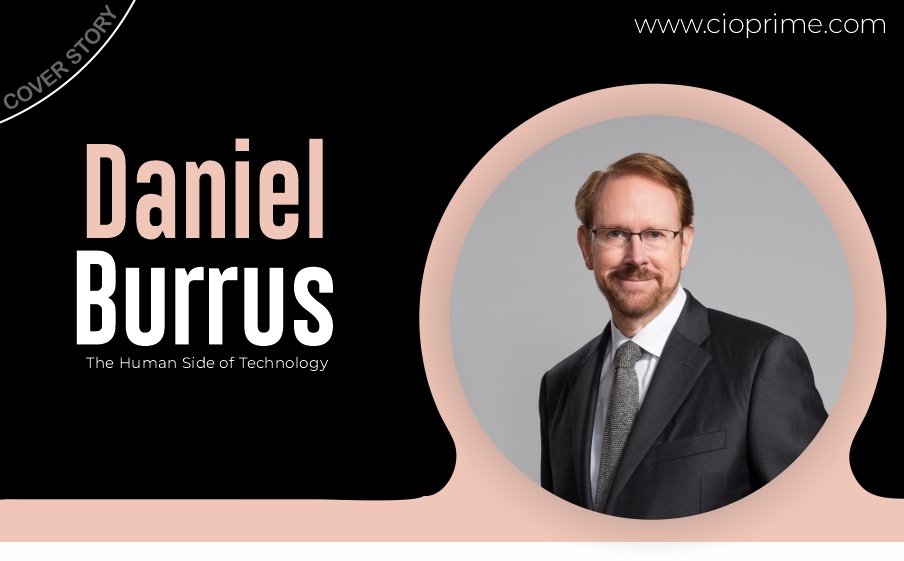
Using AI to Amplify Human Ingenuity, Not Replace It!
Every major leap in history began with someone seeing what others could not yet imagine. In the early 1980s, while technology was still finding its stride, Daniel Burrus was already mapping its future. He recognized 20 exponential technologies, including artificial intelligence, fiber optics, nanotechnology, and distributed computing, as forces destined to transform the world. He called them Hard Trends because they were based on future facts rather than assumptions.
That discovery became the seed of what he later defined as anticipatory thinking, a way of seeing the world through the lens of future facts. Daniel observed that most people and organizations tend to respond to change only after it arrives. He believed there was a stronger way forward: to anticipate it, prepare for it, and use it as a strategic advantage.
Through decades of research, writing, consulting and speaking, Daniel has guided leaders to think differently. He helps them identify disruptions before they disrupt, turning disruption into a choice, pre-solve problems before they appear, and recognize transformative opportunities before they become visible. His message is clear: anticipation leads to confidence, clarity, innovation, and growth.
For Daniel, the real story goes deeper than technology itself. What matters most is how people use it to amplify human potential. When strategic foresight meets creativity, innovation follows naturally. That belief has defined his life’s mission: to get people of all ages to creatively apply the new tools of technology to actively build a better future for themselves and others. He equips leaders with the mindset, skill set, and tool set to direct the future rather than react to it as it unfolds.
Daniel Burrus persists in inspiring a generation of thinkers who believe that progress begins with awareness and that the future rewards those who are prepared to meet it head-on.
Let us walk through his journey:
Seeing Disruption as a Doorway to Empowerment
Disruption, in Daniel’s perspective, is never an endpoint but a doorway, one that opens to transformation when approached with the right mindset. For him, the key lies in anticipation rather than reaction.
His belief in technology as a force for empowerment stems from over four decades of researching all areas of technology, writing and keynote speaking, and strategic advisory experience. Through those years, he has observed a consistent truth: disruption feels disruptive only when it catches one unprepared. By anticipating disruptive change through Hard Trends grounded in future facts, individuals and organizations can act with confidence turning disruption into opportunities.
Daniel views Artificial Intelligence as far more than a tool for automation. To him, AI augments human thinking acting as a catalyst for elevated human advancement. It enables people to transfer repetitive work to machines, allowing them to focus their energy on higher levels of thinking, creativity, strategic judgment, and complex problem-solving. These, he believes, are not merely soft skills but strategic assets that AI enhances rather than replaces.
The foundation of his optimism lies in the belief that technology does not diminish humanity; it expands it when used correctly. He sees humans as augmented, not displaced, by AI. In his view, Artificial Intelligence does not erase human value; it shifts where that value thrives. When leaders learn to merge the exponential strength of AI with deeply human abilities, they transition from reacting to change toward shaping the future.
For Daniel, empowerment is not accidental. It is strategic. And it begins by asking the right questions, not “What will AI do to us?” but “What can we do with AI to create a better future, for business, for employees, and for society as a whole?”
Discerning What Truly Matters in Emerging Technologies
In a world saturated with hype cycles, fleeting trends, and technological noise, Daniel believes discernment is a strategic necessity rather than a luxury. His Anticipatory Business Model for separating signal from noise is rooted in a methodology that has guided global organizations and government agencies for decades, the Hard Trend Methodology.
He observes that most organizations focus on agility; reacting as quickly as they can after a disruption occurs to deal with accelerating levels of change and uncertainty. As a result, they wait until disruption hits, they react as fast as they can, but as the pace of change accelerates, reacting quickly, regardless of how agile you are, is no longer good enough. However, when leaders learn to identify the Hard Trends certainties that will happen and cannot be reversed, they gain the confidence to act early and decisively.
Daniel explains that Hard Trends are based on future facts. For instance, increasing computing power, growing data volumes, the increasing speed of wireless connectivity, and the integration of AI into every business process are inevitabilities. By contrast, Soft Trends, those based on assumptions that may or may not happen, are open to influence. Both Hard and Soft Trends have high value when you identify opportunities for each. The opportunity of a Hard Trends is that you can see disruptions before they disrupt and problems before you have them turning them both into innovative opportunities. The opportunity of a Soft Trend is that you can define strategies to influence the trend in a positive direction.
According to him, the key is to focus innovation efforts based on Hard Trends. That is where exponential opportunity lives and where meaningful innovation becomes low-risk and high-reward.
He shares that he never chases trends but filters them through the lens of certainty. If it is a Hard Trend, it will happen. If it is Soft, he looks for opportunities to positively influence the impact of the trend. This, he believes, is how leaders shift from being passive observers of change to active shapers of the future.
Staying Creative While Remaining Grounded
Staying creatively expansive while remaining grounded in the present, Daniel believes, is a discipline rather than a balancing act. Every day he’s researching the latest game-changing technologies in every area of technology. But those innovations are the present state of the new technology, Burrus likes to look beyond the present state, and by using his Hard Trend Methodology, he identifies the future state and how they can be creatively applied to solve problems and create better tomorrows.
On a personal level, he has an annual commitment to learn something new every year. The purpose is to discover all that is inside of himself. One year he learned how to fly, another year scuba dive, another year sail, another year make independent films, another year play the flute. Many decades have passed, and he has discovered natural talents he didn’t know he had, and a lot about himself. This has given him a wide list of ways to enjoy every day while staying grounded with family, friends and experiences.
The continuous process of personal learning, combined with his technology research keeps him in a state of intentional learning and growth. His technology research is about elevating strategic insight through direct engagement with emerging capabilities, before they scale, before they disrupt, and before the majority takes notice. This approach enables him to stay focused on what truly matters in the present while maintaining clarity about what the future can bring.
For him, the outcome is a combination of prediction and preparation. That preparation fuels his creativity, sustains strategic relevance, and ensures a lasting advantage over time.
The Mindset Behind Every Breakthrough
Resilience is not something Daniel reserves for setbacks. It is something he builds into his process.
When a bold idea is not immediately accepted, or worse, misunderstood, he does not view that as failure. He views it as a signal. Most resistance, in his experience, is not to the idea itself but to the uncertainty it introduces. That is why he does not lead with the disruption. He leads with the certainty behind it.
For example, he anchors every transformative concept he presents by pointing out the Hard Trend future fact that the concept is based on. This moves the conversation from opinion to inevitability. When people understand that the disruption is going to happen with or without them, the resistance starts to shift into engagement. He shifts their thinking about disruption by encouraging them to become positive disruptors by creating the transformations that need to happen to elevate relevancy and accelerate innovation and growth.
For Daniel, changing how people think about the future and technologies such as AI requires clarity of purpose. He does not share innovative ideas for applause. He innovates to solve meaningful problems before they become crises and at the same time empowers others to do this as well. That mission gives him the persistence to keep teaching others how to do it.
He understands that breakthroughs often arrive before belief does. Anticipatory leaders, in his view, do not wait for consensus; they build it by showing what is certain, what is actionable, and what is possible.
A Message That Transcends Industries and Technologies
Whether he is speaking to defense leaders in Washington, executives in China, or entrepreneurs in Dubai, Daniel’s message remains the same: the future is something one shapes, not something one enters.
That message transcends industries, technologies, and borders because it speaks to agency. He believes people are active participants in building what comes next, rather than passive recipients of change. According to him, the most important shift any leader can make today is from reaction to anticipation.
He observes that people are surrounded by disruption, yet very few recognize that disruption itself can be a strategic choice. When one learns to identify the Hard Trends, future certainties, one gains the power to seize emerging opportunities, pre-solve problems, and create advantage while others hesitate.
The truth he returns to on every global stage is this: learning how to anticipate is far more valuable than agility. Agility is a fast reactive strategy. Being Anticipatory is being pre-active to future known events. He believes that when leaders guide with certainty, they gain the confidence to make bold moves and the clarity to lead their teams through uncertainty with purpose and precision.
For Daniel, this belief is more than a mindset. It is a model for transformational leadership.
When Leadership Demands a Choice Between Speed and Integrity
In a world driven by acceleration, speed is often celebrated as a competitive advantage. But in Daniel’s experience advising Fortune 500 leaders and national defense agencies, going as fast as you can usually burns teams out. Better to find a strategic velocity. Airline pilots don’t go full throttle the entire flight, that would use too much fuel and reduce the lifespan of the aircraft. They determine the best velocity based on many factors other than just speed.
Years ago, he was advising a technology firm preparing to launch an AI-driven product ahead of a key industry event. The internal pressure was immense. The market window was narrow. The launch team wanted to move forward with limited safeguards in place, citing first-mover advantage. But Daniel saw something they did not: the way they were launching it would diminish customer trust.
He advised the CEO to delay the launch. It was not because the technology was flawed, but because if they lost the trust of the customer, regaining trust would be long and difficult. The team paused, changed how they were introducing the product in a way that would elevate trust, and the result was that the product entered the market two months later but became very successful in a short amount of time and a benchmark in its category.
What guided his decision was not personal conviction alone, but strategic foresight coupled with the knowledge that we live in a human world that is based on relationships, and good relationships have high trust. He believes trust, when aligned with anticipation, becomes a force multiplier.
Speed makes headlines. High trust builds futures. That is a distinction Daniel believes leaders must always preserve.
The Lesson Daniel Hopes Future AI Leaders Carry Forward
If Daniel could pass forward one principle to the next generation of AI leaders, it would be this: spend less time reacting, regardless of how agile you are, and spend more time anticipating based on the Hard Trends that are shaping the future. If you don’t innovate based on a Hard Trend, someone else will!
He believes the world is entering a future where artificial intelligence will increasingly touch every process, every profession, and every person. The question, he says, is never whether AI will be exponentially more powerful. The question is whether its power will be guided. And guidance, in his view, begins with strategic foresight.
He often observes that too many innovators are taught to move fast and break things. But what they must learn, he explains, is that moving fast in the wrong direction will get you into trouble fast. To him, the most valuable innovations are never reactive; they are aligned with the direction Hard Trends are rapidly evolving, they represent future certainties that provide a roadmap for low-risk, high-reward transformation.
Daniel wants the next generation to see that trust is not a feature but a foundation. He also wants them to understand that exponential technologies require exponential thinking, balanced with deeply human values.
Anticipatory leadership, in his words, means using technology to elevate human potential, solve seemingly impossible problems before they become crises, and shape a future that is elevating, engaging, and intentional. That is the lesson he hopes they carry forward, because for him, the future should not be turned over to algorithms, it is about what humanity chooses to do with them to create a better tomorrow for all.
Role of Thought Leaders in Guiding Society Through Rapid AI Evolution
In a world where AI is evolving at exponential speed, far faster than regulation, culture, or education can adapt, he sees his role as a keynote speaker who has delivered over 4,500 keynote speeches worldwide, and a thought leader with millions of followers, is not to merely share the latest technology-driven trends and say good luck. It is to create an anticipatory mindset by teaching them how to separate Hard Trends from Soft Trends using industry examples and use that new level of certainty to give them the confidence to make bold moves.
When he steps onto a stage, he goes beyond possibilities, and speaks about future certainties, and the opportunities they represent. These are observable, unstoppable forces that allow leaders across sectors to move beyond reaction and operate with anticipatory foresight.
Daniel believes that thought leaders have a responsibility to bridge the widening gap between technological capability and societal readiness. That means shifting the conversation from fear to actionable strategy, from disruption to opportunity, from confusion to clarity.
He emphasizes that organizations and institutions must recognize that the issue lies not in the technology such as AI, it lies in how humanity chooses to prepare for it, guide it, and apply it. That requires more than looking at the present state and possible scenarios. It requires a mindset shift. It requires anticipatory thinking at scale.
He views the role of thought leaders as one that elevates dialogue, equips decision-makers to act before the disruption, and ensures that progress is not just fast but intelligent, ethical, and aligned with human value.
What Daniel Hopes Will Be Remembered About His Influence on Technology and Humanity
When the spotlight fades and history looks back on this era of exponential change, Daniel does not hope to be remembered only for accurately forecasting the rise of exponential technologies including AI or identifying the next wave of transformative technologies. His deeper aim has always been to shift how people think about the future, about planning, innovation, problem solving, and their relationship to the future itself. He has said many times to audiences in over 50 countries over the decades; “How you view the future shapes how you act in the present, and how you act in the present will shape your future. Your Futureview will determine the Future You!” His foundational goal is to elevate their Futureview which will elevate their future.
His anticipatory methodology helps leaders see that the future is something they can shape with confidence and clarity. That disruption is a choice, destiny can be shaped, anticipation is guided, and certainty is a strategic advantage when one knows where to look.
His books, speeches, articles, consulting and learning systems gives leaders the tools to move from fear to strategic foresight, from chaos to constructiveness. He’s demonstrated that technology, when aligned with human intention, can elevate potential as much as it enhances productivity.
Because in the end, the human story of technology is not about the code that is written. It is about the future that we build together. His work has always been about equipping leaders to actively shape the future intelligently, ethically, and exponentially. That is the legacy he considers worth leaving.
Read the full magazine edition: Click Here