
Amarnath Paluru: Turning Environmental Care into Industrial Practice
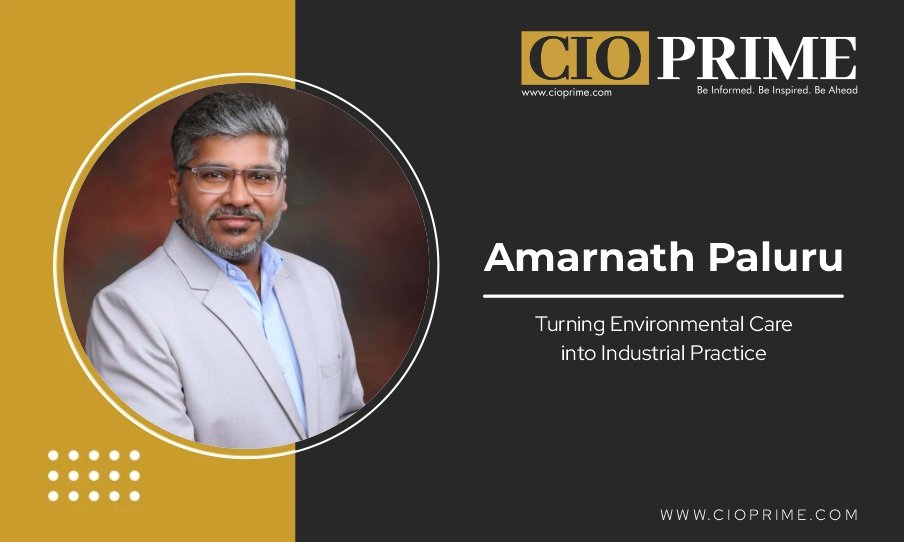
Aligning Business Progress with Safety and Sustainability Through EHS Leadership!
When a single decision at a factory can affect thousands of lives and the environment around it, the need for careful thinking becomes more than just a requirement, it becomes a responsibility. For Amarnath Paluru, this sense of responsibility has guided his career from the very beginning.
With a master’s degree in environmental sciences from Andhra University and advanced certifications in industrial safety, Amarnath Paluru was drawn to work where human wellbeing, environmental care, and industrial growth intersect. His early career in the pharmaceutical and chemical sectors showed him both the power of innovation and the dangers that come without thoughtful safeguards. He realized that growth should not come at the expense of safety or the environment.
That belief became his driving purpose. For Amarnath Paluru, Environment, Health, and Safety (EHS) is not just about rules or compliance. It is about creating cultures where people feel secure, ecosystems are protected, and organizations grow responsibly. This mindset transforms EHS from a process into a principle.
Across his journey, Amarnath Paluru has worked to embed safety and sustainability into the core of industrial operations. His goal has been to prove that growth and responsibility can move together, and that they can strengthen one another. Every safety guideline, sustainability initiative, and operational change is part of his vision, a vision where industrial progress leaves a lasting positive impact.
What stands out in Amarnath’s story is his deep sense of purpose. For him, leadership is not about control. It is about guiding change that protects both people and the planet. His journey is a reminder that real progress happens when care becomes the foundation of every decision.
Early Life Experiences That Shaped Leadership
Amarnath Paluru grew up in a modest environment where values like integrity, respect for others, and resilience were emphasized more than material success. Watching his family navigate challenges with grace taught him early on that leadership is about responsibility rather than titles.
Another formative experience came during his initial years of professional life, when he worked on the ground with frontline workers in high-risk environments. He observed how small decisions, such as introducing a safe work practice or improving protective measures, directly impacted their lives. It was then he understood that leadership is a lived commitment to those who rely on it.
These early experiences shaped his belief that leadership is grounded in empathy, service, and the ability to inspire trust even in difficult circumstances.
Evolution of Leadership Through Life and Career
In the early stages of his career, Amarnath Paluru believed leadership depended largely on expertise; knowing more, doing more, and demonstrating capability. Over time, his perspective shifted. Leadership became less about personal brilliance and more about collective empowerment.
As he advanced into senior roles, he realized the true strength of leadership lies in enabling others to thrive. His responsibilities transformed from doing to listening, mentoring, and aligning diverse teams towards shared goals. On a personal level, parenthood and family life enriched this understanding, patience, empathy, and a long-term perspective emerged as equally important in leadership as they are in life at home.
Amarnath Paluru now views leadership as a journey of continuous evolution: moving from managing tasks to shaping culture, from solving problems to creating possibilities.
Leadership Under Pressure
One of the most testing moments in Amarnath’s career occurred during a significant industrial incident early in his professional journey. The situation demanded swift decision-making, transparent communication, and immense emotional strength. The lives of workers, the reputation of the organization, and regulatory trust stood at stake.
In that moment, clarity of purpose guided him; placing human life above all else. He relied on his training while grounding his actions in deeply held values. He mobilized teams, ensured open dialogue with stakeholders, and maintained a visible presence on the ground.
The inner resources he drew upon included resilience, integrity, and composure under pressure. He recognized the value of vulnerability, acknowledging the absence of all answers while committing to finding them with his team. That experience tested his leadership and strengthened his conviction that crises reveal the true character of leaders.
Distinguishing Leadership from Authority
Authority is positional, it comes with the title, the role, or the mandate. Leadership, however, is earned. It is the ability to influence, inspire, and guide people voluntarily, even when there is no formal power over them.
The qualities that distinguish leadership from authority are authenticity, empathy, and the ability to build trust. Authority can demand compliance, while leadership earns commitment.
Amarnath Paluru consciously embodies this distinction by being approachable, transparent, and consistent. He makes it a point to listen more than he speaks, to walk the talk rather than issue directives, and to acknowledge contributions openly. By showing that he is part of the journey rather than above it, he observes that people respond because they choose to, not because they are required to.
Balancing Values and Organizational Demands
The tension between staying true to core values and adapting to organizational or societal pressures exists strongly, especially in sectors such as pharmaceuticals where business imperatives and regulatory requirements often pull in different directions. For Amarnath Paluru, reconciliation lies in clarity of non-negotiables. Human safety and ethical integrity remain non-negotiable values, while processes, strategies, and timelines can be adapted.
When faced with pressure, he relies on open dialogue. He explains the rationale behind holding firm on certain values while remaining flexible in finding innovative ways to meet organizational needs without compromising principles.
At times, this requires taking difficult stands. Amarnath Paluru believes true leadership means embracing discomfort when it protects long-term credibility and sustainability. Over the years, he has observed that organizations respect leaders who are values-driven yet pragmatic.
Leadership Lessons from a Difficult Choice
Amarnath Paluru recalls a moment earlier in his career when a decision was made quickly to meet operational timelines without fully considering the fatigue levels of the workforce. While no incident occurred, he later recognized that short-term deliverables had been placed above holistic safety.
The memory of this choice continues to cause discomfort, as it conflicted with his core principle of putting people first. This experience became a valuable lesson: leadership decisions must always take into account the human element, not solely the technical or business outcome.
It reinforced his belief in proactive engagement with teams and in fostering cultures where even leaders face challenges if safety is overlooked. The episode served as a humbling reminder that leaders are not infallible, and their true strength lies in the ability to learn and grow from mistakes.
Cultivating Trust in Times of Uncertainty
Trust is built on three pillars: consistency, transparency, and empathy. When the path ahead appears uncertain; as is often the case in fields such as sustainability and compliance, Amarnath Paluru emphasizes honesty about both what is known and what remains unclear. He believes people value candor far more than false assurances.
Amarnath Paluru invests effort in being accessible to all, whether frontline workers or senior executives. He listens to concerns and suggestions, believing that trust grows when individuals feel heard and respected.
He also leads by example. When requesting teams to adopt a safety practice, he ensures personal adherence. When speaking about sustainability, he chooses a lifestyle that reflects those principles. For him, trust emerges less from grand declarations and more from the steady alignment of words and actions in daily life.
A Turning Point in Leadership
Amarnath Paluru recalls an instance when a young team member challenged his perspective on waste management practices. He had proposed an approach that was tried-and-tested, but the team member argued passionately for a more innovative, circular-economy model. Initially, Amarnath Paluru felt skeptical and even defensive, yet the conviction in the team member’s voice compelled him to pause and truly listen.
The idea was piloted on a small scale and proved to be highly effective. This moment became a turning point, reinforcing that leadership means creating spaces where diverse voices are heard, including those that challenge established thinking.
Since then, Amarnath Paluru has consciously encouraged dissent and debate within his teams. Some of the most impactful sustainability initiatives in the industry have arisen from listening to voices that question the status quo. This experience shaped him into a more inclusive leader and strengthened his belief that humility is a strength rather than a weakness.