
Dr. Nisha Kohli: Redefining Sustainability with Authenticity
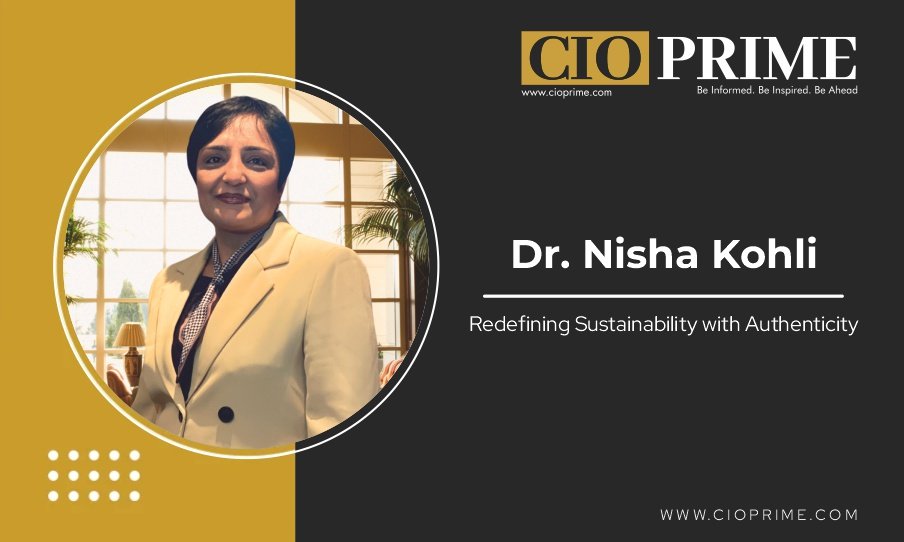
Helping Companies Move from Compliance Illusions to Real Accountability!
When the 2008 financial crisis shook global markets, it also shattered illusions. Companies once celebrated for their governance practices suddenly collapsed, leaving behind a trail of unanswered questions. How could organizations with certifications, awards, and compliance checkmarks fail so swiftly when real tests arrived?
For Dr. Nisha Kohli, this contradiction was not just a research subject during her Ph.D. studies. It became a turning point. She was examining governance failures when scandals like Satyam erupted, exposing the fragile foundations behind polished reports. That moment stayed with her and reshaped the course of her career.
She realized that sustainability and governance cannot live in checklists or glossy disclosures. They must be deeply rooted in a company’s strategy, culture, and everyday decisions. This belief later inspired her to establish CorpStage, a platform designed not to add another score but to build genuine trust.
Dr. Nisha’s perspective came from years of experience in corporate finance and her grounding as a Chartered Accountant. Over time, she observed a troubling disconnect between what organizations disclosed and what they actually practiced. ESG rating agencies often produced contradictory scores for the same company, measuring reports instead of real impact.
The clarity she gained was simple yet powerful. Stakeholders, whether investors, employees, or customers, were not demanding another performance for compliance. They wanted authentic, verifiable data they could trust. They wanted truth instead of theater.
With this understanding, she built CorpStage as more than a platform. For her, it became a compass to guide companies toward resilience. It allows organizations to generate and own their ESG data, communicate it transparently, and move from appearances to genuine accountability.
Dr. Nisha’s journey shows that real sustainability is not about collecting certificates. It is about embedding integrity into every decision an organization makes. Her work persists to remind us that trust and transparency are the true foundations of resilience.
Let us learn more about her journey:
Personal Experiences that Defined a Leadership Style
There was a defining moment early in Dr. Nisha’s journey at CorpStage that reshaped her approach to leadership. While working with a mid-sized Asian manufacturer, she encountered a CEO who carried deep skepticism about ESG integration. His hesitation came from past experiences with consultants who produced polished reports but left no lasting capability within the organization.
In their very first meeting, he asked her directly why this time would be different. Instead of relying on a polished presentation about frameworks or technology, Dr. Nisha chose honesty. She shared her own journey, speaking about companies that appeared strong on paper but failed in practice, and about her realization that compliance alone does not build resilience.
That exchange became a turning point. For her, leadership was no longer about presenting flawless solutions but about the courage to share the very questions that shaped her thinking. When she later demonstrated how the CorpStage platform could integrate ESG data directly into an ERP system, making it as dependable as financial data, the CEO saw a shift. Six months later, he admitted that he had never imagined ESG data could hold the same reliability as financial reporting.
Another defining experience emerged from her tenure as Head Office Finance Controller at Asahi Tech in Tokyo. Immersed in a new cultural environment, she learned that leadership cannot follow a single model. What resonates in one country may not translate in another. Singapore’s practices differ from Japan’s, just as India’s realities differ from Croatia’s. This understanding shaped her conviction that global standards must always be balanced with local contexts. Today, that philosophy lies at the heart of how CorpStage functions across diverse markets.
Through these experiences, Dr. Nisha came to hold a clear belief about leadership. True effectiveness requires authenticity in sharing a vision, adaptability in communicating it, and accountability in delivering it.
Defining and Using Influence as Women Leaders
Influence can be understood as the power to create change that continues even after one has stepped out of the room. True influence emerges when individuals embrace ideas, not because they were instructed to, but because they were guided to see possibilities that were previously unseen.
Dr. Nisha believes that women often practice influence in ways that differ from men, and she sees this distinction as a strength rather than a limitation. In her view, women lean towards collaboration instead of command, and empowerment instead of enforcement. When engaging with C-suite executives, she does not focus on convincing them about the significance of sustainability. Instead, she helps them uncover how it can improve efficiency, strengthen credibility, and expand access to capital.
For her, influence is about shaping perspectives. She often shares with leaders the thought that “transparency breeds trust, and trust fuels transformation.” These words are more than a phrase; they represent a framework for reimagining business practices. This, in her view, is the essence of influence, transforming how people think, not merely what they do.
She emphasizes that women leaders today can serve as catalysts for systemic change. At a time when the world faces climate challenges, social inequality, and governance failures, she believes women have both an opportunity and a responsibility to redefine leadership. Leadership, in her perspective, is not about overpowering conversations but about fostering environments where stronger and more meaningful dialogues can take place.
At CorpStage, where the guiding motto is “Elevate Your Potential,” Dr. Nisha sees influence as a way to help others achieve heights they never thought possible. Whether she is mentoring young professionals through the CorpStage Academy or advising senior executives on Net Zero strategies, her goal remains consistent, to leave individuals more capable, more aware, and more empowered than they were before.
A Leadership Moment That Changed Everything
There was a moment that reshaped the course of CorpStage as well as the future of a client. In 2023, a Singapore-based logistics company reached out in deep concern over the new ESG disclosure requirements. Their greatest challenge came from fragmented supplier data, which risked exposing large gaps in Scope 3 emissions reporting. Such a situation could have created serious doubt among investors and affected the company’s credibility.
The CorpStage ESG audit revealed that close to 40 percent of emissions reporting failed to include subcontracted transport partners. This discovery highlighted more than a data issue. It pointed to a potential crisis that could have triggered regulatory penalties and long-term damage to reputation.
What changed the outcome was the way leadership chose to respond. Instead of limiting the intervention to a technical report that exposed the gaps, Dr. Nisha decided to personally guide the process. She led cross-functional workshops that brought together procurement, finance, and operations. The focus was not only on identifying the shortcomings but also on reshaping the company’s entire approach to supply chain transparency.
The collaboration introduced automated emissions tracking across the logistics chain and placed internal controls to strengthen audit readiness. The real turning point arrived when the company’s CFO realized that emissions data, compliance measures, and financial performance could all be viewed within a single dashboard with complete reliability.
In less than a year, the company moved from apprehension to confidence. It began presenting sustainability metrics with the same clarity as financial results in its quarterly board meetings. The initiatives led to significant savings through energy efficiency measures and positioned the company as an industry example for responsible growth.
For CorpStage, this engagement became a defining project. It proved that the company’s role extended far beyond compliance. It demonstrated that ESG could be a driver of strategic transformation. The focus shifted from producing compliance paperwork to shaping boardroom strategies, validating the belief that sustainability should be seen as an investment center that creates long-term value.
Unique Strengths Women Bring to Leadership
Women often approach leadership with a systems-thinking perspective, which is essential in today’s interconnected world. Traditional leadership methods usually emphasize linear solutions such as fixing one issue or optimizing a single process. Women, however, tend to view the larger network of relationships and the unintended outcomes that each decision can create.
This approach is particularly vital in the field of sustainability. Addressing climate change requires more than focusing on carbon emissions alone. It demands equal attention to social equity, economic strength, and governance structures. Women’s natural inclination toward holistic thinking equips them well for navigating these complex challenges.
Another strength lies in what Dr. Nisha describes as “strategic patience.” This is the ability to stay committed to long-term goals while balancing immediate pressures. While working with companies on their Net Zero journeys, she highlights that the focus is not simply reaching a milestone in 2050. It is about making decisions in the present that create value for tomorrow and build resilience for the future.
Women also bring openness to vulnerability and a willingness to keep learning, which are essential leadership qualities in a rapidly evolving world. Dr. Nisha often reminds her team that their work goes beyond teaching ESG. They are shaping leaders who will embed sustainability into every choice they make. This calls for humility, and the understanding that growth continues throughout the journey.
Purpose-driven leadership is another quality women frequently display. Their focus is not solely on profit but on creating meaningful impact. At CorpStage, success comes from showing companies that sustainability and profitability can go hand in hand. The greater motivation lies in building a world where businesses prosper by driving positive change.
These qualities, systems thinking, patience, openness to learning, and purpose-led leadership, may not belong only to women, but women embody them with natural strength. They are exactly the qualities required to meet the challenges of the twenty-first century.
Overcoming Gender Bias in the Workplace
The most effective way to rise above bias is to become so valuable that prejudice loses its weight. This belief has guided Dr. Nisha throughout her journey. When she walks into a boardroom as the only woman, her focus remains on delivering insights that no one else in the room can bring, rather than spending energy proving her presence.
Early in her career, she faced challenges common to many women in leadership. She was interrupted in meetings, her ideas were attributed to male colleagues, and she was asked to take notes instead of leading discussions. Through these experiences, she discovered a powerful truth: expertise is the great equalizer. Once she became the person everyone turned to for answers, gender took a secondary place.
At CorpStage, Dr. Nisha built her credibility by translating complex ESG frameworks into clear business language that CEOs and CFOs could immediately connect with. When she explained to a manufacturing CEO how automated emissions tracking could save millions while ensuring audit readiness, she spoke as an expert solving a critical problem, not as someone seeking validation.
She also learned the art of reframing situations. When clients appeared surprised to work with a woman founder, she used that moment to showcase a distinct approach. Many ESG consultants, she pointed out, focused heavily on compliance. At CorpStage, the emphasis was on value creation, and she invited clients to see the difference.
Her efforts, however, extend beyond navigating bias. She has been intentional about reshaping systems. While hiring at CorpStage, she actively seeks diverse perspectives, knowing they lead to stronger solutions. During conferences, she highlights the achievements of women in her team. As a mentor, she shares technical expertise as well as strategic insights, equipping emerging leaders to build credibility of their own.
Bias, in her view, still exists. Yet, her career has shown that the most powerful response is to excel to such a degree that people seek expertise regardless of preconceptions. Once that platform is earned, she believes it must be used to uplift others and create space for greater equity.
Mentoring the Next Generation of Women Leaders
For Dr. Nisha, mentorship extends far beyond formal programs or scheduled sessions. It is an integral part of her work and philosophy. At CorpStage Academy, the approach is not limited to teaching ESG frameworks. The focus lies in developing the next generation of sustainability leaders, with a strong emphasis on empowering women to view themselves as change-makers.
One example that stands out in her journey is her work with a young sustainability officer from a client organization. The officer was exceptionally talented but faced difficulty in gaining the trust of senior leadership. Rather than simply offering guidance, Dr. Nisha invited her to observe meetings with C-suite executives. During these sessions, the young professional witnessed how sustainability metrics could be linked to business outcomes, how skepticism could be addressed with data, and how alliances could be built across departments.
Six months later, that officer was leading her company’s climate strategy and had become the central figure for ESG initiatives in the organization. For Dr. Nisha, this kind of transformation is what defines mentorship. It is not about transferring knowledge alone, but about helping individuals step into their strength and potential.
Through her newsletter and thought leadership on LinkedIn, she continues to make the path to sustainability leadership more transparent. She shares the realities of the field, including failures that became lessons, moments of doubt that led to clarity, and the strategic choices that shaped the direction of CorpStage.
Dr. Nisha also believes in creating opportunities for others. When invited to speak at conferences, she often recommends emerging women leaders from her network. When clients require expertise, she connects them with talented women consultants. When media platforms seek perspectives on sustainability trends, she suggests voices that deserve attention.
Equally important to her is serving as an example of what is possible. When women see someone like them leading a successful sustainability consulting firm, collaborating with global organizations such as BlackRock and DBS Bank, and being acknowledged as one of the most influential women in sustainability, it expands their vision of what they too can achieve.
Her ultimate goal goes beyond individual success stories. It is about reforming the narrative of who can lead in sustainability and redefining the ways in which leadership is exercised in this crucial field.
Risks She Took and the Lessons They Taught Her
Leaving a secure career in finance to build something untested was the boldest step Dr. Nisha ever took. In 2015, when she began shaping the idea of CorpStage, sustainability was largely seen as a compliance task rather than a strategic driver. For many executives, ESG was an added burden, far from being viewed as a business imperative.
There were nights filled with doubt, questioning whether the market truly needed what she was creating. Every ounce of her savings, reputation, and time was tied to a vision that many dismissed as premature. Friends wondered why she would walk away from a flourishing finance career to pursue what looked like a passing regulatory trend.
Yet her conviction remained steady, shaped by research and years of experience. She saw how governance lapses at companies such as Satyam and Lehman Brothers revealed the urgent need for authentic ESG integration. She believed that sustainability would one day shift from being seen as a cost to being embraced as a vital investment. Betting on that transformation, she chose to move early rather than wait for the market to mature.
This decision became a turning point. If she had waited, CorpStage would have entered a crowded field. Instead, being ahead allowed the company to shape how businesses approached ESG integration and influence the direction of the industry itself.
Another bold move came when she directed resources into ERP integration, at a time when most ESG platforms stopped at dashboards. It required significant investment and delayed the company’s launch. Many advisors warned that the approach was unnecessarily complex. Dr. Nisha held a different view. For her, sustainability data had to align with financial data to gain true acceptance in the boardroom. That choice has since become a defining advantage for CorpStage, enabling clients to evaluate sustainability and financial performance with equal confidence.
Through these risks, one lesson stood out for her. The greatest opportunities often lie in decisions that appear uncertain at the start. Risks grounded in research and conviction can transform into strengths that set a business apart. For Dr. Nisha, courage guided by insight has always been the path to creating real impact.
Balancing Innovation with Tradition
The most effective form of innovation emerges when traditional business principles are respected while being applied in new contexts. At CorpStage, innovation is pursued relentlessly in the approach, while the foundation remains grounded in timeless principles.
For instance, Chief Financial Officers have always required reliable and auditable data to make informed decisions. This need has remained constant through time. What has evolved is how ESG data now meets the same standard of reliability and integration that financial data has traditionally provided. Artificial intelligence, blockchain, and advanced analytics are employed as powerful tools, yet their purpose remains anchored in a fundamental business requirement: trustworthy information for sound decision-making.
The creation of the 6E framework; esgEdge, esgEnsure, esgEnable, esgEngage, esgExtend, and esgElevate, illustrates this balance between tradition and innovation. The methodology represents a fresh approach while upholding traditional consulting values such as thorough assessment, strategic planning, and measured implementation.
This philosophy extends to the way relationships are nurtured. Sophisticated technology platforms are used, yet traditional values of trust, reliability, and personal attention remain central. When the Chief Executive Officer of a logistics company expressed concern about ESG disclosure mandates, the solution was not a dashboard alone. Time was spent with the team, understanding their challenges, and designing a solution tailored to their context.
Decision-making is guided by what Dr. Nisha describes as anchored experimentation. Each decision is rooted in proven principles such as creating stakeholder value, solving real problems, and ensuring reliable delivery. At the same time, bold experimentation is welcomed in determining how those outcomes are achieved.
This balanced approach has consistently delivered results. Clients receive the innovation required to adapt to rapidly evolving ESG expectations, along with the dependability and professionalism they seek from a trusted advisor.
The Role of Emotional Intelligence in Leadership
Emotional intelligence holds a central place in sustainability leadership because it requires guiding people to reframe their understanding of business fundamentals. It involves questioning long-held assumptions, adjusting traditional metrics, and encouraging leaders to direct resources toward long-term outcomes that may take time to reveal their value.
Dr. Nisha explains that before influencing another person’s perspective, it is essential to first recognize their emotional connection to change. When engaging with a CEO who expresses doubt about ESG integration, the starting point is not frameworks or metrics. Instead, it is an exploration of the leader’s concerns. These could relate to financial implications, regulatory responsibilities, investor expectations, or the pressure of board accountability.
Once this emotional landscape becomes clear, communication can be tailored to resonate with the leader’s priorities. With a cost-sensitive decision-maker, emphasis is placed on efficiency and risk management. For leaders who focus on investor relations, the discussion centers on how transparency fosters trust and how trust strengthens valuation. For those facing regulatory challenges, the message highlights how streamlined compliance can create both ease and competitive advantage.
Emotional intelligence also requires sensitivity to timing. There are moments to encourage momentum and moments to step back. Dr. Nisha recalls her work with a logistics company in Singapore where the procurement team initially resisted new supplier engagement practices. Their hesitation stemmed from fear that the process would introduce greater complexity into an already demanding workload.
Instead of advancing the technical implementation, she paused and invested time in understanding their daily challenges. By redesigning the process to fit naturally within existing workflows, the resistance shifted into strong support, demonstrating the impact of empathy and adaptation.
Emotional intelligence is also a guiding principle in strengthening her own team. Sustainability professionals carry the weight of urgency around climate change and social concerns, which can be emotionally draining. Dr. Nisha seeks to instill both urgency and hope, ambition and patience, ensuring that her team remains resilient while committed to progress.
At its core, emotional intelligence in sustainability leadership is about helping people view change as an opening for growth rather than an added burden, and progress as achievable rather than overwhelming.
The Future of Women’s Leadership
The coming decade holds immense promise for women’s leadership, especially in the fields of sustainability and ESG. According to Dr. Nisha, this is a pivotal time when the qualities that women often bring naturally; systems thinking, stakeholder engagement, long-term planning, and collaborative problem-solving, align directly with the needs of a world facing complex global challenges.
She highlights three major shifts that are shaping this future. The first is the decline of the traditional command-and-control leadership model. In an interconnected and rapidly evolving world, effective leadership will belong to those who can build coalitions, navigate complexity, and inspire collective action. Women, Dr. Nisha explains, are particularly strong in these areas and are well-positioned to thrive.
The second shift is the transformation of ESG and sustainability from side concerns to central business strategy. This change creates significant opportunities for women leaders who have long championed stakeholder capitalism and purpose-driven practices. As companies begin to recognize that sustainability leadership is, in fact, business leadership, Dr. Nisha foresees more women advancing into CEO and board-level roles.
The third shift is the growing recognition of authenticity and vulnerability as strengths in leadership. Leaders who acknowledge that they do not hold all the answers, but remain committed to learning and adapting, will earn greater trust than those who cling to false certainty. This evolution, she observes, will reshape the very definition of leadership.
At the same time, Dr. Nisha emphasizes that women must also strengthen their technical expertise alongside their emotional intelligence. In sustainability, for instance, understanding carbon accounting, regulatory frameworks, and financial modeling is as critical as excelling in stakeholder engagement and change management.
She believes the most impactful women leaders of the next decade will be those who combine analytical rigor with emotional intelligence, strategic vision with operational strength, and global awareness with local sensitivity. Many women, she concludes, are already walking this path and shaping a more sustainable future.
Staying Resilient Under Pressure
Working in sustainability demands constant emotional strength. The urgency of global challenges weighs heavily, while the systems meant to address them often move with great slowness. To remain resilient, Dr. Nisha follows a set of practices that allow her to stay grounded, maintain perspective, and continue driving meaningful action.
Her first principle is to value progress over perfection. When a company reduces emissions by 20 percent or improves transparency across its supply chain, she sees this as a victory. Each success, no matter its size, creates a ripple effect. The change achieved by one organization influences suppliers, competitors, and entire industries. This is how wider transformation takes place, step by step, one organization at a time.
Her second approach is something she describes as “zoom out, zoom in.” Whenever the scale of issues like climate change or social inequality feels overwhelming, she zooms out and reminds herself of the millions of people across the globe working toward the same mission. Then she zooms in, returning her focus to immediate actions she can influence in the present. This may mean guiding a company in building stronger ESG strategies, mentoring an emerging leader, or refining a single aspect of a platform.
Continuous learning also plays a central role in keeping her motivated and optimistic. From earning a Certificate in Applied Corporate Responsibility at Harvard to staying updated with frameworks such as ISSB S1 and S2, she views education as a source of energy. Learning assures her that new ideas and improved solutions are always emerging.
Alongside this, she believes in what she calls “strategic self-care.” It is more than moments of relaxation like meditation or simple leisure. It is about engaging in activities that restore purpose. Writing her newsletter allows her to reflect and share insights, while speaking at conferences gives her the opportunity to connect with other leaders who bring inspiration.
Above all, she draws strength from the people around her. Her colleagues at CorpStage, her network of sustainability professionals, and even her clients provide encouragement and diverse perspectives. Together, they form a community that helps her move forward with clarity and determination, even through the most demanding challenges.
The Legacy She Aims to Build
While Dr. Nisha takes pride in CorpStage’s business success, its client portfolio, its recognition as a leading ESG platform, and the awards she has received, the impact she values most is harder to measure yet far more meaningful.
She measures impact through the conversations she has helped transform. When a CEO tells her that ESG was never seen as a strategic lever before working with her, or when a sustainability officer says she helped them find their voice in the boardroom, those moments matter more to her than revenue numbers. They represent a shift in thinking that will influence decisions for years to come.
She also measures impact through the leaders she has helped develop. Some of the professionals who completed the CorpStage Academy are now leading sustainability initiatives at major corporations. Others have established their own sustainability consulting practices. When she sees a former mentee presenting at a conference or being quoted in an article, she feels a deep sense of accomplishment because their influence extends far beyond what she could achieve alone.
The legacy she wants to leave is a fundamental shift in how businesses approach sustainability. She envisions a transition from compliance burden to competitive advantage, from cost center to investment center, from an annual reporting exercise to a continuous strategic process. Every company that integrates ESG data into its ERP system, every board that includes sustainability metrics in quarterly reviews, and every procurement team that tracks supplier emissions in real time represents a step toward the future she is working to create.
Equally important to her is setting an example that women can lead in highly technical and financially complex fields such as ESG and corporate governance. When young women see her building a successful platform, working with global clients, and being recognized as a thought leader, it expands their understanding of what is possible in their own careers.
Twenty years from now, she hopes to look back and see that CorpStage did more than help companies report ESG performance. She wants it to be remembered as the force that helped businesses fundamentally reimagine what sustainability can look like. She hopes to see a generation of leaders, many of them women, who evaluate every business decision through the lens of long-term value creation for all stakeholders. For her, that would be a legacy worth building.
Read the full magazine edition: Click Here