
Dr. Harrison Lee: Chasing Beauty or Finding Yourself?
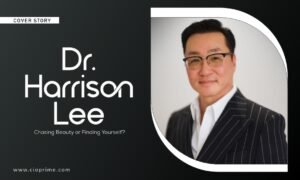
Enhancing Natural Beauty Through Personalised Facial Plastic Surgery!
People often look in the mirror and see more than a face; they see the years they have lived, the features they have always questioned, and the person they hope to become.
When that reflection begins to determine their confidence, changing it can feel like a deeply personal decision. Yet, in facial plastic surgery, the desire for change must be balanced with an understanding of what is possible, what is safe, and what will still feel true to the individual.
Dr. Harrison Lee, a triple board-certified facial plastic surgeon practising in Beverly Hills and Manhattan, has spent almost three decades helping thousands of patients attain self-confidence through facial plastic surgery.
Drawing on extensive training in oral surgery, head and neck surgery, and facial plastic and reconstructive surgery, he approaches each face with an understanding of its deeper structures as well as its visible features. That understanding is central to two procedures he is especially known for, the deep-plane facelift and the endoscopic facelift. His philosophy rests on a simple belief: listen to the patient, understand their goals, and remember that beauty is deeply personal.
A Journey Through Three Surgical Disciplines
Dr. Lee describes his path into facial plastic surgery as a circuitous route. He initially specialised in oral surgery and served as a clinical assistant professor of oral and maxillofacial surgery at New York University. However, he felt that he needed to achieve more, which led him back to medical school to obtain his MD.
The route began in dentistry. He graduated with honours from Tufts University in 1980 and earned his dental degree from Tufts University School of Dental Medicine in 1983. A four-year residency in oral and maxillofacial surgery at the Veterans Administration Medical Center in New Jersey followed, and in 1992 he received his medical degree from New York Medical College.
Following medical school, he completed a five-year residency in head and neck surgery at Mount Sinai Hospital in New York City. His journey eventually led him to facial plastic and reconstructive surgery; the field he felt was his calling. He was accepted into a one-year fellowship under renowned surgeon Dr Frank Kamer, gaining further specialised training. That fellowship ran from 1997 to 1998 and was based at The Lasky Clinic in Beverly Hills, an affiliate of UCLA. Taken together, his medical and surgical training spans 18 years.
Today, as a triple board-certified facial plastic surgeon with 28 years of experience, Dr. Lee draws on his training across oral and maxillofacial surgery, otolaryngology-head and neck surgery, and facial plastic and reconstructive surgery. His certifications come from the American Board of Facial Plastic and Reconstructive Surgery, the American Board of Otolaryngology-Head and Neck Surgery and the American Board of Oral and Maxillofacial Surgery.
He is also a Fellow of the American College of Surgeons, a Fellow of the American Academy of Facial Plastic and Reconstructive Surgery and a Fellow of the Royal College of Medicine in London. Having trained in three disciplines that deal exclusively with the face, facial bones and deeper structures, he assesses both the superficial tissues and the bony anatomy of the face, head and neck.
This broad understanding informs the way he approaches each patient, allowing him to consider the different structures of the face when planning a procedure. It is also what makes facelift surgery such a natural fit for his skills, since a facelift done well depends on knowing exactly what lies beneath the skin.
Understanding Every Patient’s Idea of Beauty
For Dr. Lee, a precise surgical plan must be tailored to the individual patient, depending on his assessment. He does not perform cookie-cutter surgery for every patient because everyone has a different and subjective idea of beauty.
Listening to the patient and determining their cosmetic goals are essential parts of the process.
His approach to natural-looking results follows the same principle.
He believes that achieving a natural result comes from performing enough surgery to obtain what the patient desires, rather than what the surgeon wants.
“Less is More!” is the philosophy that guides his thinking.
The aim is to understand the patient’s expectations and determine how surgery can help achieve them without allowing the surgeon’s personal preferences to take over.
For Dr. Lee, the consultation is where this understanding begins. The patient’s wishes, his assessment, and the possibilities offered by their anatomy must come together before a surgical plan takes shape. He puts the formula in three parts: “listening to my patients’ concerns, careful planning, and meticulous surgery.” Together, he says, they are the key to great results.
Managing Expectations in the Age of Social Media
Yet today, the wishes patients bring into the consultation room are often formed long before they arrive.
Patients increasingly arrive at consultations with specific procedures in mind, often influenced by what they have seen online. Dr. Lee explains that many request procedures such as a cat-eye lift, rhinoplasty, or facelift.
In these situations, he sees it as his responsibility to put the brakes on when expectations become unrealistic. During the consultation, he advises patients about what is achievable and what their individual anatomy may limit.
His approach places considerable importance on honest communication. Patients may have a particular appearance in mind, but understanding the possibilities and limitations of surgery is essential before proceeding. The surgeon must listen carefully, assess the patient and explain which changes may be suitable.
For Dr. Lee, the purpose of the consultation is to establish a realistic understanding between the patient and surgeon, allowing cosmetic goals to guide the discussion while keeping the assessment grounded in what can be achieved.
Facial Feminisation: Bringing Patient and Surgeon Together
Nowhere is this shared understanding more important than in one of his key areas of expertise. Facial feminisation surgery is an important part of Lee’s speciality. His approach begins by sitting the patient in front of a mirror and asking which areas of the face they would like to enhance or change.
After hearing the patient’s response, he offers his recommendations about which procedures may help them achieve their goals and, as he describes it, help them pass. He believes that surgical planning is critical to the success of the surgery.
Dr. Lee does not perform imaging studies for these procedures because he considers them inaccurate. Instead, he relies on direct assessment and discussion with the patient to understand their priorities and develop a suitable plan.
Facial feminisation can involve several procedures, making it important for the surgeon and patient to share the same understanding of the intended result. For Dr. Lee, the guiding principle remains the same as in his other work: the surgeon and patient have to be on the same page.
The process requires the patient’s wishes and the surgeon’s recommendations to work together, ensuring that the planned changes reflect what the patient seeks.
His combined training as a facial plastic, ENT and oral and maxillofacial surgeon is what equips him for the more complex bony work involved, such as brow bone contouring, chin shaping and jaw contouring. These procedures soften masculine features into a more feminine look. He has focused on this work for more than two decades, and the goal is always a natural, harmonious result that fits the patient’s own expectations.
Most facial feminisation patients are transgender women, though some cisgender women who want a more traditionally feminine appearance choose it too. His work in this area has drawn international attention, including his surgery for Caitlyn Jenner in 2015, Nikita Dragun in 2016 and Dylan Mulvaney in 2022.
He also prefers not to stage the work over several operations. Wherever possible, he addresses the whole face in a single sitting so the result stays balanced, an approach that applies equally to facelift, eyelid and brow surgery.
Building Trust Through Results and Compassion
Being on the same page is only the beginning, though. For Dr. Lee, lasting trust is built over the whole patient journey.
A successful surgical practice depends on more than technical skill. According to Dr. Lee, patient trust comes from delivering high-quality, reproducible results, while remaining attentive to the patient’s needs throughout the recovery period.
He considers the end result very important, but he also places great importance on post-operative care. Being extremely attentive during recovery is critical, as patients need support and careful attention after surgery.
Creating a warm and caring environment is another essential part of his approach. Dr. Lee believes that he and the surgical staff all play an integral role in providing a warm, compassionate atmosphere. Many of his team members have worked alongside him for decades, and surgery takes place at Beverly Hills Eclipse Surgery Center, a QUAD A accredited facility that he founded in 2023.
For him, the patient’s experience extends beyond the operation itself. The quality of care, the attention given during recovery and the environment created by the practice all contribute to the trust patients place in their surgeon.
That same care now reaches patients across the country.
Working Across Beverly Hills and Manhattan
Dr. Lee has built a bi-coastal practice with locations in Beverly Hills and Manhattan, serving patients on both the West and East Coasts of the United States.
Despite the geographical distance, he does not consider the two markets entirely different. As he explains, patients are similar on both coasts.
This perspective mirrors the common ground he sees in the people who seek facial plastic surgery. Each patient brings individual concerns and cosmetic goals, making careful assessment and communication important regardless of location.
His approach remains centred on understanding those goals, recommending suitable procedures and delivering results that demonstrate the needs of the individual.
His reach extends beyond the two cities. He also sees patients in Dubai, and he welcomes people from across the United States and around the world. He has wide experience working with patients of all ethnic backgrounds. The Beverly Hills practice grew from the Beverly Hills Medical Center for Cosmetic Surgery, which he founded in 2010.
Deep-Plane and Endoscopic Facelifts: Natural Rejuvenation Beneath the Surface
Among the procedures Dr. Lee performs, two stand out as the clearest expression of his training and his philosophy: the deep-plane facelift and the endoscopic facelift.
The deep-plane facelift is his technique of choice for ageing in the mid-face and lower face. Rather than simply tightening the skin, it works on the deeper layers of facial tissue, including the muscles, and repositions them. Traditional facelifts stay closer to the surface, which is why the deep-plane approach is known for longer-lasting results with a more natural, youthful look. It softens lines, creases and sagging jowls, and it can improve the folds running from the nose to the corners of the mouth, as well as chin definition and neck contours. Because he has performed thousands of deep-plane facelifts, he brings years of hands-on experience to every case.
In the operating room, he makes an incision along the hairline that continues into the ear and behind it. He lifts the skin and muscle layer away from the tissue beneath to reach the deep plane, then repositions the underlying fat and muscle to restore a more youthful contour. The skin is re-draped, the excess is removed and the incisions are closed. Scars sit within the hairline and behind the ears, where they are well hidden, and most fade naturally with time.
The endoscopic facelift, which he has recently added to his armamentarium, takes a different route to a similar goal. Using small incisions and an endoscope, a slim camera that allows the surgeon to see and work on the deeper tissues with precision, it can lift areas such as the brow, temples and cheeks. The smaller incisions can mean less visible scarring, which many patients find appealing. Together, the two techniques give Dr. Lee more than one way to meet a patient’s goals.
A facelift is tailored to each patient. Some come for a first lift, and others for a revision, with concerns ranging from mild to severe sagging. Many choose to pair the facelift with a neck lift, eyelid surgery, a brow lift or ear pinning, so that the whole face is rejuvenated in one operation and stays in harmony. Dr. Lee is also candid about what a facelift is not. Its main purpose is to lift and reposition rather than restore volume, so where volume has been lost he may suggest fat grafting, cheek or lip augmentation, or jaw augmentation alongside it.
Patients are told what to expect. A facelift typically takes between two and five hours, depending on the scope of the work and any combined procedures. Recovery from a facelift alone usually means two to three weeks of downtime. Moderate results appear at around four to six weeks, once swelling and bruising settle, and the full result continues to emerge over three to six months.
Neither technique is a one-size-fits-all answer, and Dr. Lee does not treat them that way. As with every procedure he performs, the right approach depends on the individual patient’s anatomy, concerns and expectations, and it is settled in the consultation. That is where “Less is More!” matters most: the aim is a result that suits the patient and still looks like them.
Educating Patients and Fellow Surgeons
Beyond the operating room, Dr. Lee also looks to share what he has learned.
Dr. Lee’s career has included national and international presentations, publications and television appearances, giving him opportunities to contribute to conversations about facial plastic surgery. He has appeared on CNN, ShowBiz Tonight, Dr. 90210, E! Entertainment and European television, and he has been featured in publications including Forbes, USA Today, Cosmopolitan and Maxim.
In his view, doctors have a responsibility to educate the general public as well as their colleagues. For him, this means explaining both the advantages and disadvantages of a procedure, along with its potential complications.
This responsibility is particularly important in a field that can influence how people view themselves and make decisions about their appearance. Patients need a clear understanding of what a procedure involves, what it may achieve and what risks it carries.
Dr. Lee sees education as an essential part of responsible medical practice. By sharing knowledge and explaining procedures carefully, doctors can help patients make informed decisions and support better understanding among fellow professionals.
Continuing to Learn and Evolve
Teaching others, however, goes hand in hand with never ceasing to learn himself.
As surgical techniques, technology, imaging and minimally invasive approaches continue to develop, as per Dr. Lee, continuing surgical education is essential.
By attending courses on new techniques and developments, surgeons can assess whether procedures are practical and determine whether they can be integrated into their practices.
His own work imitates this continued learning. Dr. Lee has performed thousands of deep-plane facelifts and has recently added endoscopic facelifts to his armamentarium. It is a pairing that shows how he works: he builds on a technique he has refined over many years while remaining open to newer, less invasive options that may benefit his patients.
For him, staying informed about developments in facial plastic surgery involves evaluating new approaches carefully and understanding how they may be applied in practice. Continuing education gives surgeons the opportunity to assess new techniques and make informed decisions about their use.
Advice for the Next Generation
After a career built on training, listening and learning, what would he pass on to those just beginning? For surgeons entering the field, Dr. Lee trusts that technical knowledge must be accompanied by strong professional values. His first piece of advice is direct: “Firstly be the Great physician!”
He cautions young surgeons against becoming overly arrogant or acting like a showboat. Instead, he encourages them to do their best for every patient they encounter and to remain ethical, professional and compassionate.
These principles echo his understanding of what makes a surgeon worthy of trust. Technical ability is essential, but the way a physician treats patients and approaches professional responsibilities also matters.
Discipline has long been part of his life outside the operating theatre too. He is a lifelong martial artist with black belts in Tae Kwon Do, Korean jiujitsu, Hapkido, Tang Soo Do and Northern Shaolin Kung Fu.
When considering what makes a plastic surgeon truly influential, rather than simply visible, Dr. Lee returns to the same message. Surgeons should always strive to do their best for each and every patient.
It is a message that comes full circle, from a man whose own journey was anything but simple. His final advice extends beyond the operating theatre and professional achievements: “Just be a great human being!”