
11 Smart Features Every Future-Ready Workspace Should Include
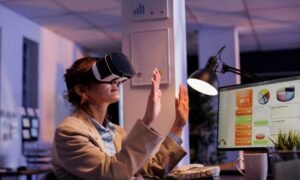
A future-ready workspace is built around one priority: helping people do their best work, consistently, without friction. That means smarter environments, better employee experience, higher safety, and tighter control over cost and performance.
As hybrid work becomes a long-term reality, companies are investing in smart office technology, workplace automation, and workplace analytics to create spaces that feel effortless to use and intelligent enough to adapt in real time.
Below are the 11 smart features that define a modern office that is truly future-ready.
1) Smart Access Control and Touchless Entry
A future-ready office begins at the door.
Touchless entry systems reduce bottlenecks, improve security, and support better hygiene. Modern workplaces are moving toward:
Smart entry systems that reduce friction
- Mobile-based access control
- Face recognition or badge-based entry
- Visitor pre-registration and digital check-ins
This is one of the clearest markers of a true smart workplace because it creates instant convenience and strengthens safety at the same time.
2) AI-Powered Desk Booking and Meeting Room Scheduling
In a hybrid-first world, workspaces must stay flexible.
A strong desk booking system prevents underused space, overcrowding, and awkward employee experiences where people arrive and cannot find a seat.
AI scheduling that adapts to real usage
AI-supported scheduling tools can learn patterns such as peak days, team behavior, and meeting room demand, then recommend better layouts and allocations.
This is the foundation of a productive future-ready workspace.
3) Smart Meeting Rooms with Modern AV for Hybrid Collaboration
A workspace can look premium and still fail if meetings feel clunky.
High-performing meeting rooms now rely on hybrid collaboration tools and professional-grade AV that brings remote participants into the conversation equally.
Features that improve hybrid meeting quality
- Auto-framing cameras
- Clear voice pickup and echo control
- Reliable video conferencing setups
Hybrid work is driving demand for workplace tech that supports participation across locations.
4) Workplace Sensors for Occupancy and Space Utilization
The smartest offices measure what actually happens inside the space.
Occupancy sensors and workspace analytics help teams see real usage patterns instead of relying on assumptions.
What space utilization data improves
- Meeting room availability accuracy
- Smarter cleaning schedules
- Better space planning decisions
Many modern offices use sensors combined with AI insights to optimize space usage and comfort.
5) Smart Lighting Systems That Support Focus and Comfort
Lighting affects productivity, energy use, and mental fatigue.
A true smart lighting system adjusts automatically based on time of day, daylight, room occupancy, and usage patterns.
Why smart lighting matters for employee experience
In tech-integrated workspaces, lighting personalization improves comfort and supports productivity across long workdays.
For teams working long hours, lighting quality becomes a performance tool, not a decoration choice.
6) Smart HVAC and Climate Control With Zoned Comfort
Temperature arguments waste time. They also impact output.
Smart HVAC systems use sensors and automation to balance comfort and energy efficiency.
Climate control that adapts automatically
- Zoned temperature settings
- Automated airflow adjustment
- Predictive maintenance alerts
In smart offices, climate, lighting, and even sound levels can shift based on employee needs and time of day.
7) Indoor Air Quality Monitoring for a Healthy Workplace
Air quality is no longer a background detail. It is a workplace performance issue.
Indoor air quality monitoring helps maintain healthier environments and builds trust with employees who care deeply about wellness.
Healthy building standards influence modern workplace design
Frameworks like the WELL Building Standard focus on air quality, lighting, acoustics, and material health, shaping how future-ready offices are designed.
A healthier workplace supports stronger attendance, sharper thinking, and better long-term employee satisfaction.
8) Workplace Energy Management for Cost Control and Sustainability
A future-ready workspace has to be efficient, measurable, and responsible.
A modern energy management system can reduce unnecessary consumption and improve building performance through automation.
Sustainability frameworks that guide smarter offices
LEED addresses energy, water, materials, waste, and indoor environmental quality as part of a holistic building approach.
In many cases, green building strategies also align with operational cost savings through smart automation and efficiency upgrades.
9) Digital Signage and Smart Wayfinding
If people waste time finding rooms, floors, or colleagues, the office feels stressful and inefficient.
Digital signage improves navigation, communication, and clarity across busy workspaces.
Smart wayfinding improves the hybrid office experience
Signage can show:
- Room availability
- Desk zones and team neighborhoods
- Event updates and emergency instructions
Digital signage is often mentioned as part of smart workplace solutions that strengthen connection and flexibility.
10) Wireless Charging Zones and Power Everywhere
A future-ready workspace supports movement. People work from lounge areas, booths, focus corners, and collaboration zones.
That only works if power access is effortless.
Power access that supports flexible workstyles
Wireless charging stations and accessible outlets reduce interruptions and keep work flowing.
Many coworking and modern workspace designs treat wireless charging as a core technology essential.
11) Biophilic Design With Wellness-First Smart Zones
Technology alone cannot fix workplace stress.
A high-performance, future-ready workspace includes wellness-driven design that helps people feel better and work better.
Features that support wellness and retention
- Breakout spaces for decompression
- Natural light, plants, calming textures
- Quiet zones for deep focus
Workspace trends in India and globally are leaning into biophilia and wellness zones to improve engagement and employee experience.
When teams feel supported emotionally, productivity becomes sustainable.
Final Takeaway
The best offices are evolving into responsive ecosystems. They adapt to people, protect well-being, and reduce waste.
If you want your workplace to stay competitive, focus on:
- Smart office technology that removes friction
- Workplace automation that saves time and energy
- Workplace analytics that make decisions clearer
- Wellness-driven design that supports real human needs
That combination creates a workspace that feels premium, performs better, and stays ready for what comes next.
Read More Articles: Click Here